CRISPR
803
MENTIONS
326
EPISODES
287
PODCASTS
Search complete. 803 mentions across 326 episodes found for "CRISPR".
Oct 27, 2026

Merlin ChowkwanyunGUEST
The other week, Anthropic, one of these frontier labs said it seemed to discover at least a new system or maybe subsystem within the human body that people weren't aware even existed.
Merlin ChowkwanyunGUEST
And there were comparisons to CRISPR and, you know, other sorts of things like that.
Merlin ChowkwanyunGUEST
But again, you know, that is a discovery that could lead to something, but there are all kinds of potential hurdles and impediments on the way, beginning with whether the discovery actually amounts to a therapeutic.
Merlin ChowkwanyunGUEST
So I think 1882 is a good parallel for that reason.

speaker_8HOST
We often think of biology as modular, you know, that you can just snap pieces together like Lego bricks.
speaker_7HOST
Right, like CRISPR makes it seem so easy.
speaker_8HOST
But bacteria are living, breathing, incredibly complex organisms governed by billions of years of evolution.
speaker_8HOST
Every single change you make has a consequence.

Blake CrouchGUEST
And it's the same thing we're suffering from now.
Blake CrouchGUEST
in our world with the advent of AI and the biotech stuff that happens in China behind closed doors with CRISPR, with them not adhering to international rules about how gene editing should go.
Blake CrouchGUEST
It's man's ambition that is the true villain.
Tony TelladoHOST
and finishing up Wayward Pines.

Christopher MacklinGUEST
And it certainly shuts down psychic abilities.
Christopher MacklinGUEST
What's interesting is that You know, if you affect your DNA and splice the chromosomes with, and it's called CRISPR technology, spike protein.
Christopher MacklinGUEST
It's in the lipid nanoparticle.
Christopher MacklinGUEST
It's fired through the cell, and then it goes in and splices the chromosomes.
6 MINS LATER
Christopher MacklinGUEST
Now you also get the spike protein lipid nanoparticle, which has four HIV, what they call microinserts.
Christopher MacklinGUEST
So it's got HIV in it.
Christopher MacklinGUEST
And that's the thing that, you know, the part of the CRISPR technology.
Christopher MacklinGUEST
And then you've got glycoethylene.

ArielAUDIENCE
I have a parent, my father has vascular dementia, and I can really relate to this topic just in terms of Lewy body dementia not getting as much attention or research dollars.
ArielAUDIENCE
And when they were talking about the CRISPR technology and when is it going to kind of come in and And the system, it's, you know, vascular dementia is the dementia that affects African-Americans the most.
ArielAUDIENCE
My father's African-American.
ArielAUDIENCE
And it's just it's really heartbreaking when you see.
10 MINS LATER
Robert KolkerGUEST
And I think brain health with dementia will wind up becoming topic A as well.
Mina KimHOST
Yeah.
Mina KimHOST
How promising is CRISPR as a way to forestall symptoms in a genetic form of dementia?
Robert KolkerGUEST
CRISPR is incredibly promising, but it has two big issues.

Azlina Ahmad AnnuarGUEST
in monkeys and, you know, and then you kind of infer that maybe it might be happening the same way in humans.
Azlina Ahmad AnnuarGUEST
So what they did was that they, I think, just, you know, very, very similar to even how CRISPR was discovered, right? The whole mechanism of how we now use CRISPR was actually discovered.
Azlina Ahmad AnnuarGUEST
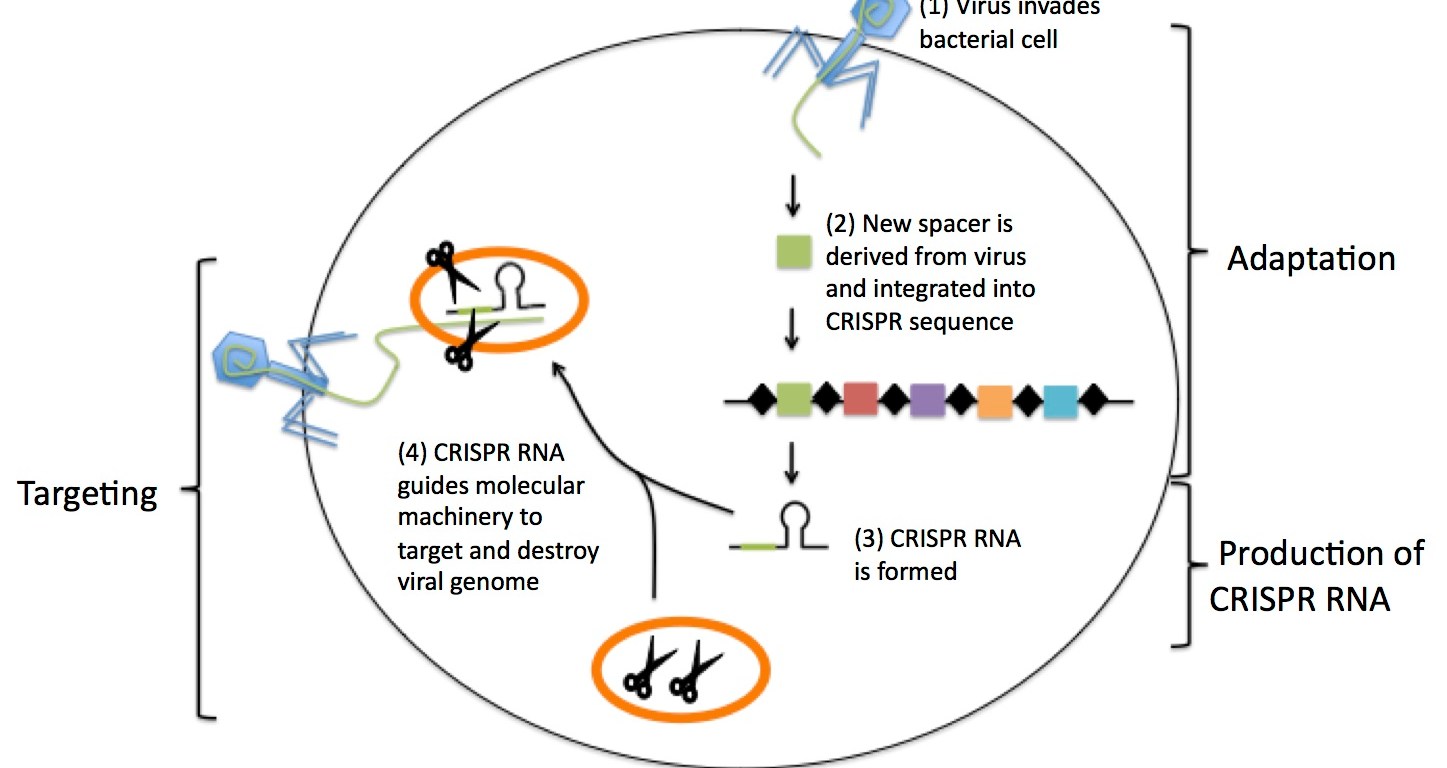
This is a natural way how bacteria kind of keeps a record of its infections.
Azlina Ahmad AnnuarGUEST
So these scientists were studying this algae and they wanted to see, well, how does the algae move around and how does it control that process? And so through those studies, then they were able to find these special proteins called opsins, O-P-S-I-N.

NishantHOST
So they take stem cells out of your own bone marrow.
NishantHOST
They then edit them outside your body using CRISPR, C-R-I-S-P-R, which is a tool that works like a pair of molecular scissors with a GPS attached.
NishantHOST
cutting at one exact address in the genome.
NishantHOST
But they don't cut the sickle mutation.

speaker_3GUEST
I'm obsessed with making food production tougher in the right ways without steamrolling nature.
speaker_2HOST
Which is why I keep coming back to CRISPR, not as a buzzword, as a tool that might connect your worries in the field with my complaints at the table.
speaker_3GUEST
And to be clear, this isn't the older style of genetic modification.
speaker_3GUEST
It is a much tighter approach.
speaker_2HOST
So it's not only defense, you can actually upgrade the eating experience too?
speaker_3GUEST
That's where it gets fun.
speaker_3GUEST
The first CRISPR-edited food people could buy wasn't corn or soy, it was a tomato in Japan.
speaker_3GUEST
A

Ezekiel IferiaHOST
So can you tell us about, you know, what does gene editing actually, how does it actually work? How does gene editing work? And where is it, where is the technology headed?
Kira DineenGUEST
It is probably my favorite topic to talk about within genetics because it's groundbreaking that the main genetic editing technology that people are using now is called CRISPR.
Kira DineenGUEST
And how this works is if you think about our DNA like a ribbon, We can use these like molecular scissors to go in and cut a part of the ribbon out and then put a different color ribbon in and then tape it back up and fix it.
Kira DineenGUEST
And basically swapping out that little piece of ribbon would be like swapping out a gene where you're taking out the gene that has a mutation or somehow that gene's not working the way it needs to and putting in a copy of the gene that does work, that does work.
Kira DineenGUEST
properly work in the human body.
Kira DineenGUEST
And it's amazing that in the course of me podcasting, we went from a landmark paper in 2012 when DNA Today launched of CRISPR and the potentials and how this could change the field.
Kira DineenGUEST
to about 10 years later, having the first FDA approved treatment for a genetic condition using CRISPR, this genetic editing.
Kira DineenGUEST
And so when I say FDA approved for people worldwide, that's basically the US government, a branch of the United States government said, hey, this is safe.
316 more episodes mention CRISPR.
Create an account to see the whole feed, search across every transcript, and follow the entities you care about.