Cretaceous–Paleogene boundary
12
MENTIONS
5
EPISODES
5
PODCASTS
Search complete. 12 mentions across 5 episodes found for "Cretaceous–Paleogene boundary".
Oct 25, 2026

Theo WrenfieldNARRATOR
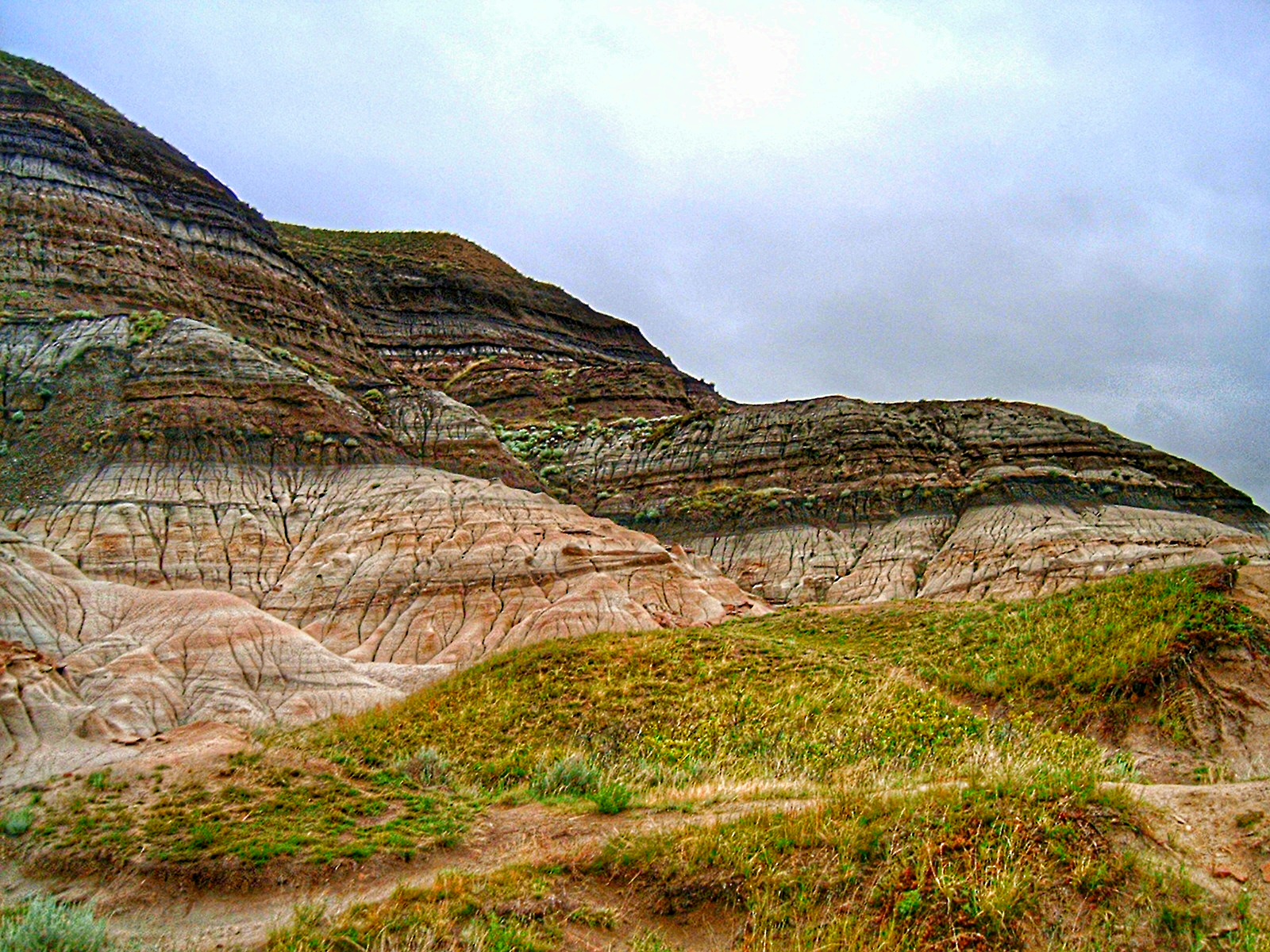
A thin layer of clay found in rock formations across the world contains unusually high concentrations of a rare element called iridium, more commonly found in asteroids than in Earth's crust.
Theo WrenfieldNARRATOR
This layer, often called the K-Pg boundary, marking the transition between the Cretaceous and Paleogene periods, serves as a quiet, physical reminder of that moment when the world changed.
Theo WrenfieldNARRATOR
Beneath this boundary, fossils of dinosaurs and many other creatures can be found in great diversity.
Theo WrenfieldNARRATOR
Above it, they vanish almost entirely.

Rebecca ReedsHOST
[laughs]
Craig FayHOST
... uh, the Cretaceous-Paleogene boundary.
Craig FayHOST
So, like, in the, uh, geographic record they found, like, this very, like, thin...
Craig FayHOST
Like, so there's, like, layers of rock, right? You know how that is.

PetaHOST
But hey, maybe they're doing a good job.
GabeHOST
Right after what's called the K-T Boundary.
GabeHOST
You might know it better from its most famous member, uh, the asteroid-
MaxHOST
Katy Perry
GabeHOST
No, not quite Katy Perry.
PetaHOST
[laughs]
GabeHOST
Uh, the K-T Boundary, uh, better known as the asteroid that killed off most of the dinosaurs.
MaxHOST
Right.

Rund AbdelfatahHOST
A swirl of colors, rusty orange, dull brown, chalk white, with fossilized creatures sprinkled throughout.
Rund AbdelfatahHOST
Each layer is a different thickness, and Walter Alvarez was focused on one layer in particular, the K-T Boundary.
David SepkoskiGUEST
The K-T Boundary had been well studied around the world.
Ramtin ArabloueiHOST
It's striking.
Ramtin ArabloueiHOST
A very thin layer of clay, much thinner than the others around it, with a distinctive dark ashy color, kind of like coal.
Ramtin ArabloueiHOST
Below the K-T Boundary is the Cretaceous layer, marking the age of dinosaurs.
Ramtin ArabloueiHOST
It's filled with shards of dinosaur bones and teeth, the outline of their footprints.
Ramtin ArabloueiHOST
And above the K-T Boundary is the Tertiary layer, marking the age of mammals.

AnthonyHOST
They had such huge sizes, you guys, that they wouldn't have been able to constantly be flapping their wings with powered flight.
AnthonyHOST
Uh, it included some of the largest pterosaurs ever, and this group survived all the way to the end of the Cretaceous Period in the K-Pg extinction 66.5 million years ago.
AnthonyHOST
But you guys, uh, examples: Pteranodon, Quetzalcoatlus, uh, our Nyctosaurus, and here, this one always trips me up, so let me scroll down here.
AnthonyHOST
Our Tapejara.
AnthonyHOST
They're living somewhat like we see birds today, but they're not birds.
AnthonyHOST
They're not related to birds.
AnthonyHOST
Birds come from the theropod-type dinosaurs, where the pterosaurs had already split away from the archosaurs and the dinosaurs, so they're nowhere lay- nowhere close to related, okay? Now, during the K-Pg extinction, many pterosaurs would have been just way too big to hide out the storm.
AnthonyHOST
The ones at the impact zone down, you guys, off the Chicxulu- down in Chicxulub, you guys, those ones would have had the asteroid blast.