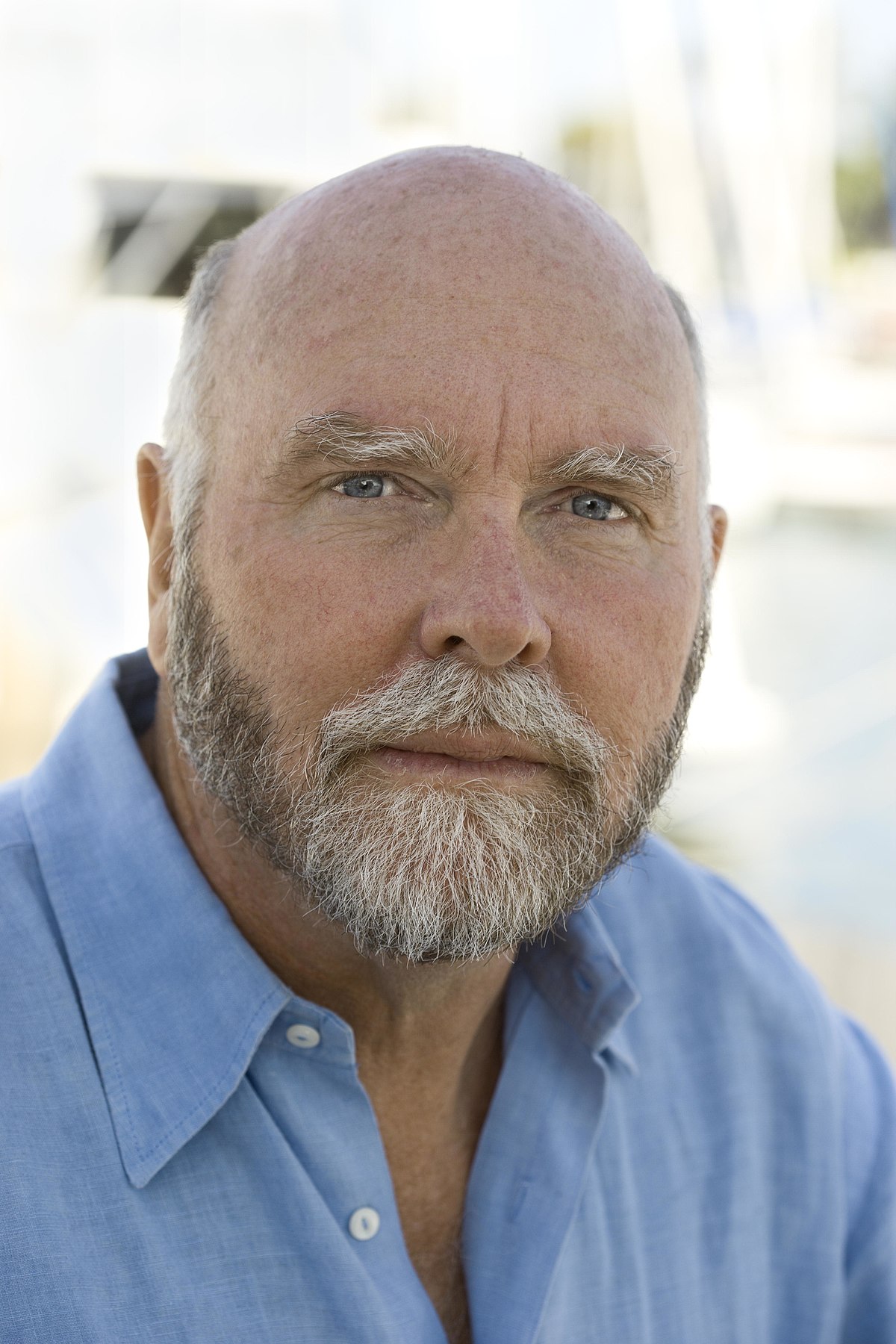
J. Craig Venter
American scientist and businessmanWikipedia
25
MENTIONS
14
EPISODES
12
PODCASTS
Search complete. 25 mentions across 14 episodes found for "J. Craig Venter".
Sep 23, 2026

Manshu AgarwalGUEST
And Safari could see that it was just a little bit too early in the development of the biology.
Manshu AgarwalGUEST
And And so I moved up the road, actually, as it happens, to Craig Venter's company, Synthetic Genomics, which is then called Viridos.
Manshu AgarwalGUEST
And he was the guy that first sequenced the human genome.
Manshu AgarwalGUEST
So I became his business development director, helping him commercialize a lot of the things that were coming from his labs.

Akos NyergesGUEST
But what really got me into synthetic biology was a completely science article article.
Akos NyergesGUEST
I came across a science paper, a news article, about some very early work in J. Craig Venter's institute, JCBI, about the synthetic mycoplasmic genome.
Akos NyergesGUEST
And that was the moment really when I felt that, yeah, synthetic biology and genome writing is really going to be the next phase of microbiology and biology, as we know, And that really, this was maybe now almost 18 years ago and really, really catalyzed my path and research directions over the past 18 years.
Cory SmithHOST
Very exciting.

Jonathan D. GrinsteinHOST
What do I have to do to live longer? Now, I'm not going to spoil the answer for you.
Jonathan D. GrinsteinHOST
The reason I'm highlighting this exchange is that it represents the next step in precision medicine for Wei Wu and HLI, which is the carry-on mission that began in 2013 with the late genomic pioneer Craig Venter to connect the genetic information we inherit with the diseases and physiological changes we experience throughout our lives.
Jonathan D. GrinsteinHOST
In this episode of Behind the Breakthroughs, Weiwu discusses what goes into HLI's platform, which is powered by a substantial proprietary dataset combining clinical-grade whole genome sequencing, advanced imaging that includes whole body MRI, and longitudinal clinical assessments.
Jonathan D. GrinsteinHOST
Weiwu thinks that a platform like HLIs, which predicts lifespan, health risks, and preventative measures, offers millions of people an unprecedented way to benefit their health as well as society's healthcare burden.
Wei-Wu HeGUEST
Okay, so, but that was 40 years ago.
Wei-Wu HeGUEST
I went to Mayo Clinic for a few years, Mass General.
Wei-Wu HeGUEST
My real career transition is really when my partner, Craig Venter, recruited me from Harvard to start a first industrialized genome company called Human Genome Sciences in 1993.
Wei-Wu HeGUEST
But I was so fascinated by Craig Venter's company.

Benjamin RapoportGUEST
And from the standpoint of how technology helped that field, there was in that moment a competition, a race between the private sector and the NIH-funded consortium of many laboratories across the country and across the world, which were trying to stitch together the first comprehensive map of the human genome.
Benjamin RapoportGUEST
And famously or infamously, the private consortium won, right? Craig Venter is sort of crazy.
Benjamin RapoportGUEST
you know, shotgun approach to sequencing one.
Benjamin RapoportGUEST
And to me, that mattered less than just the notion that moving ready or almost ready technology from the academic setting into the industry setting at the right moment has the potential to help tremendously accelerate progress.

Dave AspreyGUEST
And that's what allowed us to do the Human Genome Project project.
Dave AspreyGUEST
And I've even had a chance to ask Craig Venter questions, the guy who sequenced his own genome, the first human genome that we allegedly sequenced, even though we didn't really sequence all genome.
Dave AspreyGUEST
We just kind of said we did.
Julie RyanHOST
Well, and you know, I see DNA get resequenced all the time and healings and energetic healings.
Akos NyergesGUEST
So I always saw like bacteria on auger plates and I had the opportunity to visit the lab when I was very young.
Akos NyergesGUEST
But what really got me into synthetic biology was a completely science article I came across a science paper, a news article, about some very early work in J. Craig Venter's institute, JCBI, about the synthetic mycoplasmic genome.
Akos NyergesGUEST
And that was the moment really when I felt that, yeah, synthetic biology and genome writing is really going to be the next phase of microbiology and biology as we know.
Akos NyergesGUEST
And that really, this was maybe now almost 18 years ago, and really, really catalyzed my path and research directions over the past 18 years.
Cory SmithHOST
Very exciting.
Cory SmithHOST
And I share that as well.
Cory SmithHOST
I saw that same story, followed Craig Venter even a little before.
Cory SmithHOST
Exactly.

Johnny VedmoreHOST
I'm thinking of putting in some sort of subject access or freedom of information or data requests, whatever I need to do in America.
Johnny VedmoreHOST
to get the section on humans 2.0 that Epstein funded, Musk funded, hosted SpaceX-based training course with George Church and J. Craig Venter, who are behind part of the synthetic genomics course masterclass.
Johnny VedmoreHOST
But Epstein's School of Shame, Edge's Headcon, is where we are going to go today.
Johnny VedmoreHOST
Epstein's School of Shame.
Johnny VedmoreHOST
Again, well-programmed AI models will present disinformation in a positive, optimistic manner, regardless of the connotations.
Johnny VedmoreHOST
The most infamous child-abusing intelligence asset in human history was funding the study of extremely controversial science.
Johnny VedmoreHOST
The 2008 Masterclass was led by the father of behavioral economics, Richard Thaler, while the 2009 Masterclass was led by the fathers of modern genomics, George Church and J. Craig Venter.
Johnny VedmoreHOST
These leaders in their field analyzed the building blocks of their specific scientific areas.

Kate AdamalaGUEST
If we oil all fail as a field, then that means there is an unknown unknown, that there's something about a living cell.
Kate AdamalaGUEST
And I think at that point, I would say the bottom-up approach has not proven viable, and we should focus on the top-down approach, the Craig-Venter approach, the minimal cell approach.
Kate AdamalaGUEST
That cell is growing, is dividing.
Kate AdamalaGUEST
We still don't understand it fully, but that's another kind of, that's more of a trackable engineering problem because that's a limited set of components and we just need to figure out what they are.
Kate AdamalaGUEST
They can do chemically defined media to grow it.
Kate AdamalaGUEST
They can... minimize the lipidome that when I meant earlier, when we talked, I mentioned there is a living cell that uses two lipids in its membrane.
Kate AdamalaGUEST
That's the Craig-Venter cell that's grown under certain conditions.
Kate AdamalaGUEST
It can have a membrane made out of two lipids.

Jessica SwansonGUEST
But we have, um, we've made a lot of progress, and we've got some very promising data so far, so we're hopeful that we're on our way.
Joe HansonHOST
In 2004, two of the scientists who fueled the Human Genome Project, the late Craig Venter, the project's leader who died this year in April, and Daniel Cohen, they made a bold claim.
Joe HansonHOST
They declared that the 21st century would be the century of computers and biology.
Joe HansonHOST
And we're just a quarter of the way into that century, and it's clear that they were right.

Ira PastorHOST
I mean, nature has the ability to give us a tremendous amount of, um, chemical space, [laughs] uh, and a lot of that has not been explored.
Ira PastorHOST
Uh, had Craig Venter on the show a couple years ago while he was sailing, or he came back from sailing around the world, and he had an endless amount of genes that, you know, have just never been...
Ira PastorHOST
You know, we don't know what they do.
Ira PastorHOST
But in the world of synthetic biology and systems like what Ante is developing, um, the potential for novel natural products, uh, in drug discovery and, and other areas is just immense.
4 more episodes mention J. Craig Venter.
Create an account to see the whole feed, search across every transcript, and follow the entities you care about.