Cosmic Background Explorer
SpacecraftWikipedia
34
MENTIONS
17
EPISODES
9
PODCASTS
Search complete. 34 mentions across 17 episodes found for "Cosmic Background Explorer".
Sep 18, 2026
Big mysteries explained through your senses
M
10:09Manoush ZomorodiHOST
[laughs] So how did you come up with this idea of translating all your measurements of these sound waves into music, something that is, we can listen to?
M
10:22Mark WhittleGUEST
So starting with the COBE mission, it's a NASA satellite, in 1990, and then the WMAP satellite in 2003, the sensitivity of the microwave telescopes began to reveal these very slight patches on the microwave background.
M
10:38Mark WhittleGUEST
And what scientists do with the image of the microwave background, this full sky, this sphere of glowing with patchiness on it, is they do a, a wave analysis of it, and it produces a spectrum.
M
10:53Mark WhittleGUEST
Um, and not only were these waves basically acoustic waves, but also there was a fundamental of harmonics, and that is exactly the signature of something like a musical instrument or a human voice.
Into The Impossible: Scott Dodelson on Cosmology’s Crisis and Tensions
S
1:58speaker_1NARRATOR
That's a great phrase.
S
2:00speaker_1NARRATOR
He also took us back to 1992, when COBE first detected anisotropies in the cosmic microwave background.
S
2:07speaker_1NARRATOR
That was a turning point, because many earlier cosmological ideas had been post-dictions rather than true predictions.
S
2:15speaker_1NARRATOR
After COBE, cosmology became much more evidence-driven.
S
2:19speaker_0NARRATOR
The conversation then turned to current puzzles.
S
2:23speaker_0NARRATOR
The Hubble tension, the Sigma-8 tension, the W tension.
Genesis and Physics intro
J
7:11JimGUEST
And so that's the ground-based system.
J
7:13JimGUEST
Again, it was followed on by the launch of COBE in 1989.
J
7:17JimGUEST
Had the opportunity to be there with the chair of the physics department at NPS.
J
7:21JimGUEST
And it was really, don't ever do it.
J
7:27JimGUEST
on the California coast, so it was early.
J
7:29JimGUEST
But it was interesting to see it.
J
7:32JimGUEST
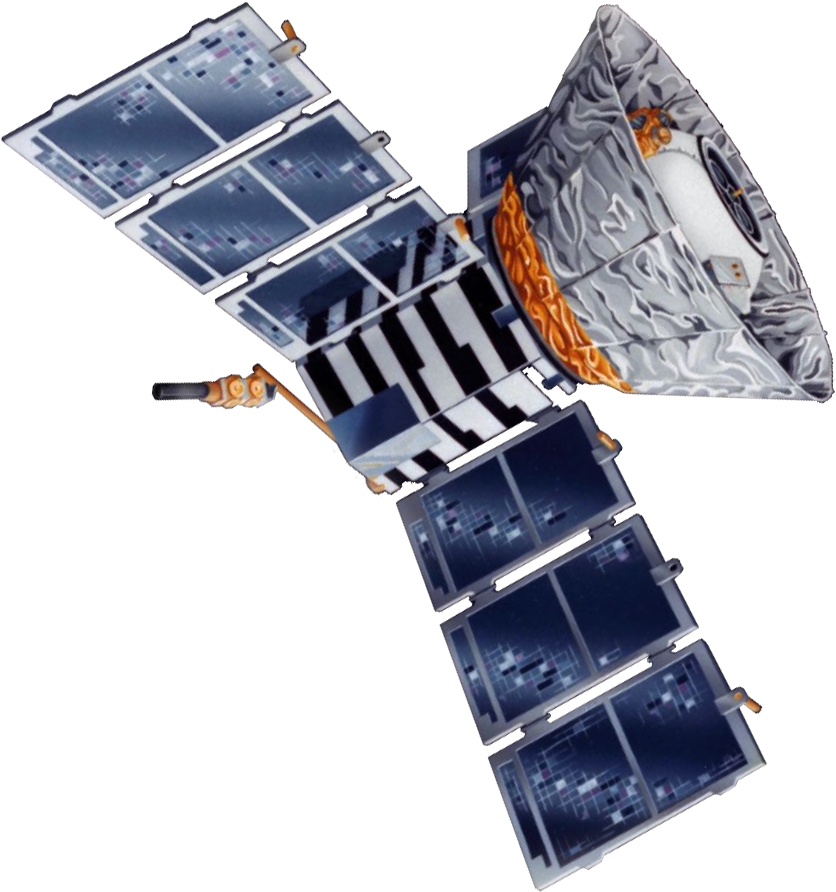
So this is the COBE satellite on orbit, and it's got shielding to keep it, you know, radiation from the sun.
J
7:38JimGUEST
And the two devices are the FIRAS, to look at the spectrum, and the DMR, differential microwave radiometers, that there are three of them, and they look at seven-degree portions of the sky sequentially.
The Universe You Cannot See | A SleepWise Story About Dark Matter and Dark Energy
G
77:34Grandpa CohenHOST
The measurements agree with the calculation only for a modest amount of baryonic matter, roughly 5% of the total content of the cosmos.
G
77:45Grandpa CohenHOST
The second, later, more precise measurement comes from the fine pattern of hot and cold spots in the cosmic microwave background, mapped by COBE and WMAP and, most exquisitely, by the Planck satellite.
G
78:04Grandpa CohenHOST
The size and spacing of those anisotropies encode the ratio of ordinary matter to everything else.
G
78:12Grandpa CohenHOST
and they too give 5%.
P
Unknown podcast
The Terrifying Truth About How Cold Space Really Is
Sep 5 · 6 Mentions
S
45:47speaker_2NARRATOR
Over the following decades, increasingly sophisticated instruments refined the measurement with extraordinary precision.
S
45:53speaker_2NARRATOR
The first major leap came with the Cosmic Background Explorer satellite, known as COBE, launched by NASA in 1989.
S
46:01speaker_2NARRATOR
COBE carried instruments designed specifically to measure the cosmic microwave background with far greater accuracy than ground-based antennas could achieve.
S
46:11speaker_2NARRATOR
Earth's atmosphere absorbs and emits microwaves, contaminating ground-based measurements.
S
46:18speaker_2NARRATOR
A satellite above the atmosphere eliminates this problem entirely.
S
46:22speaker_2NARRATOR
COBE produced two groundbreaking results.
S
46:26speaker_2NARRATOR
First, it measured the spectrum of the cosmic microwave background and found that it matched the theoretical prediction for a perfect blackbody radiator with extraordinary precision.
S
46:37speaker_2NARRATOR
A blackbody is an idealised object that absorbs all incoming radiation and emits energy in a very specific pattern, determined entirely by its temperature.
P
Unknown podcast
The Void Linked to the Cold Spot... and Why It Terrifies Scientists
Sep 5 · 3 Mentions
S
7:20speaker_5UNKNOWN
The real scientific power of the cosmic microwave background lies not in its existence but in its details, and extracting those details required instruments far beyond anything available in 1965.
S
7:33speaker_5UNKNOWN
The Cosmic Background Explorer satellite, known as COBE, launched in 1989 and provided the first full sky map of the CMB temperature.
S
7:44speaker_5UNKNOWN
What COBE revealed was simultaneously reassuring and astonishing.
S
7:48speaker_5UNKNOWN
The radiation was extraordinarily uniform.
S
7:51speaker_5UNKNOWN
In every direction astronomers looked, the temperature registered at 2.725 Kelvin.
S
10:22speaker_5UNKNOWN
Regions slightly less dense would be slightly cooler.
S
10:25speaker_5UNKNOWN
These variations, imprinted onto the last scattering surface when the universe became transparent, should appear as faint temperature differences in the CMB.
S
10:35speaker_5UNKNOWN
COBE confirmed that these fluctuations existed, but its angular resolution was too coarse to map them in fine detail.
P
Unknown podcast
The True Scale of the Universe Will MELT Your Mind
Sep 5 · 1 Mention
S
78:02speaker_2NARRATOR
The cosmic microwave background radiation provides a snapshot of those fluctuations when the universe was just 380,000 years old.
S
78:12speaker_2NARRATOR
Satellites including COBE, WMAP and Planck mapped tiny temperature variations across the entire sky, revealing the seeds of all future structure.
S
78:23speaker_2NARRATOR
Warmer spots corresponded to slightly denser regions.
S
78:26speaker_2NARRATOR
Cooler spots corresponded to slightly less dense regions.
P
Unknown podcast
The Void So Large It Shouldn_t Exist
Sep 4 · 1 Mention
S
19:12speaker_4NARRATOR
Cooler spots corresponded to slightly lower density.
S
19:16speaker_4NARRATOR
Satellites, including the Cosmic Background Explorer in the early 1990s, the Wilkinson Microwave Anisotropy Probe in the 2000s, and the Planck spacecraft, launched in 2009, have mapped these temperature variations in exquisite detail across the entire sky.
S
19:36speaker_4NARRATOR
The maps reveal a mottled pattern of hot and cold spots at various angular scales, encoding the initial conditions that determined all future structure formation.
S
19:46speaker_4NARRATOR
Scientists can take this map and feed it into computer simulations that model the physics of gravitational collapse, dark matter clustering, gas dynamics, and dark energy over 13 billion years of cosmic evolution.
P
Unknown podcast
The Largest Void Ever Found... and Why It_s Terrifying
Sep 4 · 1 Mention
S
34:26speaker_4NARRATOR
Cooler spots correspond to regions that were slightly less dense.
S
34:30speaker_4NARRATOR
By mapping these temperature variations across the entire sky, Satellites like the Cosmic Background Explorer, the Wilkinson Microwave Anisotropy Probe, and the Planck spacecraft created what amounts to a baby picture of the universe, a snapshot of conditions when the cosmos was less than 1% of its current age.
S
34:50speaker_4NARRATOR
In 2004 the Wilkinson Microwave Anisotropy Probe, commonly known as WMAP, produced the most detailed full sky temperature map available at the time.
S
35:01speaker_4NARRATOR
When scientists examined this map they noticed something peculiar.
Episode 136: Science – The Bedrock of China’s Space Program
J
19:54Ji WuGUEST
Many years ago
S
19:55speaker_0HOST
the COBE satellite detected the 3K background radiation.
S
20:05speaker_0HOST
Yes.
S
20:05speaker_0HOST
Your instrument will take that further back in time?
7 more episodes mention Cosmic Background Explorer.
Create an account to see the whole feed, search across every transcript, and follow the entities you care about.