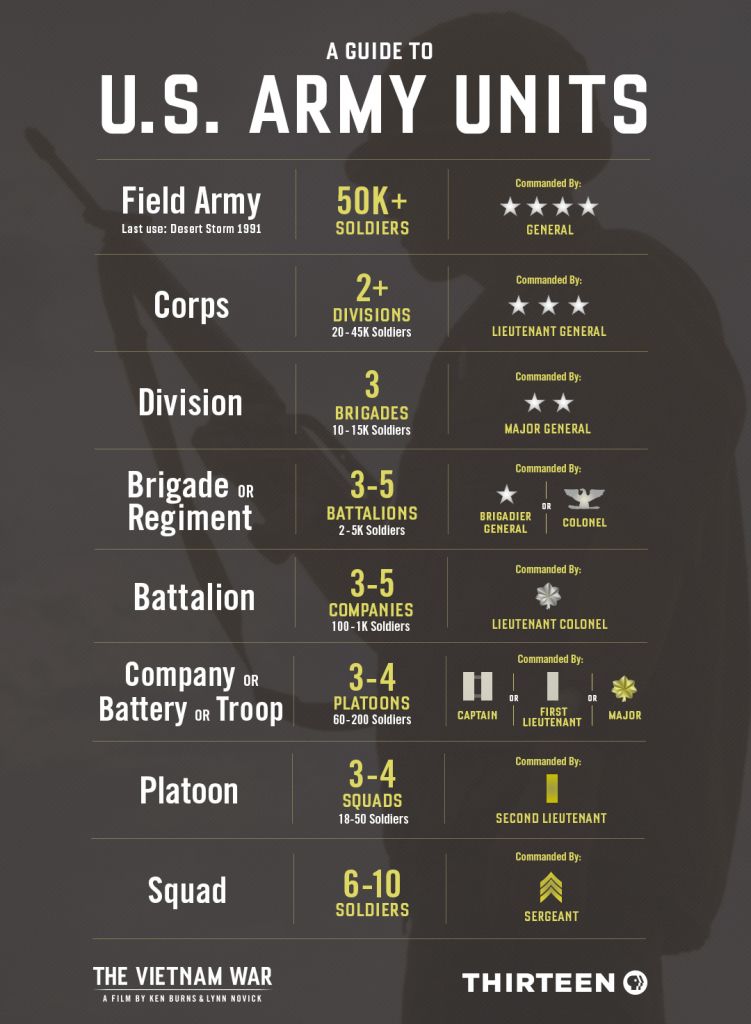
Corps
Military unit size designationWikipedia
1.1k
MENTIONS
65
EPISODES
50
PODCASTS
Search complete. 1095 mentions across 65 episodes found for "Corps".
Sep 12, 2026

Marge LauberNARRATOR
And in other news, the cleanup is continuing.
Marge LauberNARRATOR
With Superfund work at Upson Park in its final stage, the Environmental Protection Agency, the EPA, and Army Corps of Engineers are now focused on removing contaminated sediment from 18 Mile Creek north of Clinton Street to Harwood Street.
Marge LauberNARRATOR
Backhoes can be seen loading soil onto trucks that move along the creek to upload at a staging area near Mill Road.
Marge LauberNARRATOR
Kelly Gaffney, the EPA's remedial project manager at the Superfund site, said previous work along the section of the creek demolished six homes on Water Street with high levels of contamination and created area access roads along the banks.
Marge LauberNARRATOR
Last month, the EPA and Army Corps developed a staging area for shipping soil at the site from the former Lintoke plant.
Marge LauberNARRATOR
on the west side of mill street maniano supervisor for the faa's western new york remediation section said that truck loads of soil now could be seen moving away exchange club's american flag and other news is to honor the 9 11 victims the healing field a display of 1500 full-size american flags will be placed at granwick river park in north tonawanda by eric county sunrise exchange club from Friday through Sunday as a tribute of gratitude and remembrance.
Marge LauberNARRATOR
The third annual event's theme is Remember and Never Forget, and is a tribute to those who lost their lives and families that are forever impacted on the 25th anniversary of September 11.

Aaron BennettNARRATOR
Foreword.
Aaron BennettNARRATOR
An ability to furnish skilled forces to meet emergency situations on short notice has long been a hallmark of the Marine Corps.
Aaron BennettNARRATOR
When the call came for such a force to be dispatched to Korea on two July nineteen fifty, the Corps was handicapped by the strictures of a peacetime economy.
Aaron BennettNARRATOR
Nevertheless, a composite brigade consisting of a regiment and an air group was made available within a week's time.
Aaron BennettNARRATOR
With a reputation built largely on amphibious warfare, Marines of the First Brigade were called upon to prove their versatility in sustained ground action.
Aaron BennettNARRATOR
On three separate occasions within the embattled perimeter, south toward Saechan and twice along the Naktong River, these Marine units hurled the weight of their assault force at the enemy.
Aaron BennettNARRATOR
All three attacks were successful and at no point did Marines give ground except as ordered.
Aaron BennettNARRATOR
The quality of their performance in the difficult days of the Pusan Perimeter fighting made them a valuable member of the United Nations team and earned new laurels for their Corps.

Mark SmithNARRATOR
Chancellorsville and Gettysburg, Campaigns of the Civil War.
Mark SmithNARRATOR
By Abner Doubleday, Brevet Major General, USA, and late Major General, USV, commanding the First Corps at Gettysburg.
Mark SmithNARRATOR
Preface.
Mark SmithNARRATOR
In writing this narrative, which relates to the decisive campaign which freed the Northern States from invasion, it may not be out of place to state what facilities I have had for observation in the fulfillment of so important a task.
7 MINS LATER
Mark SmithNARRATOR
It is doubtful if Hooker had over 113,000 men for actual combat.
Mark SmithNARRATOR
Lieutenant Colonel W.T. Forbes, Assistant Adjutant General, who has had access to the records, after a careful estimate, places the number as follows.
Mark SmithNARRATOR
First Corps, 16,000.
Mark SmithNARRATOR
Second Corps, 16,000.

Mark SmithNARRATOR
Campaigns of the Civil War.
Mark SmithNARRATOR
By Abner Doubleday, Brevet Major General, USA, and late Major General, USV, commanding the First Corps at Gettysburg.
Mark SmithNARRATOR
Preface.
Mark SmithNARRATOR
In writing this narrative, which relates to the decisive campaign which freed the Northern States from invasion, it may not be out of place to state what facilities I have had for observation in the fulfillment of so important a task.
7 MINS LATER
Mark SmithNARRATOR
It is doubtful if Hooker had over 113,000 men for actual combat.
Mark SmithNARRATOR
Lieutenant Colonel W.T. Forbes, Assistant Adjutant General, who has had access to the records, after a careful estimate, places the number as follows.
Mark SmithNARRATOR
First Corps, 16,000.
Mark SmithNARRATOR
Second Corps, 16,000.

David PerryGUEST
Our c- our Army especially is a very interesting organization.
David PerryGUEST
Got a whole bunch of different constituent parts between the infantry, um, the different components of the i- infantry, the regiments, artillery, Army Corps that, that all tend to work in a lot of kinda independent and, um, distributed ways.
David PerryGUEST
So trying to make this all work in a coherent fashion's not gonna be super easy.
David PerryGUEST
Uh, but it, I definitely think it's doable what they've outlined.

Craig WatsonHOST
Throughout the Battle of Sinyavino, the Ladoga Military Flotilla was tasked with supporting the ground offensive.
Craig WatsonHOST
Its patrol ships and gunboats repeatedly closed on the lake's southern shore to bombard German positions, which inevitably made them targets for the bombers of the First Air Corps.
Craig WatsonHOST
Fortunately for the Soviets, German bombing accuracy proved dismal.
Craig WatsonHOST
The gunboat Beria was attacked about sixteen times over four days without suffering a single hit.
Craig WatsonHOST
The Knight's Cross holder, Kepler, was shot down on September the 3rd.
Craig WatsonHOST
Over on the land, German reinforcements had already stalled the forward momentum of the Soviet offensive during the previous week.
Craig WatsonHOST
On the 30th, Statikov committed the remainder of the 4th Guards Rifle Corps in a fresh bid to restart the drive towards Leningrad.
Craig WatsonHOST
But the original shock group had already been bled so severely that these additional rifle brigades only made marginal impacts against the entrenched German strongpoints around Sinyavino.

Amy SnivelyHOST
Instead, our intention is to document how our personnel quietly stepped up to fulfill a solemn duty supporting primary responders at a nation in mourning.
Regan LauritsenHOST
To help us understand the U.S. Army Corps of Engineers' vital role in those dark days, as well as the efforts to preserve this history for future generations, we are joined today by two guests from the U.S. Army Corps of Engineers Office of History, Chief Historian Dr. John Lundquist and Curator Eric Reiner.
Regan LauritsenHOST
Gentlemen, thank you so much for being here today with us.
Eric ReinertGUEST
Thank you.
Eric ReinertGUEST
Thank you.
Eric ReinertGUEST
It's a privilege to share how we work to preserve the culture and memories of that response.
Regan LauritsenHOST
Dr. Lundquist, for those who were working at the U.S. Army Corps of Engineers headquarters on that very morning in 2001, what was the immediate experience as the events began to unfold?
John LonnquestGUEST
it sort of played out at two levels.

AmandaHOST
It says, quote, In 1942, Mallinckrodt Chemical Works reached an exclusive agreement with the United States government's Manhattan Engineering District, an agency of the U.S. Department of Energy, to produce weapons-grade uranium at its factory north of downtown St. Louis.
AmandaHOST
From 1947, the company and the United States Army Corps of Engineers used a 21.7 acre property near Lambert Field for the purpose of burying steel drums containing the radioactive wastes from the downtown plant and other locations.
AmandaHOST
That site became the St. Louis Airport Storage Site, or SLAPS.
AmandaHOST
SLAPS.
7 MINS LATER
AmandaHOST
So that's kind of as far as they got in the early 2000s.
AmandaHOST
OK.
AmandaHOST
The Army Corps of this is again from CBS.
AmandaHOST
The Army Corps of Engineers has been in charge of the cleanup since 1997.

Peter HartHOST
You're so intellectual.
Peter HartHOST
And then on the 7th of April, he and his brigade, that's 150 Brigade, part of 50th Northumbrian Division, they were transferred to the 15th Corps.
Peter HartHOST
And they're moving to a nice, quiet area.
Peter HartHOST
It's where they're going, Gary?
Gary BainHOST
Razor sharp.
Gary BainHOST
We'll start with a quote, and this is Brigadier Hubert Rees.
Peter HartHOST
During the afternoon of the 8th, all brigadiers were sent for to meet the Corps and divisional commanders at Lestrem.
Peter HartHOST
The Corps commanders issued orders for the 50th Division to take over from the Portuguese.

MattHOST
by Ashley Sloboda of the Journal Gazette.
MattHOST
Wayne High School student Lydia Demecky joined the Air Force Junior Reserve Officers Training Corps as a quiet freshman who felt like she was just another name on the roster in her other classes.
MattHOST
Junior Rotzi made her feel seen, Demecky said, explaining the instructors quickly worked to get her to know everyone.
MattHOST
Now a junior and color guard commander, Demeke began this school year soon after helping to put the Fort Wayne Community Schools program in the spotlight.
MattHOST
This recognition, which is one of the highest honors a unit can receive, was the local program's first in almost 30 years, according to the school.
MattHOST
It's beautiful when all of us can come together to work for one goal, Demeke said.
MattHOST
It also helped us think of other things that we want to be able to achieve and future goals that we have for the Corps.
MattHOST
Only 24% of the 812 Air Force Junior ROTC units worldwide earned the honor, said Eric Pettyjohn, the regional director.
55 more episodes mention Corps.
Create an account to see the whole feed, search across every transcript, and follow the entities you care about.