Convolutional neural network
45
MENTIONS
29
EPISODES
21
PODCASTS
Search complete. 45 mentions across 29 episodes found for "Convolutional neural network".
Nov 4, 2026

speaker_2HOST
What about convolutional neural networks?
speaker_3GUEST
CNNs? Usually when I hear about CNNs, it's for image recognition.
speaker_2HOST
Right, like facial recognition.
speaker_3GUEST
Right, like facial recognition.
speaker_2HOST
Oh, that's clever.
speaker_3GUEST
It is.
speaker_3GUEST
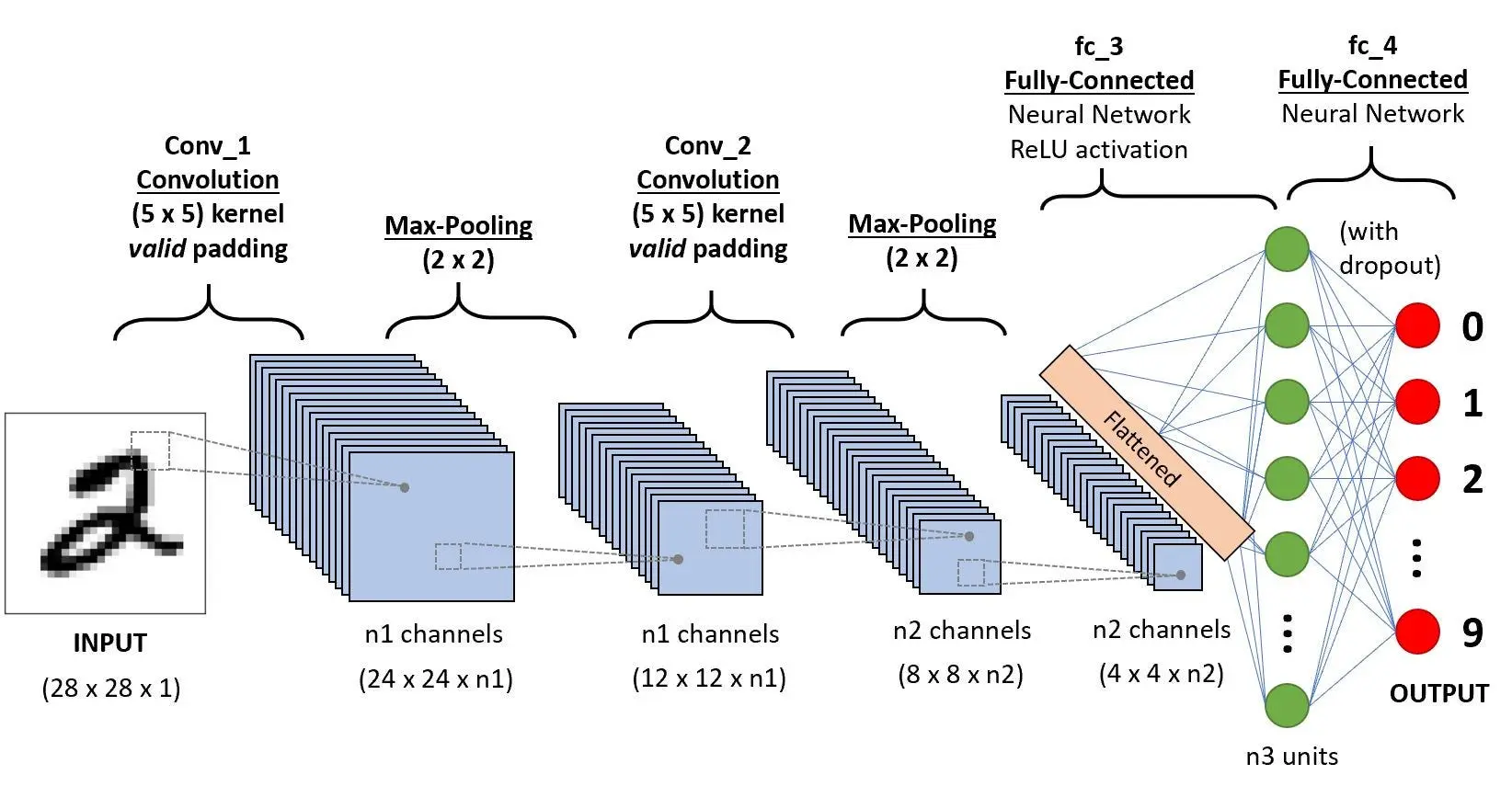
CNNs are brilliant at identifying spatial features.
speaker_3GUEST
They slide mathematical filters across that grid looking for localized patterns of firing neurons.

speaker_1HOST
Yeah.
speaker_1HOST
They used the metadata from those photos, the titles, descriptions, and hashtags to train convolutional neural networks, or CNNs, to predict words.
speaker_0HOST
Okay, 100 million photos sounds like the massive scale we're looking for.
speaker_0HOST
Were they predicting full natural language sentences?
23 MINS LATER
speaker_0HOST
Pooling is how the network shrinks the resolution of the image as it processes deeper layers, kind of summarizing the features.
speaker_0HOST
But what is the anti-aliased blur part actually doing?
speaker_1HOST
It solves a classic fragility in CNNs.
speaker_1HOST
In a standard convolutional network, when you reduce the resolution of an image, when you downsample it, the network can lose what's called spatial translation invariance.

Harrison KinsleyHOST
How do I do that? Okay, how about something with a few more lines of context and a few more lines required to complete the objective? In this case, we'll start with some common TensorFlow and Keras imports, and then we'll load in some data set that we have.
Harrison KinsleyHOST
And then again, we'll use a comment to suggest the following code should be a three layer ConvNet with a 64 by 64 imagery with five classes.
Harrison KinsleyHOST
I tried to pick sizes and classes that are a little more rare, so something like 28x28 and 10 classes is going to be super common, for example.
Harrison KinsleyHOST
64x64 might be common, I don't know.

Siddharth KaramchetiGUEST
And then separately, from the vision community that bled into the language community, we have convolutional neural networks.
Siddharth KaramchetiGUEST
And this is from a other course from Lina Vojta about using CNNs for language modeling.
Siddharth KaramchetiGUEST
And the idea here is we have this ability to do immense, deep, parallelizable training by kind of taking these like little windows, right? I'm going to look at, you know, each layer is only going to look at like the, you know, three word context at a time and going to give me representation.
Siddharth KaramchetiGUEST
But if I stack this enough times and I have these residual connections that combine, you know, earlier inputs with later inputs, by the time I'm like 10 layers deep, I've seen everything in the window.
Siddharth KaramchetiGUEST
But I need that depth and depth That's kind of a drawback.
Siddharth KaramchetiGUEST
But they're really cool, powerful ideas here.
Siddharth KaramchetiGUEST
And I'd actually say that the transformers have way more to do with CNNs and the way that they behave than the way RNNs behave.
Siddharth KaramchetiGUEST
So we have this idea of a CNN layer kind of having multiple filters, multiple kernels, different ways of looking at and extracting features from an image or features from text.
Siddharth KaramchetiGUEST
So you can use that in your projects down the road.
Siddharth KaramchetiGUEST
Cool, so just to kind of blaze past things, I kind of started by talking through where things were pre-2017 when the Transformer paper came out on both the RNN and the CNN side, and kind of tied a lot of the innovation around the transformer to how modern convolutional neural nets, specifically residual nets, were working.
Siddharth KaramchetiGUEST
And kind of the connections there were closer than the connections to RNNs.
Siddharth KaramchetiGUEST
Kind of walk through how we got to the self-attention block with this fancy code, which is basically just saying like you're splitting your heads and you can kind of think of your heads in a self-attention block as the different kind of kernels or filters in a CNN layer.
Siddharth KaramchetiGUEST
And then kind of closing with this full self-attention block, where we're actually doing the RNN-style attention.
Siddharth KaramchetiGUEST
And then this question of this non-linearity that we're adding at the end.
Siddharth KaramchetiGUEST
Because without this non-linearity and this sort of MLP that we're adding to the end of each transformer block, we're really just doing weighted averages of linear transforms of values.
Siddharth KaramchetiGUEST
OK, so if we kind of take this as ground truth, starting point for what a transformer block looks like, very much inspired by the ideas of CNNs and RNNs with attention at the time, we have this residual connection here, which is kind of just adding x over and over again as we stack more and more layers together.
Kostas AlexisGUEST
We leave that on the soft core arm that we have lying around there on FPGA.
Kostas AlexisGUEST
CNNs can work very well on FPGAs.
Kostas AlexisGUEST
So we try also with hardware.
Kostas AlexisGUEST
I think eventually, because putting good hardware or special hardware for a case is one thing that you can do.

Jason CampagnaGUEST
So on-prem versions of a factory, co-location, the idea of a neocloud or an NCP, and of course, public cloud.
Brian FeldtHOST
I mean, the large pharmas of the world, certainly on the cutting edge, are you thinking that some of those other types of models, the CNNs, the world models, things like that, those are going to be eventually used in all enterprises across the board?
Jason CampagnaGUEST
Yeah, I think it's a matter of time.
Jason CampagnaGUEST
Right now, you're starting to see more like SLM, TLM, small language model, tiny language models.

speaker_5HOST
Specifically, they utilized a convolutional neural network to act as the ultimate detector.
speaker_6HOST
Yes.
speaker_6HOST
Convolutional neural networks, or CNNs, are a specific architecture of artificial intelligence that are exceptionally good at processing visual data.
speaker_6HOST
They are designed to recognize complex mathematical patterns in images, even when those patterns are buried inside a massive amount of visual noise.
speaker_5HOST
But I have to push back here on behalf of anyone listening who might be, you know, naturally skeptical of AI.
speaker_6HOST
And that lack of context causes endless false alarms.
speaker_6HOST
Intelligent security systems discard simple motion detection in favor of convolutional neural networks or CNNs.
speaker_5HOST
What do CNNs do?
speaker_6HOST
They process high definition video feeds in real time.
speaker_6HOST
A CNN doesn't just look for changing pixels.
19 more episodes mention Convolutional neural network.
Create an account to see the whole feed, search across every transcript, and follow the entities you care about.