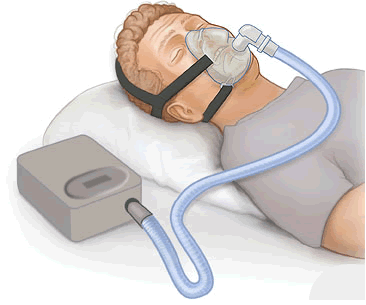
Continuous positive airway pressure
1k
MENTIONS
304
EPISODES
259
PODCASTS
Search complete. 1026 mentions across 304 episodes found for "Continuous positive airway pressure".
Sep 21, 2026

GriffeyHOST
Right? Oh, my gosh.
GriffeyHOST
And she's just fucking, like, CPAP breathing.
GriffeyHOST
Dude, that was hilarious.
GriffeyHOST
I liked,

Anjali Tiku OwensGUEST
parallels in other diseases and extrapolating to non-obstructive HCM.
Anjali Tiku OwensGUEST
And what I mean by that is we take a deep dive and really treat comorbidities that worsen symptoms, whether that's obesity with the GLP-1 agent, whether that's sleep apnea with CPAP, whether that's diabetes, hypertension, we treat all of those things.
Anjali Tiku OwensGUEST
And in addition, we sometimes use SGLT2 inhibitors or MRAs in patients that have the more heart failure congestive phenotype of non-obstructive HCM.
Anjali Tiku OwensGUEST
And And we work with those combination of therapies to see if we can affect patient symptoms and their functional status.

Michelle HjelmGUEST
And sleep studies are really the gold standard for diagnosing sleep disordered breathing.
Michelle HjelmGUEST
So if someone's coming in telling me, "We're snoring, gasping, pausing," we're going to proceed with a sleep study to really as- assess the severity of that finding and to know whether or not it needs an intervention like surgery or CPAP, um, versus is it something where we can keep an eye and it's more of a, what we call cosmetic snoring, or you just have the upper airway findings that make turbulent airflow and make you a little bit of a noisy breather.
Michelle HjelmGUEST
And so most of the time, if we can find a reasonable place to start, we can actually treat and do interventions without ordering a sleep study.
Liz DanielsHOST
Oh, that's so cool.
15 MINS LATER
Michelle HjelmGUEST
That's a wonderful question.
Michelle HjelmGUEST
I think that is probably one of the hardest parts of sleep medicine, is the idea that most changes to sleep architecture and patterns, i.e., how is your body gonna rewire its neurocircuitry, it's in the scale of six to 12 weeks.
Michelle HjelmGUEST
Any treatment modality, even if I'm starting someone on s- CPAP for sleep apnea, we're not gonna see improvement in their sleep quality in that six to 12... for at least six to 12 weeks.
Liz DanielsHOST
Mm.

Pedro CuartasGUEST
But then here, let me expose you in an immersive interactive style.
Pedro CuartasGUEST
You learn just about, okay, you learn about your CPAP, Mouthpiece, Inspire, GLP-1s on a presentation, great.
Pedro CuartasGUEST
We have some interactive time like a Q&A, and then we go into another room and we have an immersive time with our representatives of those industries, of those components.
Pedro CuartasGUEST
And these physicians who usually never see what an inspire or oral appliance may look like or, you know, all these details.
StaceyHOST
I got in as an associate dentist with a dentist.
StaceyHOST
I was so blessed, lucky that I got in with a doctor who was teaching me dental sleep medicine.
StaceyHOST
And then my dad was CPAP intolerant.
StaceyHOST
So right out of the gate, 20 plus years ago, I'm doing this.

Brian WojeckGUEST
So Sermont-OSA included patients that were It had actually two trial populations.
Brian WojeckGUEST
You had one population that was adherent to CPAP and one population that was not.
Brian WojeckGUEST
Patients on average had a class 2 obesity, so VMI between 35 to 40, the 38 range, if I'm recalling correctly.
Brian WojeckGUEST
And so that's around that VMI range.
Brian WojeckGUEST
And these, again, are averages.
Brian WojeckGUEST
So we can get into the weeds on what that means for an individual, but it's a really substantial difference.
Brian WojeckGUEST
That doesn't mean that these patients should not be treated with CPAP, and that CPAP isn't still a mainstay therapy, but it's a good adjunct.
Brian WojeckGUEST
In the past, we would say once someone is on PAP, something like CPAP, there's different kinds of pressure.

Ozzy AsadiGUEST
You don't necessarily even have to intubate right off the bat.
Ozzy AsadiGUEST
Sometimes even adding a little bit of CPAP can control your pulmonary blood flow.
Ozzy AsadiGUEST
But if that fails and your patient continues to deteriorate, That's when we would intubate those patients.
Ozzy AsadiGUEST
But the concept of introduction of PEEP and increasing your PVR, decreasing your pulmonary blood flow, especially if you think that's the mechanism by which they're failing.

Eric AxeneHOST
Be mindful of other people's space and don't always be in your cell phone.
Eric AxeneHOST
You know, if you're a loud snorer, please go get CPAP.
Eric AxeneHOST
we had what six of us go to sturgis all in an rv six six dudes living in an rv for six days
Matt BallHOST
we all overloaded that circuit with our c-pad machines

Mike GibsonHOST
He's like the...
Steve HallerHOST
Got the CPAP mask.
Steve HallerHOST
Yeah, he's
Mike GibsonHOST
like huffing a few minutes from his...

Gill BairdHOST
BMI being one of the reasons that we say no to a lot of procedures.
Gill BairdHOST
Other health conditions like a CPAP mask, which tends to come with people in hospital.
Gill BairdHOST
in higher BMI brackets and also type 1 diabetic patients for gastric sleeve procedures.
Gill BairdHOST
That is probably the number one question I get asked in relation to saying no to patients for medical criteria.

Cynthia CoufalHOST
If you are a snorer, you could maybe be getting a...
Cynthia CoufalHOST
CPAP machine, which helps you breathe in the night instead of snoring.
Cynthia CoufalHOST
There's like so many things that you can try to figure out about sleep and make your sleep better.
Cynthia CoufalHOST
And it's possible you need extra support or help with that.
294 more episodes mention Continuous positive airway pressure.
Create an account to see the whole feed, search across every transcript, and follow the entities you care about.