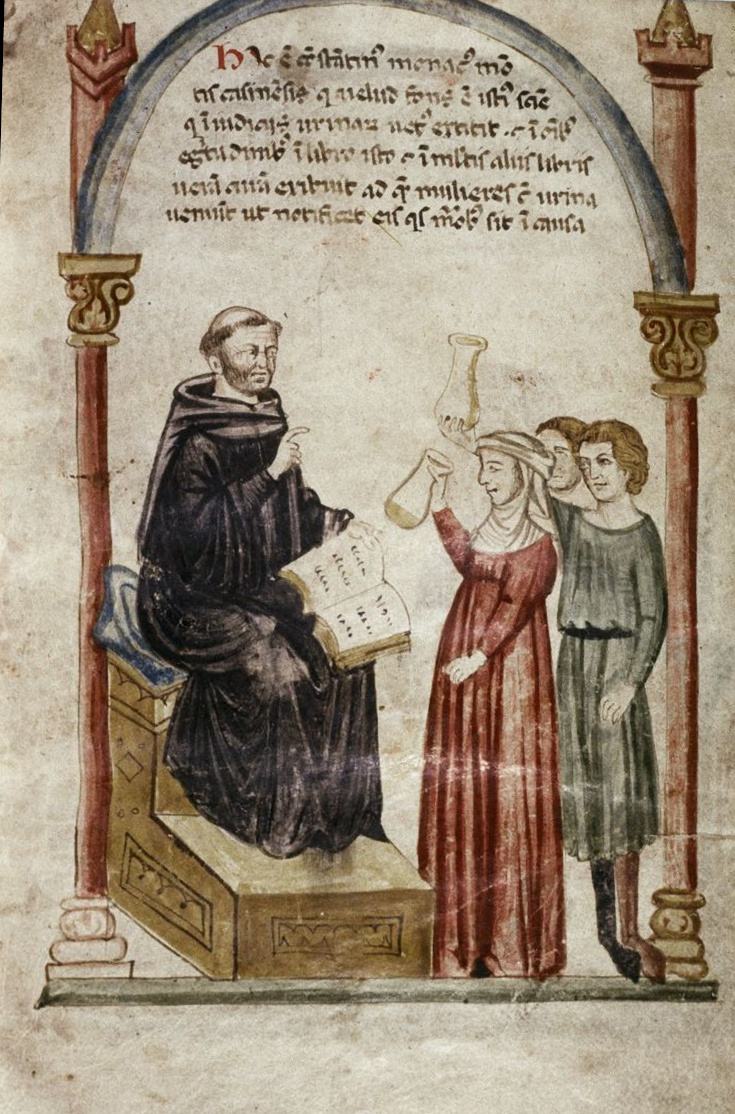
Constantine the African
PhysicianWikipedia
2
MENTIONS
1
EPISODES
1
PODCASTS
Search complete. 2 mentions across 1 episode found for "Constantine the African".
Oct 20, 2026

Lawrence TraskNARRATOR
The Antidotarium of Nicholas Salernitanus, about 1100, became the popular pharmacopoeia of the Middle Ages, and many modern preparations may be traced to it.
Lawrence TraskNARRATOR
The most prominent man of the school is Constantinus Africanus, a native of Carthage, who, after numerous journeys, reached Salernum about the middle of the 11th century.
Lawrence TraskNARRATOR
He was familiar with the works both of the Greeks and of the Arabs, and it was largely through his translations that the works of Rases and Avicenna became known in the West.
Lawrence TraskNARRATOR
One work above all others spread the fame of the school, the Regimen Sanitatis, or Flos Medicinae, as it is sometimes called, a poem on popular medicine.
24 MINS LATER
AvayiNARRATOR
But he does not seem to have done much directly for medicine.
AvayiNARRATOR
The Greco-Arabic learning passed into Europe through two sources.
AvayiNARRATOR
As I have already mentioned, Constantinus Africanus, a North African Christian monk, widely travelled and learned in languages, came to Salernum and translated many works from Arabic into Latin, particularly those of Hippocrates and Galen.
AvayiNARRATOR
The Pantegni of the latter became one of the most popular textbooks of the Middle Ages.