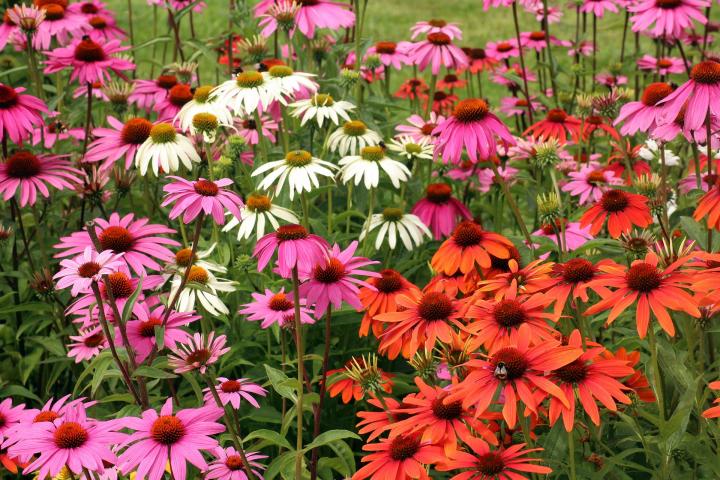
Rudbeckia
PlantWikipedia
30
MENTIONS
18
EPISODES
15
PODCASTS
Search complete. 30 mentions across 18 episodes found for "Rudbeckia".
Sep 10, 2026

JadenHOST
They're going to start scrolling now.
JadenHOST
Marsh Marigold, Foxglove, Black Eyed Susans.
AnnaHOST
I thought Foxglove was invasive.
JadenHOST
Not some of it.

AnneHOST
So what else has been happening?
CoxieHOST
So, talking flowers, I think more should be said about rudbeckia.
CoxieHOST
Is that how you pronounce it? Rudbeckia.
CoxieHOST
Rudbeckia.
CoxieHOST
I don't know what rudbeckia is.
CoxieHOST
They're flowers.

Anne BrooksHOST
So what else has been happening?
Martin CoxeyHOST
So, talking flowers, I think more should be said about rudbeckia.
Martin CoxeyHOST
Is that how you pronounce it? Rudbeckia.
Martin CoxeyHOST
Rudbeckia.
Martin CoxeyHOST
I don't know what rudbeckia is.
Martin CoxeyHOST
They're flowers.

Ken LaneHOST
All right, enough about that.
Ken LaneHOST
Black-eyed Susan, Udubeckia.
Ken LaneHOST
That's another one.
Ken LaneHOST
Great big flower.
Ken LaneHOST
It will keep blooming like nonstop.
Ken LaneHOST
It's always got more flowers coming up.
Ken LaneHOST
But I like this one because the butterflies love Black-eyed Susan.
Ken LaneHOST
and so do the birds.

Cori KondasGUEST
Butterflies, the Monarch Butterflies, well, thank you for it.
Cori KondasGUEST
And then Summer to Fall, Black-Eyed Susans, Coneflower, as in the purple Echinacea purpurea, Monarda Spotted Bee Balm, Purple Anise Hyssop, Goldenrod, and New York Aster, which is a Connecticut native, believe it or not.
Kevin GallagherHOST
Yeah, that sounds like an impressive list.
Kevin GallagherHOST
So where can people get these? There's some nurseries in Connecticut that sell things like this?

Dee NashHOST
Okay, question of the week.
Dee NashHOST
This is my favorite question of the year.
Carol MichelHOST
What's really wrong with Carol's black-eyed Susans? You know, I said that they were kind of dying out, and I thought it was because...
Carol MichelHOST
No, they still
Dee NashHOST
look very good, and...

Ashley ElenbaasHOST
They're fading.
Ashley ElenbaasHOST
There's just a few little pollinators getting the last bits they can, but most of them are actually finding other plants that are blooming like the Black-Eyed Susans and the Echinacea.
Ashley ElenbaasHOST
Some of those are still in their fullness.
Ashley ElenbaasHOST
But yeah, again, we're past the peak, past the prime.

Natalie TylerGUEST
Yeah, yeah.
Natalie TylerGUEST
The funny is some of the names, because you've got like Black-Eyed Susans.
Natalie TylerGUEST
I don't know why that's called that.
Natalie TylerGUEST
It's like one's called Timothy.

Layne AngeloHOST
Right.
Lisa Mason ZieglerHOST
Rudbeckia, Rudbeckia is day and night difference.
Lisa Mason ZieglerHOST
They bloom earlier, they bloom taller, there's more blooms.
Lisa Mason ZieglerHOST
But some plants have just proven, as we've already talked about, strawflowers and Lizzy just didn't pl- pan out that way.
Carol MichelHOST
Okay.
Carol MichelHOST
And then Black-Eyed Susans, I know you have a love-hate relationship with them.
Carol MichelHOST
Many people do.
Carol MichelHOST
No,
8 more episodes mention Rudbeckia.
Create an account to see the whole feed, search across every transcript, and follow the entities you care about.