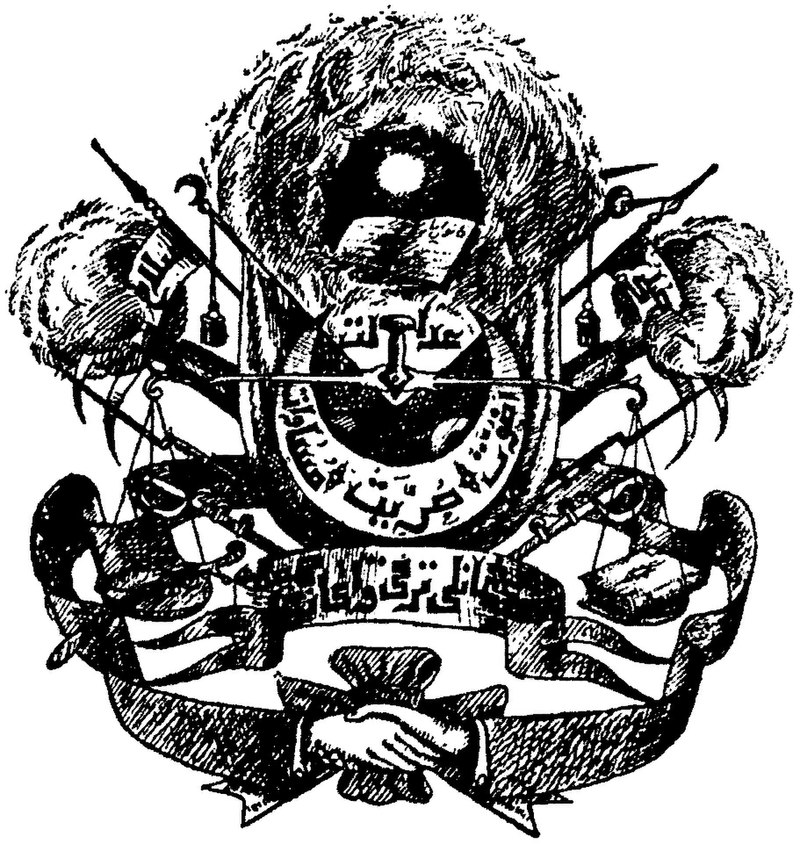
Committee of Union and Progress
Political partyWikipedia
10
MENTIONS
6
EPISODES
5
PODCASTS
Search complete. 10 mentions across 6 episodes found for "Committee of Union and Progress".
Oct 6, 2026

speaker_0NARRATOR
Throughout the Ottoman military academies of Macedonia and beyond, a generation of young officers is coming of age with a similar unease, a similar sense that something in the imperial system has broken and needs repair, whether through reform from within or upheaval from without.
speaker_0NARRATOR
Some of these young men will go on to form or join the secret societies that eventually coalesce into the Committee of Union and Progress, the organization that will, within a few short years, force the sultan to restore the long-suspended Ottoman constitution.
speaker_0NARRATOR
Mustafa Kemal, still a student is at the very edge of this ferment, absorbing its energy, testing its ideas in private conversation, forming the political instincts that will define the rest of his life, though he has not yet at this stage committed himself fully to any organized movement.
speaker_0NARRATOR
He is, for now, still primarily a student, still primarily concerned with excelling in his coursework, still primarily focused on the more immediate ambition of advancing through the Ottoman military education system toward a commission as an officer.
24 MINS LATER
speaker_0NARRATOR
Communication with sympathizers elsewhere in the empire is slow, dangerous, and unreliable, dependent on couriers and coded letters and the fragile trust of men who might, under pressure, betray their comrades to save themselves.
speaker_0NARRATOR
And Mustafa Kemal, whatever his gifts as an organizer and a strategist, is operating far from the empire's true centers of power, far from Constantinople, and more importantly, far from Salonika and Manastir, the twin capitals of an already existing and far more extensive underground network that he does not yet control and does not yet fully know.
speaker_0NARRATOR
That network calls itself the Committee of Union and Progress, the CUP, Ittihad ve Terakki Cemiyeti, and it has been growing for years in the shadow of the Ottoman Third Army's Macedonian garrisons, drawing together officers, bureaucrats, and civilian intellectuals united by the same conviction that has driven Mustafa Kemal to found his own smaller society in Damascus, that Sultan Abdul Hamid II's absolutist rule has become an existential threat to Ottoman survival, and that only a restoration of constitutional government, forced if necessary by the army itself, can arrest the empire's slide toward dismemberment at the hands of the European powers and the restless nationalisms of the Balkans.
speaker_0NARRATOR
When word of the CUP's scale and organization eventually reaches Mustafa Kemal in Damascus, sometime in 1906 and 1907, it arrives with the particular sting of a man who realizes his own initiative, however sincere and however dangerous, has been outpaced by history moving faster and further than he anticipated.

Chris CoppolaHOST
There was still a monarchy even under their revolt.
Chris CoppolaHOST
It's just the powers of the sultan versus the powers of the military government the Young Turks brought in, the Committee of Union and Progress, shifted back and forth a couple of different times.
Chris CoppolaHOST
There's no reason to believe that, that, that struggle would necessarily change.
Evan BuckHOST
Yeah, exactly.
Chris CoppolaHOST
that we're not doing this um we're not but but There were a series of wars immediately preceding the First World War.
Chris CoppolaHOST
And one of the outgrowths of that was the Committee of Union and Progress, the Young Turks, revolt
Evan BuckHOST
against the Sultan.
Evan BuckHOST
No, not Senkweger.

Matthew GhazarianHOST
And it was out from Stanford University Press in 2023.
Matthew GhazarianHOST
Remnants takes up the aftermaths of the expulsion and extermination of Ottoman Armenians ordered by the Committee of Union and Progress, members of which had recently taken over the Ottoman government in a coup and cast its lot with the Central Powers of World War I.
Matthew GhazarianHOST
Leading up to the war, during the war, and in the years that followed, not only Armenians but also Assyrians, Greeks, Kurds, Alevis, and others faced accusations of being disloyal and were ordered to be expelled, massacred, or worse.
Matthew GhazarianHOST
Historians often mark the Armenian chapter in this broader unmixing of peoples in 1915 as the Armenian Genocide.

Matthew GhazarianHOST
And it was out from Stanford University Press in 2023.
Matthew GhazarianHOST
Remnants takes up the aftermaths of the expulsion and extermination of Ottoman Armenians ordered by the Committee of Union and Progress, members of which had recently taken over the Ottoman government in a coup and cast its lot with the Central Powers of World War I.
Matthew GhazarianHOST
Leading up to the war, during the war, and in the years that followed, not only Armenians but also Assyrians, Greeks, Kurds, Alevis, and others faced accusations of being disloyal and were ordered to be expelled, massacred, or worse.
Matthew GhazarianHOST
Historians often mark the Armenian chapter in this broader unmixing of peoples in 1915 as the Armenian Genocide.

Greg GiordanoNARRATOR
For thirty years they had labored for the overthrow of the misrule of Sultan Abdul Hamid II.
Greg GiordanoNARRATOR
Their headquarters had been in Paris, but since 1904 they had been forming revolutionary organizations in Turkey under a central body called the Committee of Union and Progress.
Greg GiordanoNARRATOR
The support of the movement came from the professional classes and from progressive officers in the army, without whose help it could not have succeeded.
Greg GiordanoNARRATOR
Some days before the proclamation of the Constitution, the Sultan learned of disaffection in the army of European Turkey, and vainly tried to quell it, then being informed that unless he granted a constitution, thirty thousand soldiers would march upon Constantinople, he yielded.