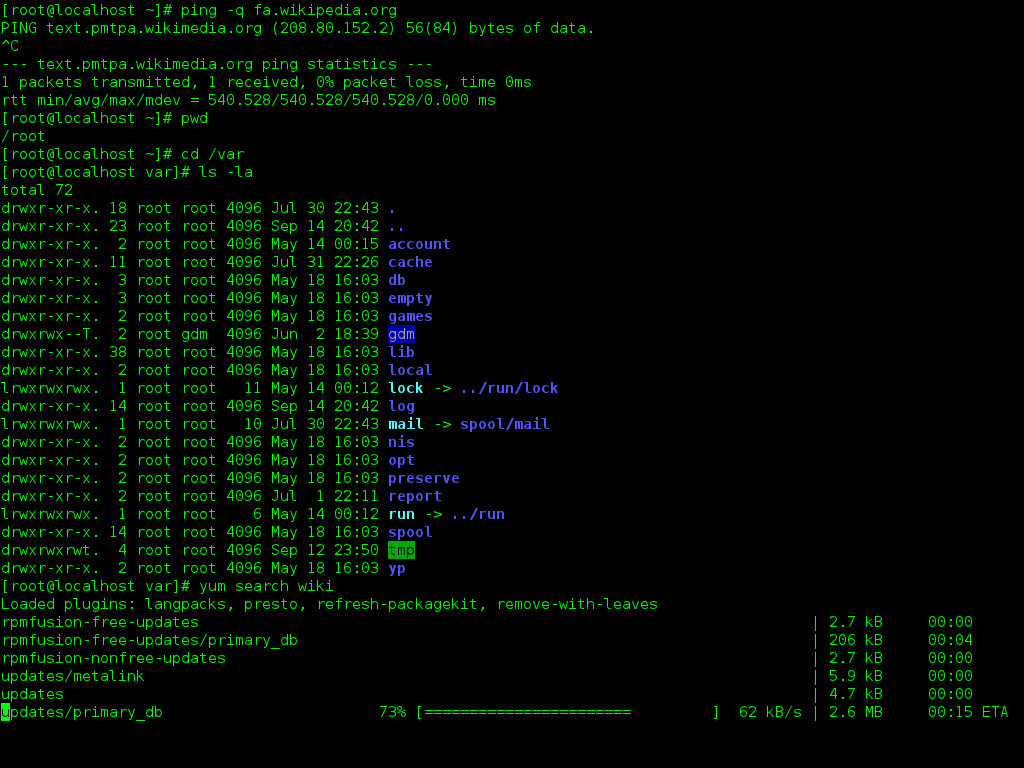
Command-line interface
Software platformWikipedia
877
MENTIONS
306
EPISODES
222
PODCASTS
Search complete. 877 mentions across 306 episodes found for "Command-line interface".
Oct 26, 2026

CJ ReynoldsPANELIST
So if you haven't heard of it, void.cloud is... is essentially like a zero-config way to deploy to Cloudflare.
CJ ReynoldsPANELIST
Now, deploying to Cloudflare is already pretty easy, but the Void team built the CLI, so all you have to do is say void deploy, and it automatically deploys to Cloudflare for you, and you don't have to manage the Wrangler config and all of the other stuff.
CJ ReynoldsPANELIST
So that's one aspect of it, like the Void platform.
CJ ReynoldsPANELIST
I believe they also, the way that it deploys isn't necessarily directly to your own Cloudflare dashboard.
35 MINS LATER
Scott TolinskiHOST
news here, yeah.
CJ ReynoldsPANELIST
Big news.
CJ ReynoldsPANELIST
And I want to up front with some clarifications because it was a little bit confusing to hear that OpenCode was hacked because for a lot of people, you install OpenCode as a CLI tool and then you just use that to, you know, talk to your agents, write code or whatever.
CJ ReynoldsPANELIST
That is not what was hacked, right? If you use OpenCode...

James MontemagnoHOST
Here's this stuff, blah, blah, blah.
James MontemagnoHOST
And they even have like a, they have a, they have a, uh, legitimately like the Maui CLI, you can say Maui AI list skill.
James MontemagnoHOST
And there's also like Maui ad skill Xcode migration.
James MontemagnoHOST
So like you can literally do this, run the skill.

G_catHOST
yeah but basically um uh yeah we do use uh paco for uh for this uh for the server uh we have like an automated system what paco does if you don't if you're notified of uh or you are just unfamiliar with it it's basically a cli uh terminal tool that allows you to automate a bunch of pack developer stuff, so you can add mods using it, you can compile the pack using it into both, you know, Moderns and Curseforge formats, as well as, I think it compiles, yeah, it compiles the server pack as well, you can make the server pack.
SiuolHOST
That's smart.
G_catHOST
yeah and Paco is 100% not AI because I know the guy who developed it and yeah and Paco has also this like feature where you can add stuff just based on names I don't know what Paco specifically does for this I guess it's like a GUI kind of thing where instead of instead of you know which is primarily CLI.
G_catHOST
This is like a graphical interface you can interact with.
G_catHOST
Again, I haven't fucked around with this.

Josef StrzibnyGUEST
or there was a potential user customer on our customer support chat, which I'm actually not part of.
Josef StrzibnyGUEST
I don't reply there every day, but I was tagged by a colleague because there was some issue, potential issue with timing out request with our CLI.
Josef StrzibnyGUEST
So I went ahead and simply quickly made a fix for that so they can continue.
Joel Gaff Jr.HOST
So you're working a lot of different angles then of, uh, of the company.
32 MINS LATER
Josef StrzibnyGUEST
I'm just thinking now if it's really worth it.
Josef StrzibnyGUEST
You can do a lot now with agents.
Josef StrzibnyGUEST
So, for example, you can use Cloudflare MCP or CLI to do a lot of stuff for you.
Josef StrzibnyGUEST
So these things definitely improve.

Nathaniel WhittemoreHOST
I, like many of you, have used lots and lots of different tools and harnesses and models and stacks for building this year.
Nathaniel WhittemoreHOST
We did OpenClaw for a while, and of course Codex and Cloud Code in both their application as well as the CLI versions, third-party tools like Cursor.
Nathaniel WhittemoreHOST
But for me, where things have landed is pretty consistently is Claude Code, with Opus 55 being the default model, and the effort settings usually on high or extra.
Nathaniel WhittemoreHOST
Now I will frequently build inside Codex using Astra as well, specifically to get native access to the image generation models.

JasminHOST
Or what is it called? What is the name of the HP's command line tool for Linux?
VedranHOST
SSACLI?
JasminHOST
Yes.
JasminHOST
For light
VedranHOST
controllers?
JasminHOST
Yes, yes, yes.
JasminHOST
SSACLI.
JasminHOST
But there is a lot of other tools that are similar names.

Aaron DoughtyHOST
And when this game crashes, it doesn't crash the computer, give you a guru.
Aaron DoughtyHOST
It just dumps you out the CLI.
Aaron DoughtyHOST
That's what happens.
Aaron DoughtyHOST
And so...

Aaron DoughtyHOST
And when this game crashes, it doesn't crash the computer, give you a guru.
Aaron DoughtyHOST
It just dumps you out the CLI.
Aaron DoughtyHOST
That's what happens.
Aaron DoughtyHOST
And so...

Artificial IntelligenceNARRATOR
For AI output, the file is a manifest.
Artificial IntelligenceNARRATOR
The CLI builds it from four things, and the result in the repository is a single canonical JSON line, keys in fixed alphabetical order, no trailing newline, so the file hashes the same on every machine, sadface hashes shortened here.
Artificial IntelligenceNARRATOR
The full file is The manifest is then registered with two signers, the AI operator and the human reviewer.
Artificial IntelligenceNARRATOR
This exact example is Livon Base Mainnet, at a station, registered in 0x38C7EEF6, signed by the AI operator's key offline, EIP712, and relayed in 0x8662EE13, then signed by the human reviewer in 0xF779A3E5.
Artificial IntelligenceNARRATOR
status change one byte of the prompt of any input or of the answer and the manifest hash changes so the lookup returns be precise about what this proves it proves which exact bytes each wallet approved and when it does not prove that the named model produced the output is a string the operator writes proving model execution is a different problem tease zkml and out of scope here architecture four pieces one solidity 228 lines on base main ad at no owner no constructor arguments no upgrade path source verified on sourceify exact match a record holds the hash a document type a project reference an optional link to the document it amends and up to 16 required signers 2.
Artificial IntelligenceNARRATOR
CLI.
Artificial IntelligenceNARRATOR
Node.
Artificial IntelligenceNARRATOR
3.

Ben GalbraithGUEST
And, and, and so, so I have that layer.
Ben GalbraithGUEST
It's just a CLI app running on my Mac.
Ben GalbraithGUEST
It has these connectors that are just constantly updating everything.
Ben GalbraithGUEST
Then I have web apps that I'm building.
296 more episodes mention Command-line interface.
Create an account to see the whole feed, search across every transcript, and follow the entities you care about.