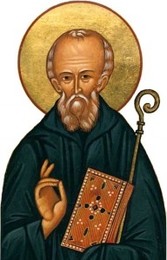
Columba
Irish abbot and missionaryWikipedia
93
MENTIONS
42
EPISODES
40
PODCASTS
Search complete. 93 mentions across 42 episodes found for "Columba".
Oct 28, 2026

Raymond McCartneyGUEST
Went to Long Tower Primary School.
Raymond McCartneyGUEST
And then I went to St. Colm's.
Raymond McCartneyGUEST
So you were close to the school.
Raymond McCartneyGUEST
Typical...
Raymond McCartneyGUEST
from each other because it's just but so so that was it school went along to our boys club very much involved in that uh you know there you learn how to you know just when you're in a boys club whatever people were playing you played yeah with indoor football how did you get on
Ro BoyleHOST
academic late school
Raymond McCartneyGUEST
well i often say it was a wasted opportunity right i mean you hit sort of talking in their parents but i i would have passed 11 plus so we went to st columns two of my older brothers where St. Colm's one went, the Strand Tech one went, the St. Joseph's and done fairly well but I done my own levels and now this is your first excuse of failure so I done my own levels in 1972 at that stage school wasn't what it meant and then I was arrested in 1972
Ro BoyleHOST
72 was, I think, out of all the troubles, was the most atrocities and things that happened, wasn't it?

Lynne NiemanHOST
There is a wee hill, but has these stunning beaches.
Lynne NiemanHOST
And then you've got the history of the abbey there, the Iona Abbey that St. Columba founded.
Lynne NiemanHOST
Totally different atmosphere.
Lynne NiemanHOST
I loved it so much that first time that as I was planning the trip with my friend Mindy, who was just here, she hadn't been there.

WHOST
I'm going to call upon two saints for this.
WHOST
First is St. Columba.
WHOST
Saint Columba, and I did an episode on this years ago, he is one of the first historical recordings of the Loch Ness Monster.
WHOST
He was traveling to evangelize the pagans throughout Scotland.

Carmen CarrionSOUNDBITE_SPEAKER
The year is 565.
Carmen CarrionSOUNDBITE_SPEAKER
A missionary named Columba is traveling through the land of the Picts, in the far north of what is not yet Scotland.
Carmen CarrionSOUNDBITE_SPEAKER
Everything we know about this comes from a book called The Life of Saint Columba, written by the abbot Abdeman, roughly a century later.
Carmen CarrionSOUNDBITE_SPEAKER
which makes it by a wide margin the oldest written account of a monster in this water and notice please what the account actually is it is not a fisherman glimpsing a hump it is a funeral in progress columba and his followers arrive at the banks of the river ness the river that pours out of the lock to find the local people burying a man.
Carmen CarrionSOUNDBITE_SPEAKER
When they asked what happened, they are told, he was swimming, and a beast in the water seized him and savaged him and dragged him under.

Beth ThomasNARRATOR
The regularity with which the bands pass under and over, even in the most complicated patterns, is very remarkable and errors are rarely to be detected the spirals which occupy the four panels at the ends and sides of the frame are also typical of this school of art the firmness and accuracy of their drawing testify to the excellent eyesight as well as to the steady hand and technical skill of the artist The prevailing feature of Celtic ornament, as shown in illuminated manuscripts, is the geometrical nature of the designs.
Beth ThomasNARRATOR
The human figure when introduced into the native Irish books is absurdly grotesque, for its delineation seems to have been beyond the artist's skill, or, more correctly, to have lain in another category and to have belonged to a style distinct from that in which he excelled at a later period figure drawing became a marked characteristic of english decorated manuscripts and english artists attained to a high degree of skill in this branch of their art bright colours were employed in the irish manuscripts but gold and silver are conspicuous by their absence and did not appear in the manuscripts of these islands until celtic art had been touched by continental influence the tradition that the book of kells was written by the great st columba himself reminds us that at this period nearly all books were the handiwork of monks and ecclesiastics and in all monasteries the transcribing of the scriptures and devotional works was part of the established order of things columba we know was a famous scribe and took great pleasure in copying books he is said to have transcribed no less than three hundred volumes and all books written by him were believed to be miraculously preserved from danger by water as an instance of this adamnan relates the following story a book of hymns for the office of every day in the week, and in the handwriting of St. Columba, having slipped, with the leathern satchel which contained it, from the shoulder of a boy who fell from a bridge was immersed in a certain river in the province of the laguenians leinster this very book lay in the water from the feast of the nativity of our lord till the end of the paschal season and was afterwards found on the bank of the river uninjured and as clean and dry as if it had never been in the water at all and we have ascertained as undoubted truth continues adamnan from those who were well informed in the matter that the like things happened in several places with regard to books written by the hand of st and he adds that the account just given he received from certain truthful excellent and honourable men who saw the book itself perfectly white and beautiful after a submersion of so many days as we have stated by irish missionaries the art of book-writing was taught to britain chiefly through the school of lindisfarne where was produced the famous lindisfarne gospels or the book of st cuthbert This magnificent work, which is one of the choicest treasures of the British Museum, was as highly esteemed by its contemporaries as by ourselves, though perhaps not for quite the same reasons.
Beth ThomasNARRATOR
Tradition has it that when Lindisfarne was threatened by the Northmen and the monks had to fly, they took with them the body of St. Cuthbert in obedience to his dying behest, and this book.
Beth ThomasNARRATOR
they attempted to seek refuge in ireland but their boat had scarcely reached the open sea when it met a storm so violent that through the pitching of the little vessel the book fell overboard sorrowfully they put back but during the night st cuthbert appeared to one of the monks and ordered him to seek for the book in the sea on beginning their search they found that the tide had ebbed much further than it was wont to do and by going out about three miles they came upon the holy book not a whit the worse for its misadventure by this says the old historian were their hearts refreshed with much joy and the book was afterwards named in the priory rolls as the book of st cuthbert which fell into the sea This notable volume is an excellent example of Celtic book art in the beginning of its transition stage, a stage which marks the approach to the two schools which were the result of the combination of Celtic and continental influences in the hands of intelligent and skillful Anglo-Saxon scribes, the Hiberno-Saxon and the English schools.

Darren StottGUEST
It's also interesting.
Darren StottGUEST
So you go back to like, you know, 565 AD with St. Columba who goes to evangelize the, the, the indigenous people.
Darren StottGUEST
Scotlanders up there in the Highlands.
Darren StottGUEST
The Highlanders.

Ruth BlackGUEST
[laughs] So they undertook, and it was for several reasons.
Ruth BlackGUEST
It was kind of the, the, the run-up to the millennium, and it was an, a big anniversary of St. Columba, who's the, the saint who brought Christianity to this part of Scotland and influenced, well, right down to Lindisfarne, beyond Scotland, um, by founding a monastery on the island of Iona.
Ruth BlackGUEST
And, uh, it was a big anniversary of, of him coming to Iona.
Ruth BlackGUEST
So they, they, they, um, came up with this idea of climbing every Munro and leaving a little, a tiny little wooden, um, uh, cross, just a simple little cross, little blessed object on the top of every hill.
Marcus HoldenGUEST
And if you follow the story that he gives us over the coming decades into his own time in the early eighth century, it led to a golden age, stage by stage, kingdom by kingdom, tribe by tribe, the whole land was converted.
Marcus HoldenGUEST
The mission of Augustine was joined by the mission of the Irish from the north with Aden and Columba and then later Cuthbert.
Marcus HoldenGUEST
And with these two missions, this whole land was brought to Christ and it forged a new identity that had a oneness amidst all these different races and tribes, Angles, Saxons, Jutes, Celts, Picts, later Normans joined in, of course, and many others since down the years into our modern age, but knit together with an identity that was Catholic and Christian and immensely fruitful, creating holiness and saints and cultural fruits that we still value to this day.
Toby LeesHOST
Yeah, so many sort of fascinating points to pick on.

John PatrickGUEST
Now, I know you're English, so we'll bring it up, but it was brought into the Battle of Bannockburn in 1314 when Scotland defeated England.
John PatrickGUEST
The tradition was that they wore that as a belt, so they brought the patron saint, St Columba, into battle.
John PatrickGUEST
We've reconstructed it and put the relics in off St Columba.
John PatrickGUEST
St Andrew have his bow in there and part of the cross, the salt tyre, and St Margaret and part of her coffin.
John PatrickGUEST
Wow.

speaker_0NARRATOR
When these highlands were still the land of Pictish tribes carving monster beasts into stone, a pilgrim crossed over from Ireland to spread the faith.
speaker_0NARRATOR
His name was Columba, later known as Saint Columba, the man credited with bringing Christianity to Scotland.
speaker_0NARRATOR
according to accounts of his journey written down by later hands one day while traveling beside a body of water in this region one of his fellow travelers swam out and was set upon by a monster of the water that lunged up from below the man cried out for help columba in exactly the style of the hagiographies raised his hand in blessing called loudly upon the name of god and the beast the account relates broke off its attack at once sank from sight and never returned it must be said plainly historians to-day weed that account with considerable scepticism the oldest surviving manuscript was set down more than a century after columba's death and most tellingly the text never actually names lochness it speaks only vaguely of a stretch of water in the north but the fascinating thing is not the historical truth of the tale it is the template eric boffetard the french palaeontologist and director of research emeritus at france's national centre for scientific research c n r s when recalling the lochness legend set it beside a pattern familiar across medieval europe the story of a holy man doing battle with a dragon from saint george spearing the dragon of anatolia to irish saints subduing great serpents to countless tales of holy men confronting water demons in the old chronicles of scandinavia that template appears in most of the ancient books of this continent in other words the people of the middle ages did not need loch ness to have a monster they already had the mole ready waiting to stamp a monster onto any body of water deep enough, dark enough, fearsome enough, and no body of water in the region was deeper, darker or more fearsome than Loch Ness.
speaker_0NARRATOR
This is what students of folklore always note.
32 more episodes mention Columba.
Create an account to see the whole feed, search across every transcript, and follow the entities you care about.