Cognitive processing therapy
33
MENTIONS
10
EPISODES
10
PODCASTS
Search complete. 33 mentions across 10 episodes found for "Cognitive processing therapy".
Sep 15, 2026

Erin BehrensGUEST
There's prolonged exposure therapy, which is what we offer at Rebound, and there's cognitive processing therapy.
Erin BehrensGUEST
Prolonged exposure therapy and cognitive processing therapy have had excellent outcomes for decades with respect to PTSD.
Erin BehrensGUEST
We know that around 80 to 85% of people who get a really structured course of PE or CPT will no longer have PTSD at the end of their treatment.
Erin BehrensGUEST
And so we're really dedicated to monitoring and, um, upholding, like, the best possible outcomes at Rebound.
Erin BehrensGUEST
So we don't leave it to chance.

Katie CruiseGUEST
Yes and no, right? It's complicated, and yet we can try to portray it in a more simple way that's more concrete to help guide us.
Katie CruiseGUEST
So you know that I love cognitive processing therapy.
Katie CruiseGUEST
So this is an intervention from cognitive processing therapy, but I use it with clients who don't go through the CPT protocol.
Katie CruiseGUEST
It's called a trust star.
Daniel BinusHOST
All right.

speaker_1ADVERTISER
Visit SpinQuest.com for more details.
speaker_2HOST
Well, today we're going to be looking at CPT, so Cognitive Processing Therapy, which is easy to miss out.
speaker_2HOST
People hear cognitive and picture affirmations.
speaker_2HOST
People hear trauma therapy and picture a forced replay of the worst hour of someone's life.
speaker_2HOST
CPT is actually neither.
speaker_2HOST
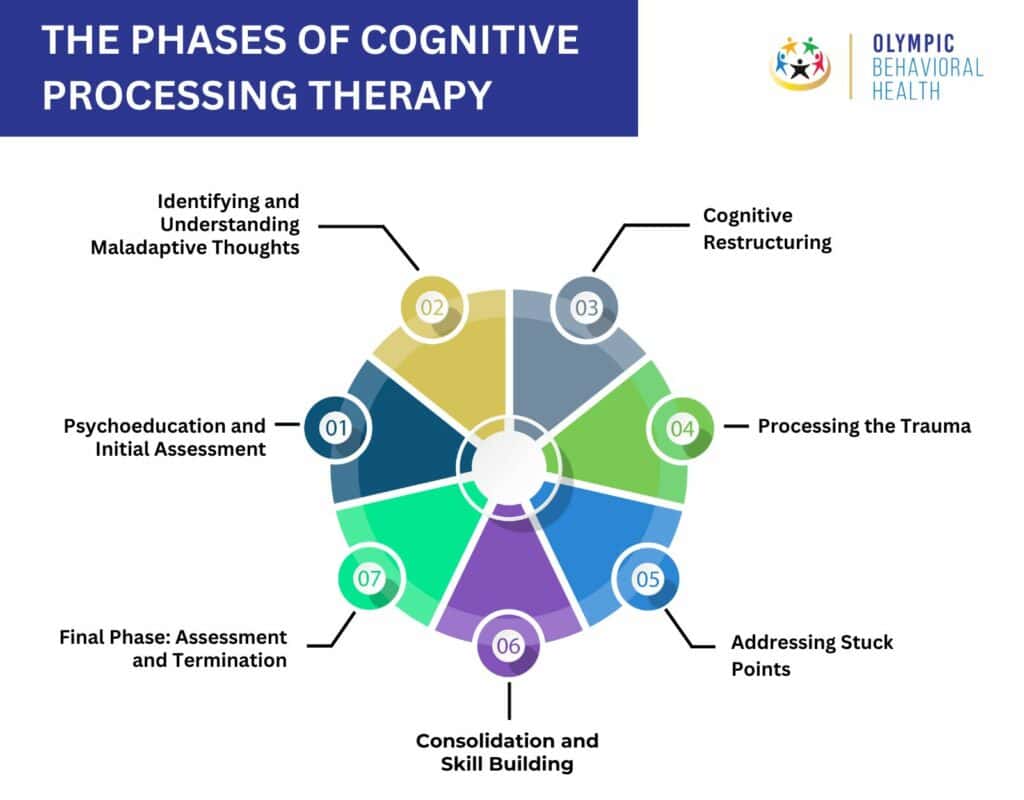
The founder, Patricia Resick, built it as a short protocol-driven treatment for PT or post-traumatic stress and lasts about 12 sessions.
speaker_2HOST
And there's homework between them, a theory you can write on one page.
speaker_2HOST
Good people are not raped, so I must have caused it could be a thought process.

Jill HubbardPANELIST
yeah
JaneAUDIENCE
And what makes it worse is that I had PTSD therapy recently, and it's called CPT, as in cognitive processing therapy.
Jill HubbardPANELIST
Okay.
JaneAUDIENCE
And I don't know if you've been part of that, but my therapist didn't even believe that.

MichelleHOST
All right, now I want to switch gears a little bit and talk more about your trauma work.
MichelleHOST
So you use a wide range of interventions, including EMDR, CPT, narrative therapy, and DBT.
MichelleHOST
So how do you decide which modality to use with a client?
Amanda JepsonGUEST
For the most part, there is definitely a lot of assessment with clients.
Amanda JepsonGUEST
They're just moving through it and I'm just taking essentially some temperature checks with them to see how they're doing, whether it's subjective units of distresses, any of like the messages and seeing how those are changing or how the emotions are changing for them.
Amanda JepsonGUEST
I would say the bulk of my clients who are needing to do a specific modality, the majority of my clients go through EMDR because a lot of them aren't wanting to verbalize what they're processing through.
Amanda JepsonGUEST
CPT is really great for my clients who are my thinkers more than my feelers because that one actually focuses on shifting the thoughts or stuck points that individuals take away from trauma events.
Amanda JepsonGUEST
That one's really impactful for my clients who like structure.

Soni DaniGUEST
And so it's almost as if our mind is on autopilot, just generating those thoughts all the time.
Soni DaniGUEST
And so what CPT helps us do is to really recognize those patterns, recognize our automatic thoughts.
Soni DaniGUEST
They're usually indicative of some of our major beliefs that we hold on to.
Soni DaniGUEST
And so...
15 MINS LATER
Soni DaniGUEST
Because of those beliefs, we see that the world is dangerous or other people can't be trusted or, you know, why did I make this mistake? It was my fault.
Soni DaniGUEST
All those things are examined.
Soni DaniGUEST
And I've had so much success with CPT.
Soni DaniGUEST
It doesn't have to be EMDR.

Alicia NewsomeGUEST
It was
Ashlyn BlueHOST
just it was a CPT.
Alicia NewsomeGUEST
Oh,
Ashlyn BlueHOST
cognitive.

Liz ZhouHOST
Dr. Diana Ali is a clinical psychologist licensed in California and Colorado with over 20 years of experience working with survivors of complex trauma.
Liz ZhouHOST
She uses a variety of trauma therapies, including EMDR, cognitive processing therapy, the DBT PTSD protocol, brain spotting, the trauma resiliency model, havening techniques, and sensory motor psychotherapy.
Liz ZhouHOST
Diana is also certified in Ashira Darwish's Ashira Active Meditation Protocol, a community-based intervention involving a series of somatic release practices that were developed for working with survivors of ongoing chronic trauma.
Liz ZhouHOST
She has been honored to be able to offer Ashira Active Meditation workshops to Palestinian refugees from Gaza.

CarlosHOST
The next one, developed by Patricia Rezek, is cognitive processing theory, especially effective for sexual assault, shame-based, and interpersonal traumas.
CarlosHOST
Essential idea of CPT, trauma changes, beliefs about safety, trust, power, control.
CarlosHOST
esteem, and intimacy.
CarlosHOST
PTSD symptoms are maintained by distorted interpretations.
CarlosHOST
Over-accommodation is making excessively broad negative conclusions.
CarlosHOST
All relationships are dangerous.
CarlosHOST
CPT techniques include Socratic questioning, so guided questioning to examine beliefs logically, what evidence supports your belief, thought records, worksheets, tracking, thoughts, emotions, evidence, alternative interpretations, trauma, written narrative of traumatic experiences, increased emotional processing, identify cognitive distortions and reduce avoidance, cognitive restructuring, replace distorted experiences, Replacing distorted thoughts with balanced alternatives.
CarlosHOST
Changing I'm weak to I survived overwhelming circumstances.