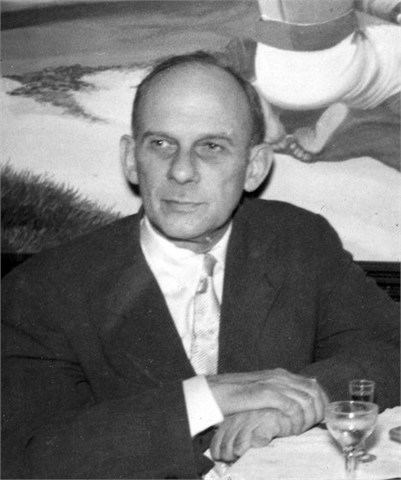
Clyde Kluckhohn
American anthropologistWikipedia
18
MENTIONS
2
EPISODES
1
PODCASTS
Search complete. 18 mentions across 2 episodes found for "Clyde Kluckhohn".
Oct 10, 2026

NickHOST
Diné ideas about harmful supernatural practice developed independently of that Christian tradition and carried their own categories, methods, and explanations for how one person might deliberately injure another.
NickHOST
So one of the most detailed later studies of those beliefs came from the anthropologist Clyde Cluckholm, whose Navajo Witchcraft was published by Harvard's Peabody Museum in 1944 after years of work with Diné informants.
NickHOST
Cluckone stressed that there was no single practice that could be neatly translated into the English word witchcraft, and he used English categories such as witchery, sorcery, wizardry, and frenzy witchcraft to separate different kinds of harmful supernatural activity described to him.
NickHOST
Those labels were Cluckone's analytical terms rather than proof that every Diné person in 1878 divided the subject in exactly the same way.
NickHOST
English language writers often use the broad word witchcraft for this material, although the people they interviewed distinguish several categories of harmful practice more carefully, and the animal-changing figure occupied only one part of that larger structure.
NickHOST
One of the major sources we will use is anthropologist Clyde Kluckhohn's Navajo Witchcraft, published in 1944 from years of fieldwork and testimony.
NickHOST
But Kluckhohn is not where the documentary trail begins, and following the older record backward reveals material that almost never appears in modern paranormal retellings.
NickHOST
Early twentieth-century linguistic collections, stories dictated by Dine narrators, a 1936 monograph devoted entirely to human wolves, and even a lethal witchcraft crisis documented in 1878 all show that the subject has a much deeper history than the version popularized by television and the internet.
NickHOST
We are therefore going to begin inside the Dine world in which these beliefs had meaning, move through the older ethnographic record and the stories people actually told, and only afterwards follow the name into Tony Hillerman's fiction, Skinwalker Ranch, Pentagon Associated Research, television, Reddit, TikTok, and modern cryptid culture.
NickHOST
While ceremonial specialists work to restore order when illness or imbalance threatens a person or family.
NickHOST
The healer, singer, or ceremonial practitioner therefore should not be reduced to a generic medicine man, just as the harmful practitioner should not be reduced to an inverted version of one because Navajo ceremonial knowledge contains highly specialized roles, practices, and bodies of training that cannot be explained by imagining a single class of shamans choosing either a good or evil career path.
NickHOST
Kluckhohn's material becomes easy to understand against that background because the practices he grouped under the English word witchcraft are repeatedly associated with destructive intention, secrecy, illness, and the reversal of relationships that ordinarily bind people to one another.