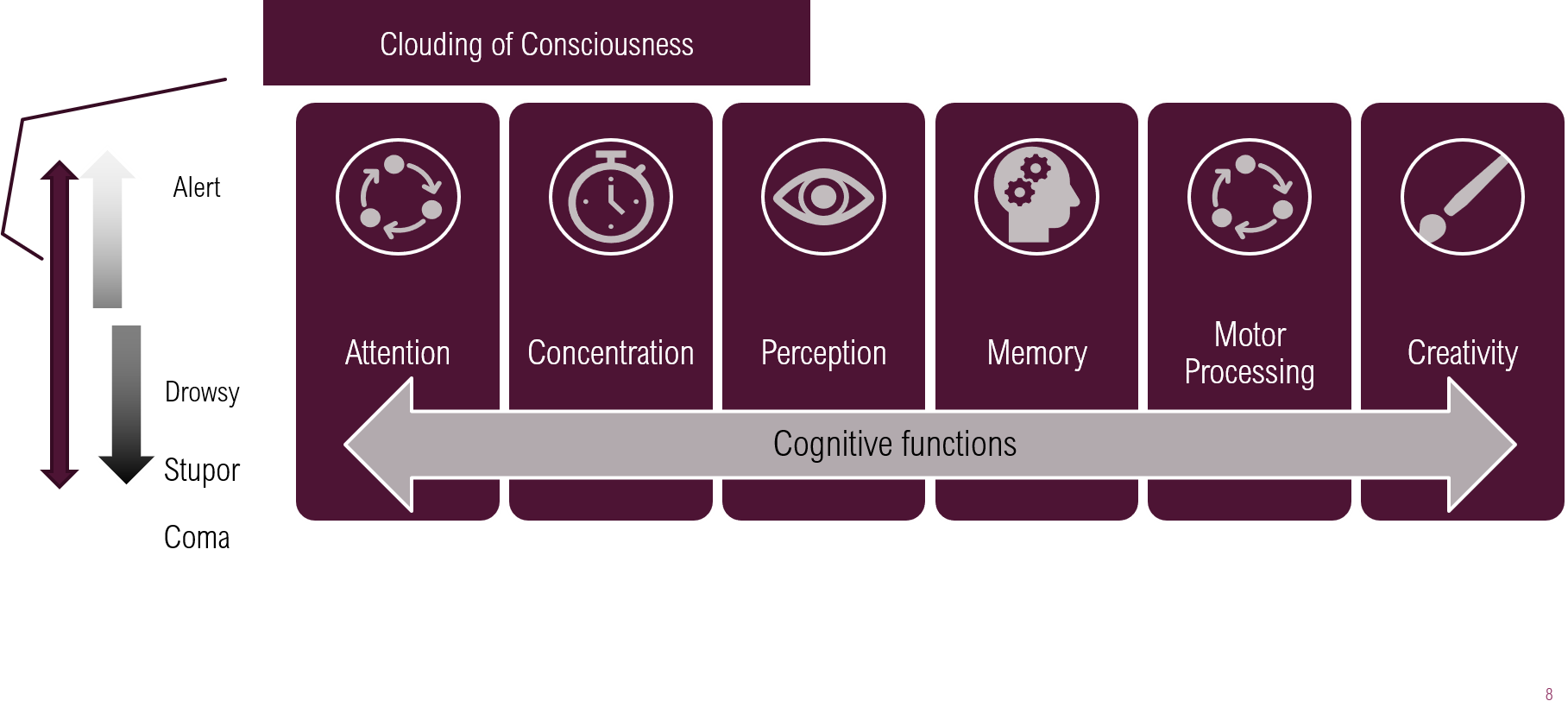
Clouding of consciousness
ConditionWikipedia
559
MENTIONS
101
EPISODES
100
PODCASTS
Search complete. 559 mentions across 101 episodes found for "Clouding of consciousness".
Oct 27, 2026

Darshan ShahHOST
Emma Hemming-Willis is the co-founder of Make Time Wellness.
Darshan ShahHOST
She started it after a doctor brushed off her own brain fog as mommy brain.
Darshan ShahHOST
She's also been a caregiver, so she knows that side of brain health personally.
Darshan ShahHOST
Today, we're going to be talking about why most brain research has been done on men and how perimenopause and menopause raise a woman's risk of dementia and Alzheimer's.
6 MINS LATER
Darshan ShahHOST
And I'd love to hear from your own words, like what that journey consisted of and why you're so passionate about women's health.
Emma Heming WillisGUEST
Yeah.
Emma Heming WillisGUEST
I mean, a few years ago, I was experiencing my own brain fog and went to my doctor and said, you know, I'm not feeling sharp.
Emma Heming WillisGUEST
I don't know what's going on.

Nadine GavinGUEST
You're noticing you're getting a little bit more irritable or things that used to feel very manageable now are starting to feel overwhelming.
Nadine GavinGUEST
You might notice brain fog or losing your words, right? And that's one of those things that can really get people feeling unsettled.
Nadine GavinGUEST
One of the ones with some of the athletes I work with that they notice is pain, right? They start noticing achiness in their joints.
Nadine GavinGUEST
They're not recovering after their exercises.
12 MINS LATER
Nadine GavinGUEST
Then we can get a lot more control over, well, what can we do in our body to support things like our sleep cycle, to support our perception of stress, and to make it so we're better positioned to meet those external stressors that are happening.
Karen GallagherHOST
And I think that's really important, too, because I see a lot of women, even in my practice, that come to me and they may not quite be in perimenopause.
Karen GallagherHOST
And stress is a huge factor in terms of their, you know, all symptoms, their gut health, digestion, their sleep, their walking around kind of in a brain fog all day, ability to lose belly fat, all very similar symptoms, obviously, to perimenopause.
Karen GallagherHOST
But managing those stressors is really important as well too, right? And I know sometimes it can really overlap in a lot of situations with women as well.

Jim KwikHOST
somebody's feeling tired, if they're feeling weak, if they're zapped of energy, And this happens, you're seeing people, we were just talking before we started recording, this is any age and stage also as well, correct?
Steven GundryGUEST
Yeah, it's amazing how many millennials now are suffering from low energy and brain fog.
Steven GundryGUEST
In fact, I actually wrote this book because I was on my way to do a PBS special to make some money for public television, which I love to do.
Steven GundryGUEST
And I was going into Orange County, Southern California, and I get a call on the car phone that said, Mary, who was gonna host my segment, wasn't gonna make it in today.
14 MINS LATER
Steven GundryGUEST
Thank you
Jim KwikHOST
so much.
Jim KwikHOST
How do you overcome and fix mental fatigue, that brain fog that holds you back? And we're excited to have back on our show a very important guest, Dr.
Jim KwikHOST
Steven Gundry.

AshleyHOST
Not fuzzy, not I just can't think all the way, but completely blank.
AshleyHOST
If your brain fog seems to get worse exactly when your calendar fills up, when the season gets busier, and the to-do list gets longer, that is not a coincidence.
AshleyHOST
And it's not you losing your mind.
AshleyHOST
Today I want to explain exactly why that happens.
AshleyHOST
Is it food? Is it a gift? Is it for the house? And before giving up, I've just wandered through the store hoping that seeing it will jog my memory.
AshleyHOST
Have you ever done that and then ended up buying half of what you actually needed, forgetting the rest, and then having to come back afterward another time because you didn't get everything you needed? You know, it's not, sometimes we struggle to think, why is this going on? Why am I struggling so much? And I will say that I have learned to connect how much my brain has already been asked to do that week.
AshleyHOST
What else am I juggling with today? Am I experiencing brain fog? So do you have a week full of appointments, deadlines, a decision every five minutes? All of that is pulling from the same limited pool or resources that your brain has.
AshleyHOST
And when you realize that, you can realize, okay, that blank or that complete memory loss wasn't a failure.

Liz GravesGUEST
you know, good binders, things like, you know, your zeolite, your fulvic acid, your humic acids, things like that to really support that gut microbiome while it's taking that hit and afterwards.
Michael KarlfeldtHOST
And so one of the things with Lyme is, you know, you got the brain fog.
Michael KarlfeldtHOST
You also have a lot of neurological conditions.
Michael KarlfeldtHOST
And, you know, how much can that be connected to what's actually going on in the gut?
Liz GravesGUEST
The gut is where your body, converts amino acids into the neurotransmitters to help you feel good, that regulate your immunes and your emotions.
Liz GravesGUEST
So I think about when you don't have good gut function, your body can't break down protein, your body can't make neurotransmitters, your brain can't work right.
Liz GravesGUEST
But then we also know like lime, mold, these opportunistic infections, they also... cause the brain fog, the anxiety, the depression, those things as well.
Liz GravesGUEST
I think it can be really hard at times for a patient or practitioner to sometimes isolate which one is causing the primary symptoms.

Nicole Sandilands and Natalie McCullochHOST
Just because we're experiencing brain fog and perimenopause does not mean that we are at an increased risk for dementia.
Nicole Sandilands and Natalie McCullochHOST
These changes are, they almost always get better.
Nicole Sandilands and Natalie McCullochHOST
It's almost like your brain is recalibrating.
Nicole Sandilands and Natalie McCullochHOST
It's adapting to the hormonal shifts.
Nicole Sandilands and Natalie McCullochHOST
And once we navigate through this transition, a lot of times the brain fog lifts.
Nicole Sandilands and Natalie McCullochHOST
Welcome to the Empowered Midlife Podcast, where real talk and sisterhood meet to help you thrive through your 40s, 50s, and beyond.
Nicole Sandilands and Natalie McCullochHOST
We're your hosts, Dr. Nick and Nat.
Nicole Sandilands and Natalie McCullochHOST
Have you ever walked into a room and completely forgot why you went in that room in the first place? Or you see someone and you know you should know their name and it's just not coming to you? Or you're talking about something and you lose your train of thought mid-sentence? or read the same email over and over and over again, and you can't actually compute what you actually read, you're not alone.

Shari EmamiGUEST
It might not completely get rid of, you know, the leaky gut, but your moods will feel better and your thinking will be better.
Shari EmamiGUEST
You'll have clearer, you know, the brain fog will be lifted basically.
Shari EmamiGUEST
When you stick to anti-inflammatory foods, that brain fog is just going to lift and it's going to be a difference of night and day when you start really getting into it.
Shari EmamiGUEST
That's from my own personal experience.
Shari EmamiGUEST
Anytime I went back to like, In and out or, you know, restaurant food.

Scott HickleHOST
Dear Throne Team, I always figured drink when you're thirsty was the whole system.
Scott HickleHOST
But I get random afternoon headaches and brain fog.
Scott HickleHOST
And a coworker said, have you tried just drinking water? And annoyingly, it worked.
Scott HickleHOST
Have I been dehydrated this whole time? And I just didn't know.

AshleyHOST
Yeah.
AshleyHOST
So that's where the brain fog and the word finding issues and the emotional up and downs, they're real.
AshleyHOST
One word that I always forget almost every single month during my cycle when my estrogen drops is the word spoon.
AshleyHOST
Like I can look at a spoon and I cannot for the life of me think what the word is.

Mindy CorporonGUEST
I didn't understand it when I wrote in 2021.
Mindy CorporonGUEST
I didn't understand the brain fog.
Mindy CorporonGUEST
But there's real data about why.
Mindy CorporonGUEST
What that's from and why that happens.
12 MINS LATER
Mindy CorporonGUEST
And then some of that material from her, just a little bit.
Mindy CorporonGUEST
I mean, just my personal experience related to her education and research is in Grief Leadership, my second book.
Mindy CorporonGUEST
And I learned that brain fog, while it is real, not only is it just, oh my gosh, I'm foggy brained, but there are parts of your brain that kind of shut down.
Mindy CorporonGUEST
And I'm giving you all very layman's terms.
91 more episodes mention Clouding of consciousness.
Create an account to see the whole feed, search across every transcript, and follow the entities you care about.