Clostridium difficile
InfectionWikipedia
68
MENTIONS
37
EPISODES
35
PODCASTS
Search complete. 68 mentions across 37 episodes found for "Clostridium difficile".
Sep 14, 2026

Oscar CoetzeeGUEST
And it's the only product on the market currently that's doing that.
Oscar CoetzeeGUEST
So that product initiated originally from research that was done for people that had C. diff overgrowth.
Oscar CoetzeeGUEST
And I'm sure that most people would know that C. diff is a very nasty bacteria that takes hold of people in a very hospital-like cleansed setting, and they cannot get rid of it.
Oscar CoetzeeGUEST
So what they did is they took these particular commensal strains and a couple more, and they inserted in these people and it outperformed fecal microbial transplantation to the C. diff.
Oscar CoetzeeGUEST
Okay.
Oscar CoetzeeGUEST
So that's kind of at a big medical level.
Oscar CoetzeeGUEST
So now when you have the MET1 and MET2 studies, which is the C. diff study, they used about 33 strains of commensals.
Oscar CoetzeeGUEST
Now, if I have to develop a strain like that, Wendy and Ed, it'll cost $1,500 per person per month to do.

Jessica WashingtonHOST
So this first page is pathogens, and these are kind of the nasty things that your doctor would be testing you for and that they would wanna know about.
Jessica WashingtonHOST
So stuff like C. diff, E. coli, Salmonella, Giardia, all those nasty things that nobody wants.
Jessica WashingtonHOST
And she did not have any of that, so that was great.
Jessica WashingtonHOST
And then we scroll down here, we look at H. pylori.

BrendanHOST
I don't know.
BrendanHOST
In humans, like C. diff, you know, I think like an acute GI, C. diff problem, fecal transplantation, I think is pretty popular, isn't it? But I don't know if humans have, I don't know, I might be wrong here.
BrendanHOST
I don't know.
BrendanHOST
I've not heard of it in humans with chronic.

Kristina TurnureHOST
It shows pathogens.
Kristina TurnureHOST
Some common ones we see could be like C. diff, salmonella is in there as well, neurovirus, viral pathogens, parasitic pathogens.
Kristina TurnureHOST
The next page shows your H. pylori levels.
Kristina TurnureHOST
This is one of the most common ones.

KellyHOST
The spores themselves are not harmful until they encounter the right conditions and reactivate into vegetative cells.
KellyHOST
You'll also probably recognize Clostridioides difficile or C. diff.
KellyHOST
This is another spore forming bacteria, which means extensive isolation precautions and room cleaning.
KellyHOST
The takeaway here is that spore forming bacteria require specialized cleaning to remove them from the environment.

Briana DrappHOST
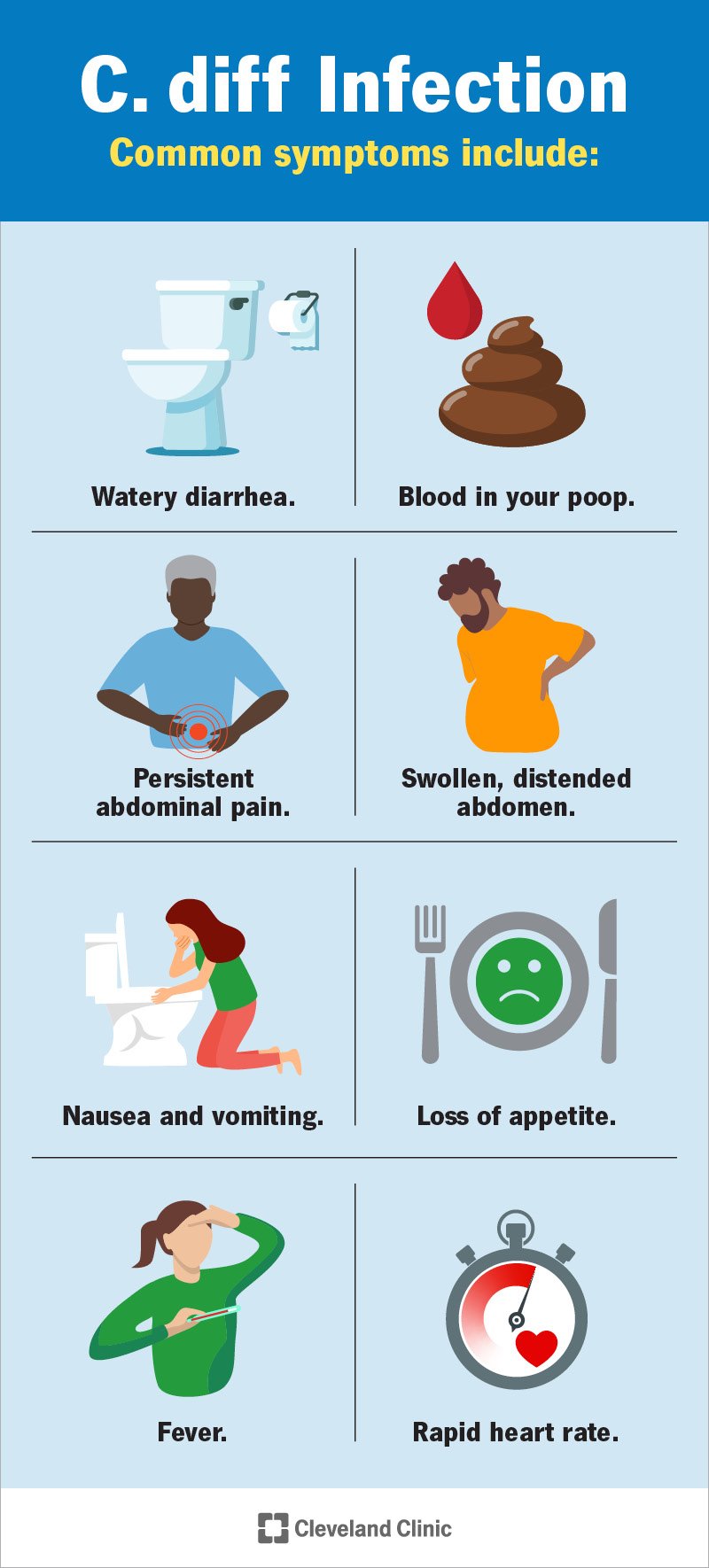
If you've ever smelled blood in poop, oh my goodness.
Briana DrappHOST
That's up there with C. diff.
Briana DrappHOST
Like you just know it's bad.
Briana DrappHOST
So essentially because there's blood in the stool, we're worried about infection.

DeniseHOST
And we're also going to talk about, and this one part I'm very excited about, the medication that doctors put us on and never take us off of that can actually create long-term years of of problems for ourselves.
DeniseHOST
So, um, including, uh, C. difficile, which I found that very fascinating when I was researching that.
DeniseHOST
I thought, wow, you have increased the C. diff and maybe this is one of the reasons why.
DeniseHOST
Um, so lots to cover today.

Chris MotleyGUEST
So if you don't have a lot of smell, you don't have those.
Chris MotleyGUEST
You get an oats test, they call it, and they'll have people that have like Pseudomonas or they'll have Klebsiella, C. diff, Clostridium, and E. coli.
Chris MotleyGUEST
Those will give off like horrible smells.
Chris MotleyGUEST
So like let's say somebody eats a meal and they go, man, I had the worst gas.

Senu ApewokinGUEST
But for the organ transplant, again, um, a colonoscopy may be helpful, uh, especially if you have a, well, especially when you have a CM- negative CMV, but you, the patient is still at high risk.
Senu ApewokinGUEST
So if D or D plus R minus has lots of diarrhea and the testing for things like C. diff and other GI infections are negative, then I think that one should consider doing a colonoscopy to get tissue to look for CMV.
Zoe Freeman WeissGUEST
Can I just make a comment about CMV from a biopsy? We do get, sometimes we get requests from clinicians, "Uh, can you do a CMV PCR from stool?" Which could be way easier, right, than doing a biopsy.
Zoe Freeman WeissGUEST
However, patients can shed CMV in the stool and a, and a positive result doesn't necessarily mean they have invasive disease.
40 MINS LATER
Nancy LawGUEST
But, uh, yeah, just the GI pathogen panel when it comes up with that norovirus, it makes me cringe a little bit.
Senu ApewokinGUEST
Do you order a lot of GI pathogen panels or-
Nancy LawGUEST
That's what originally when they come in with, they'll order C. diff and GI pathogen panel.
Nancy LawGUEST
And then so, like, they're always popping up with random stuff.

Jessica AllegrettiGUEST
For many patients that may mean symptoms are back or blood is back in the stool or their abdominal pain is back, right? So symptoms are starting to come back And so it's not necessarily one thing, right? It could be often when a patient is presenting with newer worsening symptoms, there's several things we always do.
Jessica AllegrettiGUEST
We always check for infections like C. diff, which we know are very common in patients with IBD.
Jessica AllegrettiGUEST
And so we have to rule that out because even if there haven't been, you know, if they haven't taken antibiotics or some of the more classic triggers that we know occur for C. diff, IBD patients can get C. diff regardless.
Jessica AllegrettiGUEST
So we always check.
Jessica AllegrettiGUEST
And ask questions like, have you been taking Motrin or Advil regularly? We know sometimes patients, you know, they have bad headaches or they had an injury and they're popping NSAIDs.
27 more episodes mention Clostridium difficile.
Create an account to see the whole feed, search across every transcript, and follow the entities you care about.