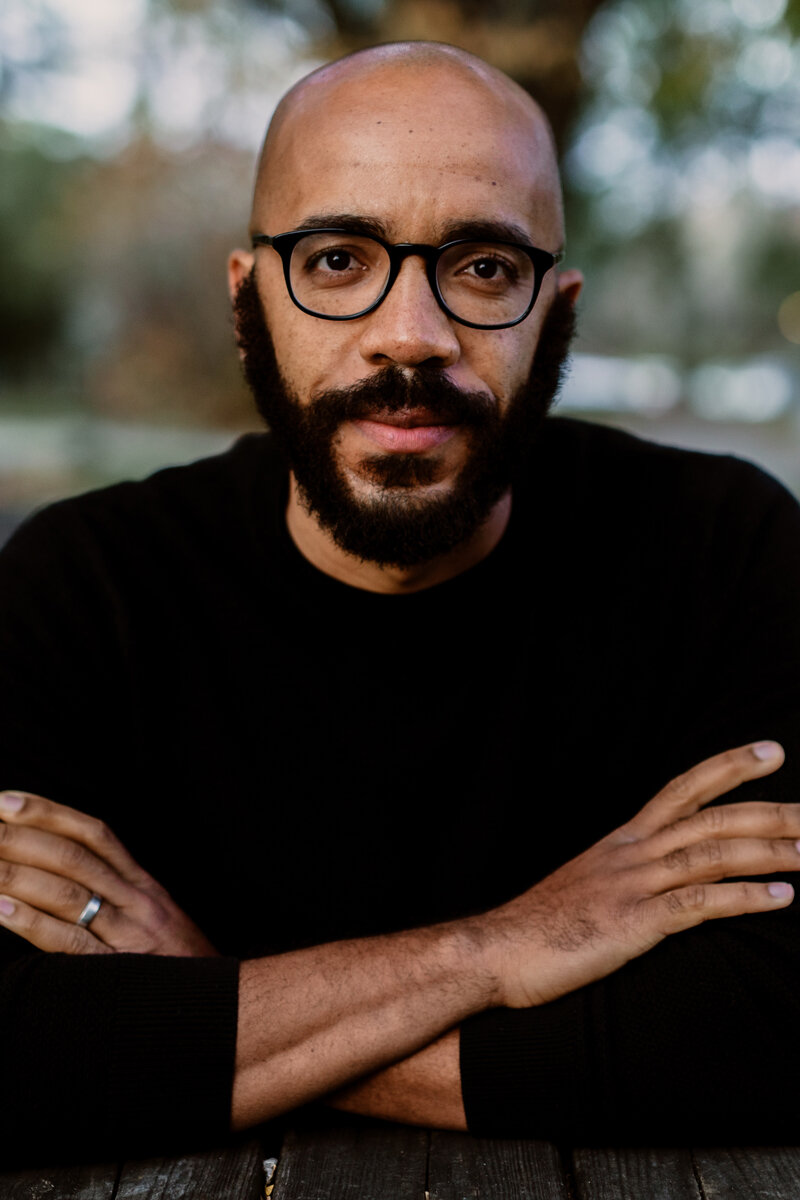
Clint Smith
American writer and poetWikipedia
18
MENTIONS
10
EPISODES
6
PODCASTS
Search complete. 18 mentions across 10 episodes found for "Clint Smith".
Sep 21, 2026

speaker_1ADVERTISER
Rated PG-13.
Clint SmithHOST
Hi, I'm Clint Smith and this is Crash Course Black American History.
Clint SmithHOST
Economic crises usually affect marginalized people differently.
Clint SmithHOST
This is because systemic injustices typically create environments where historically oppressed people have fewer resources to work with before the crisis, less access to entitlement programs to help them during the crisis, and more burdens to carry by the time the crisis is over.
Clint SmithHOST
Hi, I'm Clint Smith and this is Crash Course Black American History.
Clint SmithHOST
I want you to imagine that you're in the shoes of this person.
Clint SmithHOST
You're being offered free medical treatment by a team of doctors that work for the U.S. government.
10 MINS LATER
Clint SmithHOST
The Commission's recommendations required researchers to always get informed consent from all of their study participants.
Clint SmithHOST
In 1996, the Tuskegee Syphilis Study Legacy Committee was organized to develop a strategy to address the emotional damages of the study, to hold the federal government accountable for more ethical research practices, and to persuade the federal government to publicly acknowledge their role in harming this community of Black Americans.
Clint SmithHOST
And in 1997, President Bill Clinton apologized publicly, stating, it is not only in remembering that shameful past that we can make amends and repair our nation, but it is in remembering that past that we can build a better present and a better future.
Clint SmithHOST
The United States government did something that was wrong.
Clint SmithHOST
Deeply, profoundly, morally wrong.

speaker_0HOST
She lives with her husband and two children in Brooklyn, New York.
speaker_0HOST
Parker will be in conversation with Clint Smith, a staff writer at The Atlantic.
speaker_0HOST
He is the author of narrative nonfiction book How the World Has Passed, which won the 2021 National Books Critics Circle Award for nonfiction and was a New York Times bestseller.
speaker_0HOST
And he is the author of poetry collections Counting Descent and Above Ground.
58 MINS LATER
Priya ParkerGUEST
We're going to start it here tonight on Politics on Prose.
Priya ParkerGUEST
It's going to be called the Group Help Shelf.
Priya ParkerGUEST
Clint Smith's work's going to be on it.
Priya ParkerGUEST
Raina's work's going to be on it.

Edgar MillsHOST
I was called a FUD even.
Edgar MillsHOST
One guy called me a FUD and then another guy invoked Clint Smith.
Edgar MillsHOST
So the spectrum of comments was broad.
Edgar MillsHOST
Your truck or your car is not a damn arms room and it's not a kit locker.
Clint SmithHOST
I'm having fun on Play-O-Joe.
Clint SmithHOST
Hi, I'm Clint Smith, and this is Crash Course Black American History.
Clint SmithHOST
Many Americans are pretty familiar with the August 1963 March on Washington, largely because it's where Dr. Martin Luther King Jr. gave his famous I Have a Dream speech.
Clint SmithHOST
But what a lot of people don't know is that there was another March on Washington that was planned more than 20 years before.

African Prince LovkidHOST
cooking?
MSL MalachiHOST
Shout out to Clint Smith.
African Prince LovkidHOST
Yeah.
MSL MalachiHOST
He's still cooking.

JenHOST
I still teach it, and students really love it and love to discuss it.
JenHOST
I will also recommend, there's a great Crash Course African American History episode about Zora Neale Hurston that Clint Smith narrates.
JenHOST
He is the narrator of all of those episodes.
JenHOST
And it is excellent.
speaker_1SOUNDBITE_SPEAKER
Read PG-13.
Clint SmithHOST
Hi, I'm Clint Smith and this is Crash Course Black American History.
Clint SmithHOST
The Montgomery Bus Boycott, which took place from December 5, 1955 to December 20, 1956, was one of the most successful examples of mass nonviolent resistance in U.S. history.
Clint SmithHOST
This boycott is regarded as being the first large-scale U.S. demonstration against segregation with an estimated 40,000 participants.

Simone Sanders-TownsendHOST
I think it's a huge question.
Simone Sanders-TownsendHOST
This week, we've asked writer Clint Smith to join the group chat because we want to talk about how if, you know, maybe everybody understood the history of this country, Eugene, just a little bit better.
Simone Sanders-TownsendHOST
Maybe they could see very clearly what the president is trying to get his hands on and trying to require voter ID everywhere, which is not just voter ID.
Simone Sanders-TownsendHOST
Really, they're trying to talk about citizenship and suppose that's what the Save America Act is really about.
21 MINS LATER
Simone Sanders-TownsendHOST
I'm radicalizing you for the, for the, for, you know, democracy.
Simone Sanders-TownsendHOST
Okay, let's take a quick break.
Simone Sanders-TownsendHOST
And when we come back, New York Times bestselling author Clint Smith is joining the group chat.
Jacob SoboroffSOUNDBITE_SPEAKER
For me, being a part of this place has always been about the people, not about the politics.
Yoni AppelbaumMODERATOR
It's a pleasure to see you.
Yoni AppelbaumMODERATOR
I actually see some faces who were here a month ago when we did this with Clint Smith.
Yoni AppelbaumMODERATOR
And I've got the pleasure tonight of talking with my colleague, Rose Horwich, who wrote our wonderful cover story.
Yoni AppelbaumMODERATOR
This is actually, this is like the advanced level, because we're going to ask Rose to sit here in a room full of Atlantic readers, surrounded by books, and convince you that people are not reading anymore.