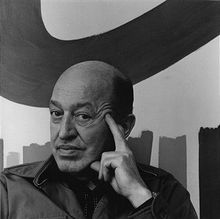
Clement Greenberg
American essayistWikipedia
23
MENTIONS
8
EPISODES
7
PODCASTS
Search complete. 23 mentions across 8 episodes found for "Clement Greenberg".
Oct 8, 2026

Mary GabrielGUEST
Yeah
Ben DavisHOST
... uh, critics that you associate with abstract expressionism, Harold Rosenberg and Clement Greenberg-
Mary GabrielGUEST
Mm-hmm
Ben DavisHOST
...
7 MINS LATER
Mary GabrielGUEST
So she took him under her, she took him under her wing and said, "I'm gonna show you, meet you, have you meet some people, and, you know, let's get you going." And, uh, not too long after that, this mutual, this mutual admiration they had, which he did have for her, you know, in his own Pollock way, he said, "You're a damn good female painter," you know.
Mary GabrielGUEST
But, you know, coming from Jackson Pollock, who wasn't the most socially skilled individual in the world, that was something.
Mary GabrielGUEST
And, and so, and I, and the, the evidence that he respected her was that she was the only one he would really talk to about his work You know, even Clement Greenberg, who later became a sounding board for him, said Pollock would talk to Lee about art and only talk about his art when Lee was in the room.
Mary GabrielGUEST
So she was essential.

Joana P. R. NevesHOST
At the end of the 20th century, there was a moment, there was a big, big, big upheaval against a group of artists, the abstract expressionists.
Joana P. R. NevesHOST
They had come to a very interesting form of abstraction, but also in the way it was theorized by an art critic called Clement Greenberg.
Joana P. R. NevesHOST
a very dogmatic definition of what art was.
Joana P. R. NevesHOST
It had to be painting and what painting did.
Joana P. R. NevesHOST
It was, according to Clement Greenberg, pure experience.
Joana P. R. NevesHOST
And the minimalists were fed up with this notion.
Joana P. R. NevesHOST
They opened up again the art-making practices and disciplines to objects, to different materials, because at a certain point, Through this big change in terms of what an image did, we remained in a very traditional, after all, type of skill, which was to paint.
Joana P. R. NevesHOST
It felt rather esoteric to certain minimalists or conceptual artists, and it also felt very restrictive.

Pier Vittorio AureliGUEST
but at the same time, after, you know, going through that literature, I went back to the more chaotic Italian approach, uh, which I think it's interesting because at the end, uh, this, you know, more rigorous formalist approach was very locked into its own kind of principles, uh, and, and often unable to transcend these, the boundaries.
Michael MeredithHOST
I'd be curious to your thoughts on, let's say, Clement Greenberg and medium specificity, 'cause y- your work, I think of play, again, the paintings I, the landscape paintings I've seen really do play with, um, flatness to some degree.
Michael MeredithHOST
But it's not, but it never gets totally flat.
Michael MeredithHOST
It doesn't quite get as far as it could.
Pier Vittorio AureliGUEST
And, and Milton Avery, for me, is really, uh, the painter who definitely, uh, applied to the flat, uh, idea, but not completely.
Pier Vittorio AureliGUEST
Uh, and I'm really interested in that.
Pier Vittorio AureliGUEST
I, I think that, uh, Greenberg, uh, idea of flatness is fascinating and very, as you know, almost theological or teleological.
Pier Vittorio AureliGUEST
[chuckles]

Sarah HigginsGUEST
Mm
Josh BaerHOST
... it's an important thing to think about, particularly if you were raised in the old school of Clement Greenberg and that-
Sarah HigginsGUEST
Yeah
Josh BaerHOST
...

Naomi FalkGUEST
But, um, I mean, I...
Naomi FalkGUEST
When I was teaching myself about art history, kind of being like an autodidact for a moment, like, really getting deep into American art history, um, kind of trying to get more into, like, global art history and into art criticism of the 20th century, I was kind of reading the greats, um, one being, like, Clement Greenberg, or more, like, I guess contemporarily, uh, Roberta Smith, who is, um, the partner of Jerry Saltz, who they kind of do, like, very opposite things in terms of being art critics.
Naomi FalkGUEST
He's kind of like the jester, and she's kind of the, um, the voice of reason in a way-
Joe BileckiHOST
Hmm

Robert YarberGUEST
And the only problem with the art world today, in my opinion, my humble opinion, is that the rigor and almost the Hegelian search for this answer through the modernist progression of styles that ended up with postmodernism was fine, but I think today we have now pluralism And what are we reacting against? Everything is soft now.
Robert YarberGUEST
Back in the day when I was a kid, 17 or 18 years old, there was Clement Greenberg.
Robert YarberGUEST
He was the Pope.
Robert YarberGUEST
You went along with him or you were sidelined.

Sarah Urist-GreenHOST
Abstract art began to emerge in the 20th century, largely without the ethical messages of the neoclassical era, and it was widely celebrated.
Sarah Urist-GreenHOST
This was thanks in no small part to American art critic Clement Greenberg, who proclaimed his own ideas of what made good and bad art.
Sarah Urist-GreenHOST
To him… good art pushed boundaries and broke from tradition.
Sarah Urist-GreenHOST
That included abstract pieces like this painting by Piet Mondrian, which he considered good precisely because it didn't look like anything in the world around it.
Sarah Urist-GreenHOST
Why did that happen? Why do we take one person's dripped paint seriously and not the others? What's the difference between just an everyday amateur and an artist? Hi, I'm Sarah Urest-Green, and this is Crash Course Art History.
Sarah Urist-GreenHOST
We know that Sobel directly influenced Pollock, who first encountered her paintings with art critic Clement Greenberg in 1944.
Sarah Urist-GreenHOST
Greenberg was impressed by Sobel's works and wrote about them.
Sarah Urist-GreenHOST
He considered hers the first truly all-over pictures he had ever seen, a term he coined for paintings that don't really have a focal point and treat the entire surface evenly.