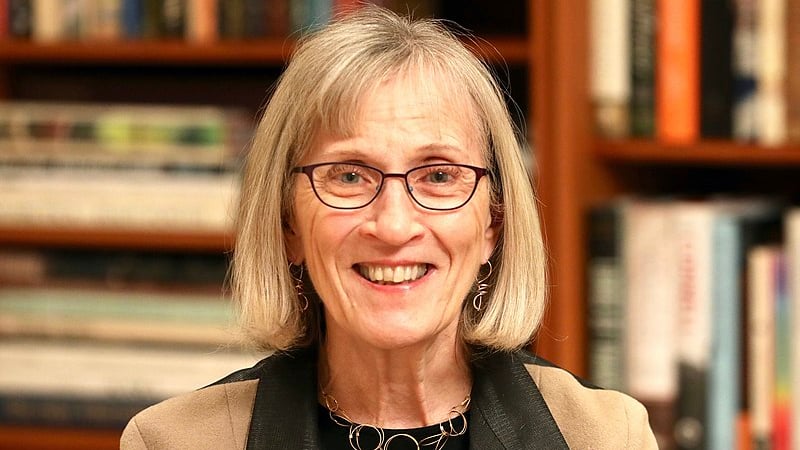
Claudia Goldin
American historianWikipedia
15
MENTIONS
9
EPISODES
9
PODCASTS
Search complete. 15 mentions across 9 episodes found for "Claudia Goldin".
Oct 30, 2026

Anna-Louise SussmanGUEST
Um, back in 2019, he wrote a whole, um, essay in the Atlantic describing it as this new American religion with people working far more than was necessary to keep the lights on or even to have a sort of affluent lifestyle, but really going above and beyond.
Anna-Louise SussmanGUEST
And I think that one of the roots of that is the sort of way that labor and the rewards of work have shifted where the economist Claudia Golden talks about this idea of greedy jobs.
Anna-Louise SussmanGUEST
So it's not these are jobs where if you work an extra 10 hours, you don't just get 10x your hourly wage, you might get you know, if you work 20 extra hours a week, you might wind up with a bonus in, you know, the mid six figures or even more as we think of jobs like consulting, corporate law, finance, tech.
Anna-Louise SussmanGUEST
So the rewards are really disproportionate, even to the amount of time that you put in.

Ben ZweigHOST
If I'm trying to think of, like, who are the big giants in each field, I would think the first one, you know, this digitization is, like, Eric Brynjolfsson and, like, Coe.
Ben ZweigHOST
The second one's, like, you know, David Autor, Claudia Goldin, you mentioned.
Ben ZweigHOST
And then, like, the third, I would think, like, Romer, Chad Jones style.
Ben ZweigHOST
Like, you know, so that's kind of, like, growthy, growth people, you

speaker_0NARRATOR
Some experts point to smartphones and social media, others to the cost of childcare, still others to existential dread or over-parenting.
speaker_0NARRATOR
Claudia Golden, the Nobel Prize-winning labor economist, favors another explanation.
speaker_0NARRATOR
It's the men.
speaker_0NARRATOR
In a widely discussed new working paper, she argues that husbands still fail to do their fair share of housework and childcare, forcing their wives to choose between procreation and career success.

Lisa KahnGUEST
And so women saw expanded educational opportunities in part due to policies such as Title IX, which said that funding for higher education had to be proportional for men and women.
Lisa KahnGUEST
And also other societal trends such as delayed marriage, which may have been brought about by the birth control pill, for instance, that the famous work by Larry Katz and Claudia Golden point out.
Lisa KahnGUEST
Delaying marriage enabled women to stay in school for longer.
Lisa KahnGUEST
And so both Title IX and the birth control pill may have helped women achieve a better human capital through staying in schools.
Michael KleinHOST
We had Claudia Golden on and kind of fact chats and she described the way in which in one of her books she used the depiction of women in television as sort of an indicator of changing societal norms.
Michael KleinHOST
It went from the housewife in Father Knows Best to the secretary in Perry Mason to the single woman who had a job in Mary Tyler Moore, Mary Tyler Moore Show.
Michael KleinHOST
to Tina Fey, who was actually a boss in 30 Rock.
Lisa KahnGUEST
In politics, women hold less than a third of elected offices.

Kathryn ValentineGUEST
Because even if you get promoted a year faster, the raise that comes with that promotion is so much bigger.
Kathryn ValentineGUEST
So this is Claudia Goldin's work, who won the Nobel Prize two years ago.
Kathryn ValentineGUEST
Um, but she shows analytically that if you can get promoted even just a little bit earlier each step of the way, at the end of the day you have significantly more than if you had just negotiated a raise every year.
Heather MonahanHOST
Wow, that's so...

KylaSOUNDBITE_SPEAKER
That's what you're citing.
KylaSOUNDBITE_SPEAKER
Claudia Goldin's work, which by the way, I chatted to her before this conversation.
KylaSOUNDBITE_SPEAKER
She loves your book by the way.
KylaSOUNDBITE_SPEAKER
Um, Claudia Goldin discovered and coined the term the Quiet Revolution, which in the late 1970s there was a revolution not in an infusion of women in the workplace in the '70s, that was the same since the '40s.
KylaSOUNDBITE_SPEAKER
It's been a consistent progressive trundle up.
KylaSOUNDBITE_SPEAKER
What was different is women's relationship to work.
BrianHOST
All right.
AlisonHOST
Okay, sure.

Kimberly AdamsHOST
To mark the occasion, we reached out to a couple of past laureates to hear how things have been going since getting the call.
Kimberly AdamsHOST
First, Claudia Goldin, an economics professor at Harvard University.
Kimberly AdamsHOST
She won in twenty twenty-three for her work in the field of historical economics, tracking women's pay and labor market participation across centuries.
Claudia GoldinSOUNDBITE_SPEAKER
This award, to me, was not just to me, it was to an extremely large group of people.

Tricia KagererGUEST
It's basically a universal experience.
Tricia KagererGUEST
And in 2023, Nobel Prize winning author, she was an economist and an author, Claudia Golden, defined greedy work as jobs demanding constant availability and punishing anyone who has caregiving responsibilities.
Tricia KagererGUEST
She said the final act in Gender Gap Saga can't be written until couples share more and the world of work makes that less of a costly thing to do.
Tricia KagererGUEST
There is a reality to taking five years off to raise a family.

Julie KratzHOST
And-
Corinne LowGUEST
And many women in those, like, more structured professions say, like, "No, I don't want flexibility, I want boundaries." 'Cause what flexibility often means is that you always take your work home with you and you end up very burned out, right? And so I think that's gonna be the new task for these, like, what Claudia Goldin calls greedy jobs, the jobs that are just asking more and more of employees, is how do you still provide your employees with some kind of boundaries so that they can still feel like they get to be people outside of work? And so, you know, wh- uh, when I'm talking to, like, a law firm and they say, like, "Well, I don't know if that's ever gonna be the case because, like, you know, our cl- our clients have issues when our clients have issues," it's like, okay, but can you assign one of the associates on the team to be on call for the first weekend in the month, and a different associate to be on call for the second weekend-
Julie KratzHOST
Mm-hmm
Corinne LowGUEST
... of the month and et cetera, so that then they still have their weekends where they know, "Okay, I get to be a whole person.