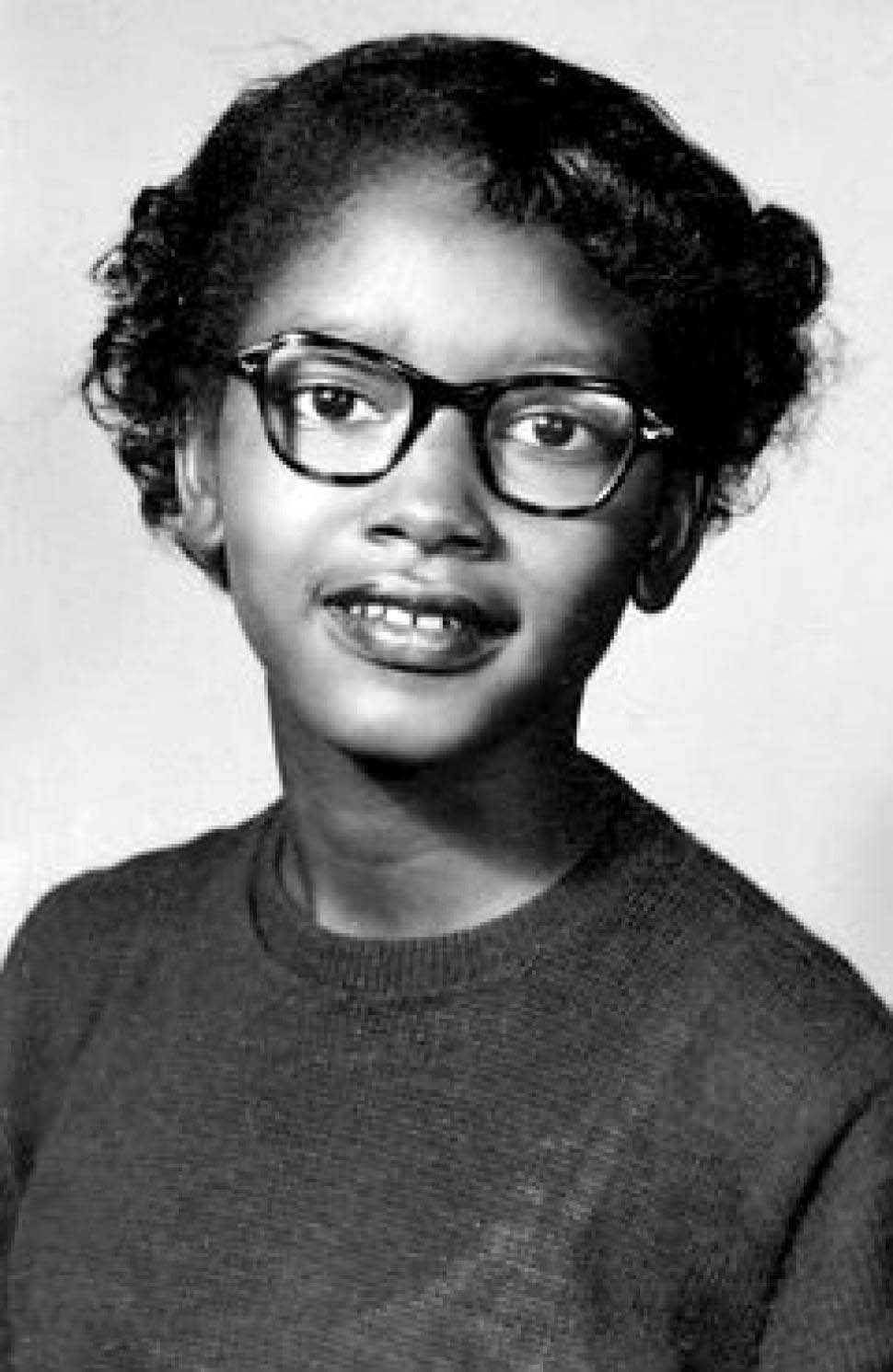
Claudette Colvin
American civil rights activistWikipedia
49
MENTIONS
17
EPISODES
14
PODCASTS
Search complete. 49 mentions across 17 episodes found for "Claudette Colvin".
Oct 1, 2026

Bryan StevensonGUEST
And I actually think he didn't do anything wrong by insisting on an America.
Bryan StevensonGUEST
And then of course, in 1955, those black women, Claudette Colvin and Susie McDonald and Aurelia Browder and Mary Louise Smith and ultimately Rosa Parks, they said no, but what they really were saying is I'm going to push this country to be greater.
Bryan StevensonGUEST
And I think they were great Americans and they gave birth to a civil rights movement that was sustained by great Americans, black and white, young and old, who pushed this country to do something better, stronger.
Bryan StevensonGUEST
And we became a more robust, healthy democracy in 1965 after the Voting Rights Act has passed.

Clint SmithHOST
Folks like Harriet Tubman, Mary Church Terrell, Ida B.
Clint SmithHOST
Wells, Rosa Parks, Claudette Colvin, Zora Neale Hurston, Fannie Lou Hamer, Ella Baker, Daisy Bates, the list goes on and on.
Clint SmithHOST
But that work didn't end with the Civil Rights Movement.
Clint SmithHOST
Black women continued to lead this fight even when they weren't at the center of attention.

Gary ArndtHOST
Till, a Chicago teenager, had gone to Mississippi to stay with relatives and was murdered for supposedly interacting with a white woman.
Gary ArndtHOST
In March of nineteen fifty-five, fifteen-year-old Claudette Colvin was handcuffed and dragged off a city bus for refusing to give up her seat.
Gary ArndtHOST
And in October of that year, eighteen-year-old Mary Louise Smith was arrested for the same offense.
Gary ArndtHOST
The Woman's Political Council, led by Alabama State College professor Jo Ann Robinson, had been lobbying city commissioners since nineteen fifty-four to end bus segregation and driver harassment.
7 MINS LATER
Gary ArndtHOST
Early in Chief Justice Earl Warren's tenure, the court had already established itself as favoring the expansion of civil rights.
Gary ArndtHOST
Led by counsel and Montgomery local Fred Gray, the boycott organizers bypassed local courts, which were certain to rule against them, and filed Browder v. Gayle, a federal lawsuit challenging Montgomery's bus segregation under the 14th Amendment.
Gary ArndtHOST
The case addressed the humiliation bus passengers Aurelia Browder, Claudette Colvin, Susie McDonald, and Mary Louise Smith experienced under the Equal Protection Clause of the 14th Amendment.
Gary ArndtHOST
The defense of segregation relied on the 1896 Supreme Court ruling in Plessy v. Ferguson, which allowed separate facilities as long as they were deemed equal.

RemedyHOST
All right then, that's who you are.
RemedyHOST
Claudette Colvin, whatever her name is, yeah, she said no on the bus before Rosa Parks.
RemedyHOST
Nine months.
RemedyHOST
She was the first one to sit on the bus.
RemedyHOST
Everyone's doing this.
RemedyHOST
Everyone's doing this.
RemedyHOST
But Claudette Colvin, she's the real unsung hero.
RemedyHOST
So that might be you.

Heather FosterNARRATOR
In 1955, the year that would finally see the start of the bus boycott, several Black women were arrested for defying discrimination on the buses.
Heather FosterNARRATOR
In March, a 15-year-old high school student named Claudette Colvin refused to give up her seat for a white rider, declaring it was her constitutional right to keep her seat.
Heather FosterNARRATOR
She was arrested.
Heather FosterNARRATOR
The next month, a 37-year-old rider named Aurelia Browder was arrested in a similar case.
19 MINS LATER
Heather FosterNARRATOR
After the bombing of their house, several white supporters, some friends and some strangers, came to check on the King family's welfare.
Heather FosterNARRATOR
Around this time, two lawyers filed a legal challenge to the Alabama and Montgomery bus segregation laws in federal district court.
Heather FosterNARRATOR
The plaintiffs were several black women, including Aurelia Browder, Claudette Colvin, and Mary Louise Smith.
Heather FosterNARRATOR
The next effort to quell the bus protest once and for all was a wave of arrests based on an all-but-forgotten state law banning boycotts.

speaker_7NARRATOR
She refused to give up her seat on the bus nine months before Rosa Parks, and you've probably never heard of her.
speaker_7NARRATOR
This is Badass Black History: Claudette Colvin Edition.
speaker_7NARRATOR
On March 2nd, 1955, in Montgomery, Alabama, 15-year-old Claudette Colvin boarded a city bus after school.
speaker_7NARRATOR
Claudette was sitting in a middle row near an emergency exit when the bus became crowded, so crowded that white people were forced to stand and couldn't find a seat, and Jim Crow protocol stated that Black people towards the middle or the front would have to give up their seat to the white people.
speaker_7NARRATOR
Claudette said no.
speaker_7NARRATOR
Black leaders also thought that Rosa would be a better case test for integration because she was an adult who had a job and would be better able to handle it.
speaker_7NARRATOR
Claudette says she wasn't angry that she didn't get more recognition, just disappointed.
speaker_7NARRATOR
Claudette Colvin died in hospice care on January 13th, 2026 at the age of 86.

Sharon McMahonGUEST
And this is actually nine months before Rosa Parks does the same thing.
Sharon McMahonGUEST
Now, why do we know about Rosa Parks that we don't know about Claudette Colvin? She's gained more prominence in the last handful of years.
Sharon McMahonGUEST
Actually, Claudette Colbin literally just died.
Monica PackerHOST
Yes.
Monica PackerHOST
History is not that long ago, right? She lived until very recently.
Monica PackerHOST
Right.
Sharon McMahonGUEST
But why do we know Rosa Parks that we don't know Claudette Colvin? It's because she was told she was not right for the job.
Sharon McMahonGUEST
She was not right for the job of being the face of the civil rights movement.

Bryan StevensonGUEST
She's a great American for resisting bigotry.
Bryan StevensonGUEST
In 1955, those five black women, Claudette Colvin, the 15 year old, and Susie McDonald, and Aurelia Browder, and Mary Louise Smith, and ultimately Rosa Parks, they said no, but they didn't just say no, they said, we're going to push this country.
Bryan StevensonGUEST
And I think they were great Americans for doing that.
Bryan StevensonGUEST
The civil rights leaders, 50,000 black people in Montgomery who stayed off the buses for 382 days, 50,000 black, every black person in the city stayed off the bus For 382 days and I love the stories that we're seeing now because we've done this site This older black man was being questioned by a journalist when the bus came by and the journalist said why don't you get on that bus? And and the older black man told the journalist he said well jim crow is on that bus when jim crow gets off i'll get on and I now I now realize they were great Americans.

speaker_0NARRATOR
It was Wednesday, March 2, 1955.
speaker_0NARRATOR
School had just let out in Montgomery, Alabama, when 15-year-old Claudette Colvin was riding the city bus home with three of her friends.
speaker_0NARRATOR
They had found four seats together about halfway down the bus.
speaker_0NARRATOR
Claudette sat beside the window.
speaker_0NARRATOR
But she had already made her decision.
speaker_0NARRATOR
She was staying right where she was.
speaker_0NARRATOR
See, Claudette Colvin grew up in Montgomery during a time when the color of your skin could decide where you lived, where you went to school, which door you entered, even where you were allowed to sit.
speaker_0NARRATOR
These rules were called segregation.

Derek WatersGUEST
them.
Derek WatersGUEST
I mean, Claudette Colvin, I think, is the best story that we ever found ever.
Derek WatersGUEST
Little girl, 14, who did what Rosa Parks did one year prior that inspired Rosa Parks.
Derek WatersGUEST
And it was just one of those stories that is just so beautiful, passionate.
7 more episodes mention Claudette Colvin.
Create an account to see the whole feed, search across every transcript, and follow the entities you care about.