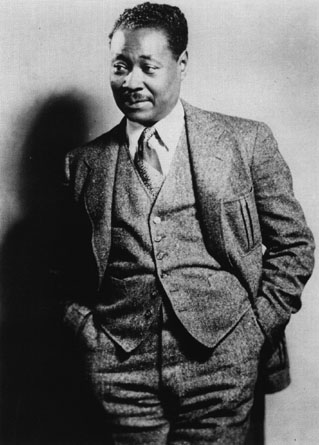
Claude McKay
Jamaican-American writer and poetWikipedia
14
MENTIONS
9
EPISODES
8
PODCASTS
Search complete. 14 mentions across 9 episodes found for "Claude McKay".
Sep 20, 2026

Martin SheenHOST
And we're back.
Martin SheenHOST
On Broadway by Claude McKay, 1922.
Martin SheenHOST
Above me, young and careless feet, linger along this garish street.
Martin SheenHOST
Above a hundred shouting signs shed down their bright, fantastic glow.
Martin SheenHOST
From playhouse, cabaret, and inn, the rainbow lights ablaze, all gay without all glad within, as in a dream I stand and gaze.
Martin SheenHOST
At Broadway, shining Broadway, only my heart, my heart is lonely.
Martin SheenHOST
Claude McKay, originally named Festus Claudius McKay, was born on September 15, 1890 in Jamaica.
Martin SheenHOST
He attended both Kansas State College and the Tuskegee Institute before moving to New York City in 1914.

Ronald Smokey StevensGUEST
These elements contributed greatly to the creation of a new identity for African-Americans.
Ronald Smokey StevensGUEST
And with the new writings of Langston Hughes, Claude McKay, Zora Neale Hurston, African-Americans were beginning or becoming in vogue during this period of the 20th century.
Ronald Smokey StevensGUEST
The audience's taste was developing and evolving to reflect the many voices of African American expression, and these voices were playing out in a concentrated form in Harlem during the 1920s.
Ronald Smokey StevensGUEST
Harlem became the Mecca for this new renaissance of African American expression.

Paul PrescottGUEST
So Cyril Briggs, the African Blood Brotherhood, I'm, I won't go down that rabbit hole, but they were another Black nationalist organization at this time, more so allied with the Communist Party.
Paul PrescottGUEST
And many groups, what they were trying to do during this period, less so Randolph at a certain point, but communists especially, um, also people like Claude McKay, who, Harlem Renaissance poet, wrote "If We Must Die," which people are probably familiar with.
Paul PrescottGUEST
They kind of recognized that Garvey has won over the masses, and they were thinking, "How can we kind of latch onto this energy?" And then the African Blood Brotherhood was kind of thinking, "Well, if we attach ourselves to the UNIA, maybe we can get members out of it.
Paul PrescottGUEST
Maybe we can kind of capitalize on what's going on here." Um, but they were-- they became burned very badly by Garvey.
Paul PrescottGUEST
Um, you know, so it's not like this was a democratic decision on the continent.
Paul PrescottGUEST
Um, and, and Randolph would point that out, that, like, he thinks he'll just, like, go over to Africa and people will willingly submit to his rule.
Paul PrescottGUEST
Um, Claude McKay also said the same thing.
Paul PrescottGUEST
Um, and you know, Randolph, I think, deserves credit for During this period of the early 1920s, there wasn't much to point to as far as success of Black workers in unions, of, of socialism.

D. RandallNARRATOR
As for the special part of the Negro in the war, importance attaches to Dr. Emmett J. Scott's official history of the American Negro in the World War, Washington, 1919.
D. RandallNARRATOR
While in biography outstanding is Robert Russell Motens, Finding a Way Out, Doubleday, Page & Company, Garden City, New York, 1920. a work written in modest vein and forming a distinct contribution to the history of the times Of those poets who have come into prominence within the period now under review, first place must undoubtedly be given to Claude McKay.
D. RandallNARRATOR
This man was originally a Jamaican and his one little book was published in London, but for the last several years he has made his home in the United States and his achievement must now be identified with that other race in this country.
D. RandallNARRATOR
He has served a long apprenticeship in writing, has a firm sense of form, and only time can now give the full measure of his capabilities.

Jim MichaelieNARRATOR
He also gave financial assistance to aspiring writers.
Jim MichaelieNARRATOR
His involvement in the cultural life of Harlem led to friendships with such talented writers as Langston Hughes and Claude McKay.
Jim MichaelieNARRATOR
Schomburg also admired the work of the Honorable Marcus Mosiah Garvey.
Jim MichaelieNARRATOR
who believed that blacks should be independent and establish their own businesses and institutions.

Marlon JamesHOST
Yeah.
Marlon JamesHOST
Um, one of the things I wish Jamaican schools would stop teaching is bad Claude McKay
Jake MorrisseyHOST
That's assuming there's good Claude McKay
Marlon JamesHOST
Well, I can't speak on that because I'll be shot-
Jake MorrisseyHOST
No, no, I'm not s-
Marlon JamesHOST
Actually, Bishop, Elizabeth Bishop
Jake MorrisseyHOST
Mm-hmm
Marlon JamesHOST
Um, but you know, I remember the, reading, um, reading this poem from Claude McKay, and one of the line was, "Duly bedecked and softly speaking, do you dream of me tonight?" It's about a flower, by the way

Brenda BuntingGUEST
You have so many different writers that came out.
Brenda BuntingGUEST
Claude McKay, and they talked about the things that were not fair.
Brenda BuntingGUEST
And it's a voice of courage that a lot of times will be expressed because the traditional platforms are not available to marginalized people.
Lady DiGUEST
But the
DougNARRATOR
He also gave financial assistance to aspiring writers.
DougNARRATOR
His involvement in the cultural life of Harlem led to friendships with such talented writers as Langston Hughes and Claude McKay.
DougNARRATOR
Schomburg also admired the work of the honorable Marcus Messiah Garvey, who believed that blacks should be independent and establish their own businesses and institutions.
DougNARRATOR
Schomburg contributed articles to Garvey's Negro World newspaper and gave him historical items from his vast collection on black history.

RickHOST
Everyone should go read it.
AutumnHOST
I'm looking at the Wikipedia page, and Claude McKay shows up in this book, so yeah, this is a, this is a book for me.
AutumnHOST
[laughs]
RickHOST
[laughs] Um, and then it was my birthday last weekend when we were recording this.