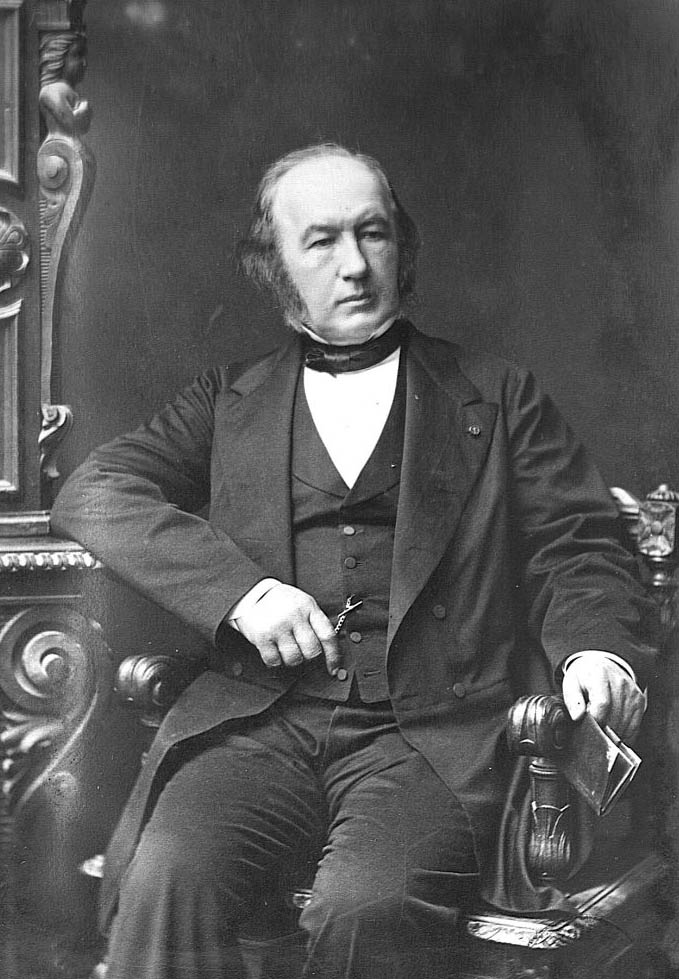
Claude Bernard
French physiologistWikipedia
11
MENTIONS
6
EPISODES
6
PODCASTS
Search complete. 11 mentions across 6 episodes found for "Claude Bernard".
Sep 6, 2026

Michael ArmentaNARRATOR
as trembling is sometimes caused by rage long before exhaustion can have set in and as it sometimes accompanies great joy it would appear that any strong excitement of the nervous system interrupts the steady flow of nerve force to the muscles the manner in which the secretions of the alimentary canal and of certain glands as the liver kidneys or are affected by strong emotions is another excellent instance of the direct action of the sensorium on these organs independently of the will or of any serviceable associated habit there is the greatest difference in different persons in the parts which are thus affected and in the degree of their affection The heart, which goes on uninterruptedly, beating night and day in so wonderful a manner, is extremely sensitive to external stimulants.
Michael ArmentaNARRATOR
The great physiologist Claude Bernard has shown how the least excitement of a sensitive nerve reacts on the heart, even when a nerve is touched so slightly that no pain can possibly be felt by the animal under experiment.
Michael ArmentaNARRATOR
hence when the mind is strongly excited we might expect that it would instantly affect in a direct manner the heart and this is universally acknowledged and felt to be the case claude bernard also repeatedly insists and this deserves special notice that when the heart is affected it reacts on the brain and the state of the brain again reacts through the pneumogastric nerve on the heart so that under any excitement there will be much mutual action and reaction between these the two most important organs of the body the vasomotor system which regulates the diameter of the small arteries is directly acted on by the sensorium as we see when a man blushes from shame but in this latter case the checked transmission of nerve force to the vessels of the face can i think be partly explained in a curious manner through habit we shall also be able to throw some light though very little on the involuntary erection of the hair under the emotions of terror and rage the secretion of tears depends no doubt on the connection of certain nerve-cells but here again we can trace some few of the steps by which the flow of nerve-force through the requisite channels has become habitual under certain emotions A brief consideration of the outward signs of some of the stronger sensations and emotions will best serve to show us, although vaguely, in how complex a manner the principle under consideration of the direct action of the excited nervous system of the body is combined with the principle of habitually associated serviceable movements.
Michael ArmentaNARRATOR
when animals suffer from an agony of pain they generally writhe about with frightful contortions and those which habitually use their voices utter piercing cries or groans almost every muscle of the body is brought into strong action with man the mouth may be closely compressed or more commonly the lips are retracted with the teeth clenched or ground together there is said to be gnashing of teeth in hell and i have plainly heard the grinding of the mulle teeth of a cow which was suffering acutely from inflammation of the bowels the female hippopotamus in the zoological gardens when she produced her young suffered greatly she incessantly walked about or rolled on her sides opening and closing her jaws and clattering her teeth together with man the eyes stare wildly as in horrified astonishment or the brows are heavily contracted perspiration bathes the body and drops trickle down the face the circulation and respiration are much affected hence the nostrils are generally dilated and often quiver or the breath may be held until the blood stagnates in the purple face If the agony be severe and prolong, these signs all change.
Michael ArmentaNARRATOR
Utter prostration follows, with fainting or convulsions.
Michael ArmentaNARRATOR
A sensitive nerve, when irritated, transmits some influence to the nerve cell, whence it proceeds, and this transmits its influence first to the corresponding nerve cell on the opposite side of the body, and then upwards and downwards along the cerebrospinal column to other nerve cells to a greater or lesser extent, according to the strength of the excitement, so that, ultimately, the whole nervous system may be affected.
Michael ArmentaNARRATOR
this involuntary transmission of nerve force may or may not be accompanied by consciousness why the irritation of a nerve cell should generate or liberate nerve force is not known but that this is the case seems to be the conclusion arrived at by all the greatest physiologists such as mller burchow bernard etc as mr herbert spencer remarks it may be received as an unquestionable truth that at any moment the existing quantity of liberated nerve force which in an inscrutable way produces in us the state we call feeling must expend itself in some direction must generate an equivalent manifestation of force somewhere so that when the cerebrospinal system is highly excited and nerve force is liberated in excess it may be expended in intense sensations active thought violent movements or increased activity of the glands mr spencer further maintains that an overflow of nerve force undirected by any motive will manifestly take the most habitual routes and if these do not suffice will next overflow into the less habitual ones consequently the facial and respiratory muscles which are the most used will be apt to be first brought into action then those of the upper extremities next those of the lower and finally those of the whole body An emotion may be very strong, but it will have little tendency to induce movements of any kind, if it has not commonly led to voluntary action for its relief or gratification.
Michael ArmentaNARRATOR
And when movements are excited, their nature is to a large extent determined by those which have often and voluntarily been performed for some definite end under the same emotion.

Thalia FieldGUEST
So I'm interested by that, by these figures, these major scientific figures whose determined legacy is a kind of dulled awareness, whether it's Conrad Lorenz
Anne DeMarkinMODERATOR
or Claude Bernard or whoever.
Thalia FieldGUEST
I feel the same thing in a lot of science.
Thalia FieldGUEST
Now that's not to say that there are not millions of conservation scientists out there doing extremely good work.

Lawrence TraskNARRATOR
The introduction of the use of the microscope in clinical work widened greatly our powers of diagnosis, and we obtained thereby a very much clearer conception of the actual process of a disease.
Lawrence TraskNARRATOR
In another way, too, medicine was greatly helped by the rise of experimental pathology, which had been introduced by John Hunter, was carried along by Magendie and others, and reached its culmination in the epic-making researches of Claude Bernard.
Lawrence TraskNARRATOR
Not only were valuable studies made on the action of drugs, but also our knowledge of cardiac pathology was revolutionized by the work of Traube, Konheim, and others.
Lawrence TraskNARRATOR
In no direction did the experimental method effect such a revolution as in our knowledge of the functions of the brain.
16 MINS LATER
Lawrence TraskNARRATOR
Internal Secretions.
Lawrence TraskNARRATOR
One of the greatest contributions of the 19th century to scientific medicine was the discovery of the internal secretions of organs.
Lawrence TraskNARRATOR
The basic work on the subject was done by Claude Bernard, a pupil of the great Magendie, whose saying it is well to remember, When entering a laboratory, one should leave theories in the cloakroom.
Lawrence TraskNARRATOR
More than any other man of his generation, Claude Bernard appreciated the importance of experiment in practical medicine.

speaker_2HOST
Absolutely.
speaker_2HOST
Back in the nineteenth century, the pioneering physiologist Claude Bernard coined the term milieu interior to describe this concept.
speaker_1HOST
The internal environment.
speaker_2HOST
Right.

Phil ChenevertNARRATOR
But when fortune has given one of the first chairs in the university to a man of four-and-thirty, he must try and act the part consistently.
Phil ChenevertNARRATOR
What a fellow Wilson is! If I could only throw the same enthusiasm into physiology that he does into psychology, I should become a Claude Bernard at the least.
Phil ChenevertNARRATOR
His whole life and soul and energy work to one end.
Phil ChenevertNARRATOR
He drops to sleep collating his results of the past day, and he wakes to plan his researches for the coming one.

speaker_25NARRATOR
Five centuries before him, under the Ptolemies, Egyptian experimenters had operated upon condemned persons.
speaker_25NARRATOR
so then vivisection is not as usually thought a diabolical invention of modern science in all ages the necessity has been recognized of operating upon animals that are nearest allied to man such as the monkey the hog and the dog and who share with the king of creation the privilege of eating a little of everything claude bernard however had another way of looking at things It is true that he especially made researches into the general laws of physiology, the secret of the vital functions, and the operation of the various organic systems that constitute living matter, but his immediate object was not to furnish weapons for the art of curing.
speaker_25NARRATOR
He left to physicians and surgeons the care of drawing conclusions from his great work in biology and of acting experimentally upon animals allied to man in order to found a rational system of therapeutics.
speaker_25NARRATOR
so he preferred to operate upon beings placed low in the animal scale, the frog especially, an animal that has rendered him greater service than even man himself could have done.
speaker_25NARRATOR
Yes, we do sometimes oppose useless sufferings upon animals.
speaker_25NARRATOR
It is a culpable folly, a beastly cruelty, to constantly repeat barbarous experiments with the object of exhibiting a well-known physical fact, a hundred times verified and always the same, when it would only be necessary to enunciate it.
speaker_25NARRATOR
but this is not the place to expatiate upon the subject after proclaiming the utility of vivisection we give it as our opinion that the practice of it should be confined within narrow limits it is not too much to ask that it be confined to the privacy of laboratories with the exclusion of visitors and to require from students a diploma guaranteeing their knowledge and giving a program of researches to be made it is useless to seek in the living what a study of the corpse reveals in all its details And now, after these preliminary remarks, we present herewith a series of cuts representing the various apparatus used in the practice of vivisection, which are taken from a recent work by Claude Bernard.
speaker_25NARRATOR
Figure 1 shows the mode of muzzling a dog with a strong cord placed behind an iron bit.