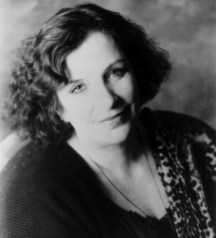
Clarissa Pinkola Estés
American writerWikipedia
11
MENTIONS
11
EPISODES
11
PODCASTS
Search complete. 11 mentions across 11 episodes found for "Clarissa Pinkola Estés".
Sep 15, 2026

BJ WeaverGUEST
Vanzant
Leslie C. Sotomayor IIHOST
... right, and, um, her work and, um, Clarissa Pink- Pinkola Estés, right-
BJ WeaverGUEST
Mm-hmm
Leslie C. Sotomayor IIHOST
... work.

Greer KirshenbaumHOST
And,
Britta BushnellGUEST
And our overculture, and overculture is a term I borrow from Clarissa Pinkola Estes, who is talking about the energies that press down on us.
Britta BushnellGUEST
Not all equally.
Britta BushnellGUEST
Not all equally.

Caleb CampbellGUEST
Unstriving is the descent into the underbelly of our lives.
Caleb CampbellGUEST
It is a descent away from this river above the deeper river of our lives, right? Clarissa Estes, the woman who runs Wolves, she talks about there's a river below the river.
Caleb CampbellGUEST
For many of us, we only know that first layer of a river, the river of survival, the river of false belonging, right? That river of approval and acceptance through more achievement and success.
Caleb CampbellGUEST
But there's a deeper river.

Amanda HansonGUEST
The Inner Authority Method is helping women build off of All of these eight archetypes that I've constructed and built inside of herself.
Amanda HansonGUEST
So normally, and this dawned on me a couple years ago, it's like the fact that one of the best selling books ever for women was Women Who Run With Wolves, right? By Clarissa Pinkola Estes.
Theo BergmannHOST
Okay.
Amanda HansonGUEST
It's a book based on goddesses and mythology and deity, right? All these different deities.

Kimberly Ann JohnsonHOST
Mm-hmm.
Gertrude LyonsGUEST
Uh, and, and if you saw other things that I'm not remembering or missing of [laughs] like I, you know, I, I, I love Clarissa Pinkola Estés' work, and she works with myth, you know? But it, to me it doesn't feel quite so, um, entrenched or w- in, in this like it's all about me kinda thing.
Kimberly Ann JohnsonHOST
Yeah.
Gertrude LyonsGUEST
I don't know.

Shawna McGrathHOST
your personal unconscious, but also is there a part of that that is societal, collective, and that is a function of being immersed in a capitalist, colonialized society? This process is often called decolonial work or decontamination.
Shawna McGrathHOST
And Dr. Jennifer Mullen and Dr. Clarissa Pinkola Estes have both written and spoken about this process.
Shawna McGrathHOST
And I think it is something that we could do over a lifetime and still have more work to do.
Shawna McGrathHOST
So this is the first thing is just acknowledging that maybe there is more here.

Jennifer AtkinsonSOUNDBITE_SPEAKER
So I chose a passage that predates our current moment, whose words seem timeless because their wisdom has little to do with the details of external events or and everything to do with the internal resilience we summon in times of adversity.
Jennifer AtkinsonSOUNDBITE_SPEAKER
The words are from poet Clarissa Pinkola Estes.
Jennifer AtkinsonSOUNDBITE_SPEAKER
Here's what she wrote.
Jennifer AtkinsonSOUNDBITE_SPEAKER
My friends, do not lose heart.

Trish SinghGUEST
What else is there if it's not your body? So the crone for me is owning the power of the mysterious at that space.
April PrideHOST
The book Trish is talking about is Women Who Run With the Wolves by the Jungian analyst Clarissa Pinkola Estes.
April PrideHOST
Published in 1992, it spent 145 weeks on the New York Times bestsellers list, a record at the time.
April PrideHOST
And one of the folktales Estes works with in it is La Llorona, The Weeping Woman Who Haunts the Water, which is the same story Trish grew up with in New Mexico.

Marie-Claire GouldHOST
of, of wholeness, right? Right.
Marie-Claire GouldHOST
um exactly you know it's it's it's it's uh it's interesting because like that is a major theme in all of the works that we talk about like clarissa pinkola estes marine murdoch it's a it's a it's a heroine's journey the the quest for wholeness like that is the the subline of that right yeah um when we talk about um bell hooks and healing the wounded masculine as a concept so specifically her work on you know the the masculinity, especially in, inside of our culture, she talks about living with integrity as you are finally being the whole
Marie-Claire GouldHOST
self, not just the sort of one that has to live in the violent world.
Marie-Claire GouldHOST
Right.

Siobhan AsgharzadehGUEST
Martine Prechtel talked a lot about grief and grieving and the lack of grief in this culture.
Siobhan AsgharzadehGUEST
Stephen Jenkinson, even Clarissa Pinkola Estes has been a teacher of mine for many years.
Siobhan AsgharzadehGUEST
I consider Wapio a great teacher in the work that I do, like that the My teachings around birth really supported me in what it is that I'm doing now, because I do feel like it's a birthing process.
Siobhan AsgharzadehGUEST
Softening the cervix, opening and becoming something new.
1 more episode mentions Clarissa Pinkola Estés.
Create an account to see the whole feed, search across every transcript, and follow the entities you care about.