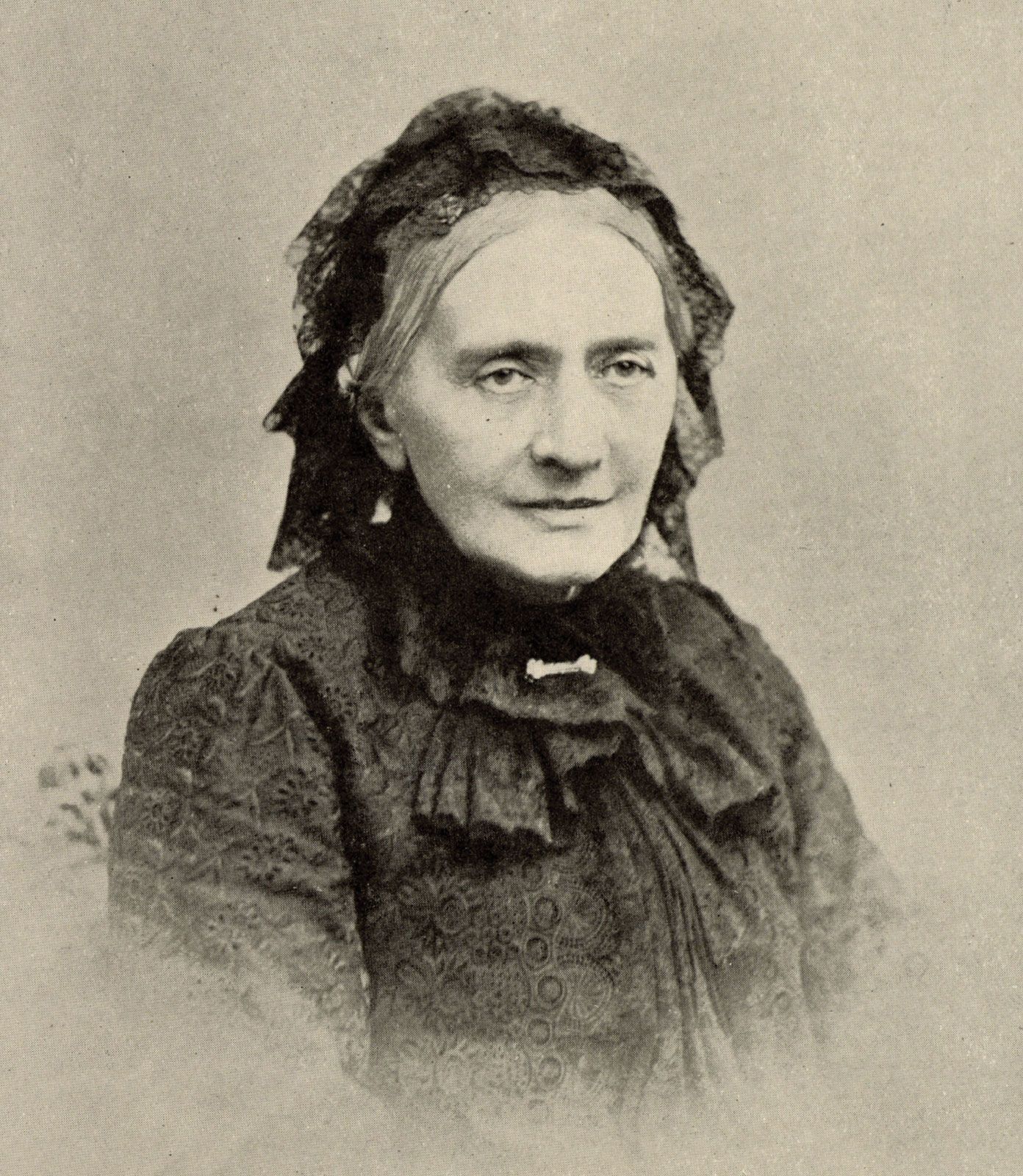
Clara Schumann
German pianist and composerWikipedia
55
MENTIONS
22
EPISODES
20
PODCASTS
Search complete. 55 mentions across 22 episodes found for "Clara Schumann".
Sep 26, 2026

speaker_2NARRATOR
He was continually poor and everlastingly driven to borrowing.
speaker_2NARRATOR
unquestionably the circle of acquaintances robert made during his first days in leipsic was not large though he was very happy to find his old friends from zwickau dr and mrs at their home he met some musicians of prominence heinrich marschner then conductor of the leipsic stadttheater gottlob wiedebein a song composer of some distinction at the time and two people who almost more than any others were destined to play crucial roles in his life the piano teacher friedrich wieck and his nine-year-old daughter clara whom her father was assiduously grooming for a great artistic career beek in particular was a rather extraordinary if unsympathetic person he had had a difficult and impecunious youth kept body and soul together by giving music lessons for a few pennies a week and subsisted largely on the bounty of friendly families who invited him now and then to a dinner of roast mutton and string beans he aspired to become a minister studied theology but preached no more than a trial sermon he was something of a traveller and had been to vienna where he met beethoven the privations and troubles of his youth hardened his character his first wife stood his spectacular tantrums for eight years then obtained a divorce and married a berlin musician named bargiel by this second marriage the mother of clara wieck had a son voldemar who later made a name for himself as a composer though a hard-boiled martinet and as time went on a tyrant of the first order wieck was not wholly without good qualities his unscrupulous treatment of schumann and his own daughter has made him the object of much historical in the main abundantly justified yet he was a good teacher for all his irascible disputatious ways and his devotion to the artistic causes he believed in could be very genuine from the first he appreciated schumann's creative talent and never concealed the fact outrageously as he came to demean himself to the composer and clara alike clara was of course her father's most famous pupil yet he had others notably his daughter by his second marriage marie and hans von the qualities he aimed to cultivate in his pupils were according to clara the finest taste the profoundest feeling and the most delicate hearing to this end he demanded that his students listen to great singers as much as possible and even learn to sing themselves exactly a year after he had come to leipsic robert was off to heidelberg there ostensibly to carry on his legal studies with thiebaud and another famous jurist mittermeier yet what chiefly busied him at heidelberg was not jurisprudence but music under the teaching which in leipzig he had begun to enjoy with wieck he was developing into a first-rate virtuoso and stirred all who heard him especially by his fantastic skill in improvisation before long he was turning down invitations to concertise in places like mannheim and mainz he practised tirelessly played composed read poetised and became one of the social lions of the neighbourhood as well Out of his old guardian back in Zwickau he wheedled money enough to defray the expenses of a summer jaunt to Italy.
speaker_2NARRATOR
shortly after his return he heard paganini in frankfurt and reacted to the overwhelming impression in much the same manner as his contemporary liszt and in an earlier day schubert it was out of this revelation of diabolical virtuosity that his piano transcriptions of certain paganini violin caprices overshadowed subsequently by those of liszt were to grow to his mother robert confided little about his creative achievements in his heidelberg days the better to prepare her for the more remunerative plan he was forming of a virtuoso career yet in this period he conceived several works which were to become part of the foundations of his fame things like the abeg variations the papillons the superb vertiginous To be sure, the Papillons were only begun in Heidelberg and the Toccata revised several years later.
speaker_2NARRATOR
a word however about the abeg variations the composer's opus one the theme is one of those alphabetical inspirations he was to utilize even more imaginatively later on that is to say it is based on the note succession a b e g g and its inversion schumann had indeed known a flirtatious mette abeg in nearby mannheim and had developed a tender feeling for her yet when he published the work he found it wiser to resort to mystification and so he dedicated it to an imaginary countess pauline von abag who served the purpose just as well the abag variations though unmistakable schumann have rather less than their creator's subsequent technical ingenuity and seem more like outgrowths of the virtuoso principles of hummel and weber but the elaborate dreaming and light-hearted pleasures of heidelberg could not go on forever on july thirty eighteen thirty robert took the bull by the horns and confided to his mother that music not law was for weal or woe to be his destiny was invited to settle the question that awesome pedagogue wrote to the widow schumann a long and circumstantial letter larded with many an if and but having considered the problem from every angle he urged the good woman to yield to her son's wish robert so vic assured her could under his training become one of the foremost pianists of the time if the plan misfired he could always return to his legal studies to every intent the youth's course was now clear and for all time he was freed from his nightmare back in leipsic robert took up his residence in the wieck home the quicker to pursue his pianistic studies but in one thing he was less moderate than his teacher could have wished he obstinately declined to make haste slowly he would become a great pianist yet he wanted a short cut to that goal the idea of practising dull finger exercises for hours on end every day revolted him already in heidelberg he had discussed with his friend tippken a project for overcoming the weakness of the fourth finger he found an excuse for breaking off his lessons with wieck a little while and with his fourth finger held up by some home-made contrivance he practised furiously in solitude precisely what happened we do not know the first intimation that something was amiss emanated from a letter written to his brother edouard on june fourteenth eighteen thirty two edouard is instructed to show this passage to his mother edouard will inform you of the strange misfortune that has befallen me this is the reason of a journey to dresden which i am going to take with although i undertake it on the advice of my doctor and also for distraction i must do a good deal of work as well there soon afterwards he wrote that his room looked like an apothecary's shop for years to come letters to one person or another speak of treatments and cures prospects of improvement or stubborn developments which promised to futilize all his virtuoso ambitions the long and the short of it was that robert had so incurably lamed his right hand that for purposes of a public career it was as good as useless after a fashion he could still play piano but the particular glory to which he aspired was nipped in the bud who shall say that the accident was an unmitigated misfortune would schumann have bequeathed us the treasures he did had he wandered incessantly over the map of europe to gain the transient rewards of an itinerant pianist would his characteristic style of piano writing have been what it is it has been surmised that certain distinctive traits of it are directly or indirectly the products of his self-made physical disability and can we be sure that the nervous instability associated with the inherited illness of the entire schumann line might not have struck him down even earlier precipitated by the worries and strains to which an executant is forever subject if robert still wished to be a musician it had to be in a creative sense under the circumstances he would require a fuller training than he had yet enjoyed in the technique of composition wieck had recommended for a master in theory none other than kantor weinlich the teacher of his own daughter clara and of a certain irresponsible young firebrand named richard wagner robert did not accept the suggestion instead he became a pupil of heinrich dorn recently come to leipsic who promised to be a more progressive person schumann esteemed dorn personally and long remained his friend but soon he was writing to wieck and his daughter then off on a concert tour i shall never be able to amalgamate with dorn he wishes to get me to believe that music is fugue heavens how different men are Nonetheless, he slaved away at his exercises in double counterpoint, and when the study became too intolerably dry, he moistened it with draughts of champagne.
22 MINS LATER
speaker_2NARRATOR
Bit by bit, Beek's case disintegrated.
speaker_2NARRATOR
With the help of a friendly advocate, Robert was able to show that his means were ample to support a family.
speaker_2NARRATOR
then wieck played what he believed would be his trump card he maintained that schumann was a drunkard instantly robert's friends rallied to his support mendelssohn even declaring himself ready to testify in court that the accusation was outrageously false on august twelfth eighteen forty the decision was handed down in favor of the sorely tried couple and their marriage received judicial sanction On September 5 she gave a concert in Weimar, my last as Clara Wieck.
speaker_2NARRATOR
one week later and a day before clara's twenty-first birthday they were married at schirnfeld a tiny suburb of leipsic on the previous evening robert had brought her a bridal offering richer than fine gold the song cycle mirthen enclosing such deathless blooms as die lotusblume der nussbaum du bist wie eine blume and when they returned from church next morning clara wrote in her diary a period of my life is now closed now a new life is beginning a beautiful life a life in him whom i love above all above myself but grave duties rest with me too end of part two part three of robert schumann tone poet prophet and critic the period through which we have passed witnessed the birth of many of schumann's greatest piano composition the david's bundler tenza the carnival the f sharp minor sonata the kindersehnen the symphonic studies the christ's lyriana the c major phantasie the things which along with others scarcely less great were to become what might be called daily bread of pianists his circle of musical friends was steadily widening those he esteemed most highly perhaps were mendelssohn and chopin mendelssohn was to both robert and clara nothing less than a god the strange thing about this friendship is that much as the schumanns worshipped mendelssohn's music mendelssohn to the end of his days had virtually nothing to say on the subject of schumann's no doubt its novelty its bold fantasy its unprecedented imaginative qualities were in a measure alien to mendelssohn's ideals of formal logic clarity order It was not in his artistic nature to enjoy the work of a composer who, like Schumann, dreamed with the pedal down.

David WalesNARRATOR
His first wife stood his spectacular tantrums for eight years, then obtained a divorce and married a Berlin musician named Bargiel.
David WalesNARRATOR
By this second marriage, the mother of Clara Wieck had a son, Woldemar, who later made a name for himself as a composer.
David WalesNARRATOR
Though a hard-boiled martinet and, as time went on, a tyrant of the first order, Wieck was not wholly without good qualities.
David WalesNARRATOR
His unscrupulous treatment of Schumann and his own daughter has made him the object of much historical obloquy, in the main abundantly justified.
33 MINS LATER
David WalesNARRATOR
Instantly Robert's friends rallied to his support, Mendelssohn even declaring himself ready to testify in court that the accusation was outrageously false.
David WalesNARRATOR
On August 12, 1840, the decision was handed down in favor of the sorely tried couple, and their marriage received judicial sanction.
David WalesNARRATOR
On September 5, she gave a concert in Weimar, my last as Clara Wieck.
David WalesNARRATOR
One week later, and a day before Clara's 21st birthday, they were married at Schirnfeld, a tiny suburb of Leipzig.

Lynn ThompsonNARRATOR
these works placed schumann in the foremost rank of song composers and he is now held equal to schubert and franz in this form if not actually the greatest song-writer in the world france is more delicate schubert more simply melodious but schumann's songs are endowed with a warm vigour of strong emotion that has never been equalled his contemporaries felt their force but hardly realised their full power for one of the writers on schumann's own paper accorded them only a secondary rank in your essay on song-writing the composer replies it has somewhat distressed me that you should have placed me in the second rank i do not ask to stand in the first but i think i have some pretension to a place of my own posterity has been proud to place him with the foremost in other matters besides those relating to art the marriage was perfectly happy both husband and wife possessed simple domestic tastes and both were endowed with the innate modesty that prevented their being harmed by the continual praise of the world they lived for each other and for their children he modelled his compositions on lines to suit her artistic nature and she threw herself ardently into the task of giving these works to the world her days were spent in winning fame for him or in shielding his sensitive and irritable nature from too rude contact with the world now that his life was one of perfect tranquillity he withdrew more than ever from intercourse with strangers and became wholly absorbed in his domestic felicity and his creative work the complete happiness of his married life was bound to produce its effect on his nature and not only in the songs but in the larger works also his most beautiful music is due to the inspiring influences of this part of his life after a time his wife was able to entice him from the quiet home first in leipzig then dresden and finally dsseldorf that sheltered this scene of domestic harmony Sometimes her tours were taken alone, but at last she was able to draw him with her into the world.
Lynn ThompsonNARRATOR
in germany in the netherlands in austria even in russia constant triumphs awaited them there were a few exceptions chief among them being vienna the city where mozart struggled so long in vain and where gluck was unable to produce more than a passing impression by his great operatic reforms but nearly all the places they visited offered admiration and incense to the faithful pair of artists through schumann's genius that of his wife was influenced and clara schumann became far greater than clara wieck had ever been she became a true priestess of art she did not rest until she gave the world a clear understanding of the depth of thought in his great works she made her fame serve his and considered the recognition of his qualities her own reward yet it still happened at time that this recognition came slowly and in vienna as late as eighteen forty six he was spoken of merely as the husband of clara and after the court concert given by her some one turned to him with the question are you musical too gradually the perfect happiness was marred by the growing sickness of schumann always extremely nervous and excitable he had on one or two earlier occasions been forced to forego work in eighteen fifty one the disease became evident again by degrees his conduct grew more and more eccentric and he became a victim of actual delusions he often insisted that he heard one particular note or certain harmonies sounding or voices whispering messages of hope or of sorrow one night the spirits of schubert and mendelssohn seemed to reveal a theme to him upon which he tried to complete a set of variations at times he would work calmly and sensibly but one day in a fit of mental anguish he left his house alone and threw himself into the rhine rescued by some boatmen he went home to experience a few more lucid periods but insanity gradually mastered him.
Lynn ThompsonNARRATOR
His last two years were spent in a private asylum near Bonn, where he died July 29, 1846.
Lynn ThompsonNARRATOR
His wife, who had been on a tour in London, returned just in time to witness his end.
Lynn ThompsonNARRATOR
He was buried in Bonn, near the tombs of Beethoven and Schubert.
Lynn ThompsonNARRATOR
As widow, Clara Schumann continued faithfully the work of her married life.
Lynn ThompsonNARRATOR
Her many tours were still a means of performing her husband's music, and she was able to know that her life work was successful in germany at least soon after his death the name of schumann became immortal and the very peculiarities of his work were recognized as essentially national in character his widow found a home with her mother in berlin where she stayed for four years and whither she returned after twelve years in baden-baden In 1878 she became chief teacher of piano in the school founded by Dr. Hoch at Frankfurt, and there for ten years she lived and worked with the most complete success.
Lynn ThompsonNARRATOR
In 1892 she retired from her labours, and on May 19, 1896, her long life of usefulness came to a quiet end.

speaker_3NARRATOR
Before long poor Hector found himself as luckless in his second love affair as he had been in his first.
speaker_3NARRATOR
the various tours which ector undertook in germany brought him artistic honors and material successes of which in france he had never dreamed among average audiences he discovered a seriousness and a degree of taste such as were limited to a few circles at home he refashioned old musical friendships and cultivated new ones mendelssohn met him in leipsic and the pair continued the old artistic discussions and arguments as they had years before in rome felix was charming fascinating ceaselessly obliging and determined to be a guarantee for his french colleague's success the two exchanged batons to symbolize their professional amity felix praised some of hector's songs but avoided saying a word about his symphonies overtures or the requiem actually he detested them berlioz saw robert and clara schumann the former appeared wholly electrified by the offertory of my requiem the schumanns were hospitality itself even if clara sometimes found the frenchman cold indifferent morose and not the kind of artist i like robert however feels a sympathy for him which i cannot explain mendelssohn privately confessed that he felt like washing his hands after he had been through a berlioz score in dresden there was richard wagner whose rienzi in flying dutchman ector listened to with interest and who turned himself inside out to assist the extraordinary visitor in training orchestra and chorus for his concert in that city one thing astonished berlioz and grew to be something of a fly in the german ointment that worship of bach with which he was surrounded people do not believe that this divinity can ever be subjected to question he sighed heresy on the subject is forbidden bach is bach just as god is god On these travels, which went on intermittently for years, Hector visited not only Germany, but also Austria, Bohemia, Hungary, Russia.
speaker_3NARRATOR
He went to Russia in 1847 and later.
speaker_3NARRATOR
There he was greeted like a conqueror, and more than any other nation, that country proved materially a gold mine to him.

KateGUEST
That's why we keep sort of raiding the cupboards and seeing what's in there, really.
KateGUEST
So this season alone, we've played works by Fanny Mendelssohn, Clara Schumann, Florence Price, and a lot of these just haven't been heard before.
KateGUEST
I still
Yolanda BrownHOST
find it remarkable when we hear about Florence Price and they leave people flabbergasted when you listen to it and you feel shaken to the core and you just think, wow, these haven't been heard.

Anna WilliamsSOUNDBITE_SPEAKER
I'm Anna Williams, the violinist of the Neve Trio, and in our new album, In Her Hands, we are celebrating the work of three extraordinary and trailblazing women composers, all of whom not only wrote their own work, but performed it and truly paved their own paths in a world that was often not welcoming to them based upon their sex.
Anna WilliamsSOUNDBITE_SPEAKER
This the Andante from Clara Schumann's beautiful piano trio.
Anna WilliamsSOUNDBITE_SPEAKER
Clara Schumann was an incredible figure, a genius composer and performer, a piano virtuoso, the muse and mentor to both Johannes Brahms and her husband, Robert Schumann.
Anna WilliamsSOUNDBITE_SPEAKER
She also was the person who kept her family afloat when times were tough, including when her own husband, Robert, was institutionalized because of his severe mental health struggles.
Anna WilliamsSOUNDBITE_SPEAKER
All the while, she was the mother to eight children and was someone who could clearly express not only her love of performing and composing, but the conflict that that would give internally when she would have to leave her own children to go and perform and keep the family going.
Anna WilliamsSOUNDBITE_SPEAKER
We hope you enjoy this Andante where you can hear all of that, her struggle, her heartfelt melodies, her tenderness, the tumult in her life.
Anna WilliamsSOUNDBITE_SPEAKER
It's all there.
Anna WilliamsSOUNDBITE_SPEAKER
And we hope you enjoy the Andante from Clara Schumann's piano trio.

speaker_0HOST
Leonard Borwick passed away in 1925 at the age of 57 from an undisclosed illness.
speaker_0HOST
Direct pupil of Clara Schumann, the English concert pianist, was famous for his expressive recitals of Robert Schumann and also Johannes Brahms.
speaker_0HOST
Charles Lynch passed away in 1984 at the age of 77 from an illness.
speaker_0HOST
Irish concert pianist famous for his technical precision and for also premiering groundbreaking 20th century classical works by composers like Arnold Bax and Sergei Prokofiev.

Jed DistlerHOST
But then the variations grow more and more complex and emotionally varied as the Chaconne unfolds.
Jed DistlerHOST
In a letter to Clara Schumann, Johannes Brahms described the Chaconne as a whole world of the deepest thoughts and most powerful feelings.
Jed DistlerHOST
And in this letter, Brahms went on to say that, if I imagine that I could have created, even conceived, the Chaconne, I am quite certain that the excess of excitement and earth-shattering experience would have driven me out of my mind.
Jed DistlerHOST
If one doesn't have the greatest violinist around, then it is well the most beautiful pleasure to simply listen to its sound in one's mind.

Sandra MogensonHOST
Published by Pegasus, and it's about to be released in North America September 29th, and in the UK October 29th.
Sandra MogensonHOST
And we're going to hear from Sarah all about the writing of her book, and of course we'll delve into the remarkable life and work of Clara Schumann.
Sandra MogensonHOST
And I just can't wait to talk about all of this with you, Sarah.
Sandra MogensonHOST
Welcome, and thank you for coming on the Women of Notes podcast.
Sarah FritzGUEST
This is really exciting work going on here.
Sandra MogensonHOST
Seemed appropriate also to begin, launch the podcast on the actual birthday of Sandra.
Sandra MogensonHOST
Clara Schumann, September 13th.
Sandra MogensonHOST
So thank you
Molly McCannGUEST
but I was able to buy, you know, through my piano teacher, I don't know how she found it, but she found some additions.
Molly McCannGUEST
I think like the, the Hildegard edition of the Amy Beach piano concerto and some collections by Chaminade and Clara Schumann's piano trio.
Molly McCannGUEST
And so I had these kind of little glimpses as a 15, 16 year old into works by women composers, but they weren't comprehensively recorded and, And they were just, in general, kind of hard to get.
Molly McCannGUEST
And then I went to university, very quickly found out that I didn't like studying music at the undergraduate level.
12 more episodes mention Clara Schumann.
Create an account to see the whole feed, search across every transcript, and follow the entities you care about.