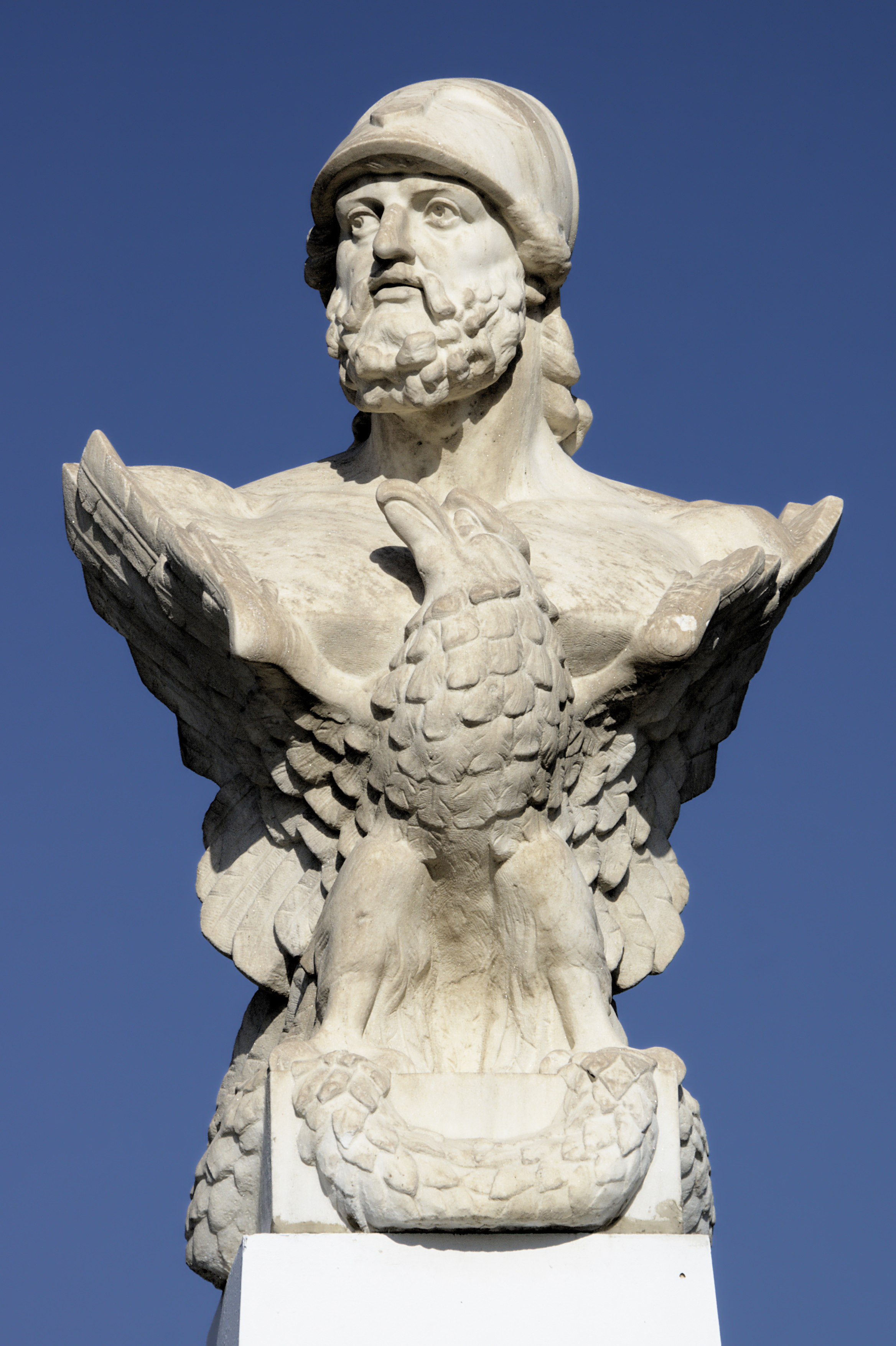
Cimon
PoliticianWikipedia
28
MENTIONS
4
EPISODES
2
PODCASTS
Search complete. 28 mentions across 4 episodes found for "Cimon".
Oct 21, 2026

speaker_3NARRATOR
Ere long Byzantium fell back again into the hands of Persia, but she was finally freed from the Oriental yoke seventeen years later, when the victorious Greeks, fresh from the triumph of Salamis and Mycale, sailed up to her walls and after a long leaguer starved out the obstinate garrison, B.C. 479.
speaker_3NARRATOR
The fleet wintered there, and it was at Byzantium that the first foundations of the naval empire of Athens were laid, when all the Greek states of Asia placed their ships at the disposal of the Athenian admirals Cimon and Aristides.
speaker_3NARRATOR
During the fifth century Byzantium twice declared war on Athens, now the mistress of the seas, and on each occasion fell into the hands of the enemy, once by voluntary surrender in 439 B.C., once by treachery from within in 408 B.C.
speaker_3NARRATOR
But the Athenians, except in one or two disgraceful cases, did not deal hardly with their conquered enemies, and the Byzantines escaped anything harder than the payment of a heavy war indemnity.
speaker_3NARRATOR
Besides, since he was rich, of brilliant lineage, and had friends of the greatest influence, he feared that he might be ostracized, and so at first had naught to do with politics, but devoted himself rather to a military career, where he was brave and enterprising.
speaker_3NARRATOR
However, when Aristides was dead, and Themistocles in banishment, and Cimon was kept by his campaigns for the most part abroad, then at last Pericles decided to devote himself to the people, espousing the cause of the poor and the many instead of the few and the rich, contrary to his own nature, which was anything but popular.
speaker_3NARRATOR
But he feared, as it would seem, to encounter a suspicion of aiming at tyranny, and when he saw that Cimon was very aristocratic in his sympathies, and was held in extraordinary affection by the party of the good and true, he began to court the favor of the multitude, thereby securing safety for himself, and power to wield against his rival.
speaker_3NARRATOR
Straightway, too, he made a different ordering in his way of life.
speaker_3NARRATOR
On one street only in the city was he seen to be walking, the one which took him to the marketplace and the council-chamber.
9 MINS LATER
speaker_3NARRATOR
Whereupon Simon came back from banishment and made peace between the cities.
speaker_3NARRATOR
For the Lacedaemonians were as kindly disposed towards him as they were full of hatred towards Pericles and the other popular leaders.
speaker_3NARRATOR
Some, however, say that the decree for the restoration of Cimon was not drafted by Pericles until a secret compact had been made between them, through the agency of Elpinice, Cimon's sister, to the effect that Cimon should sail out with a fleet of two hundred ships, and have command in foreign parts, attempting to subdue the territory of the king, while Pericles should have supreme power in the city.
LeniNARRATOR
For instance, while he was still young and obscure, he prevailed upon Epicles of Hermione, a harpist who was eagerly sought after by the Athenians, to practise at his house because he was ambitious that many should seek out his dwelling and come often to see him.
LeniNARRATOR
Again, on going to Olympia he tried to rival Cimon in his banquets and booths and other brilliant appointments, so that he displeased the Hellenes.
LeniNARRATOR
For Cimon was young and of a great house, and they thought they must allow him in such extravagances; but Themistocles had not yet become famous, and was thought to be seeking to elevate himself unduly without adequate means, and so was charged with ostentation.
LeniNARRATOR
And still again, as choregus or theatrical manager, he won a victory with tragedies, although even at that early time this contest was conducted with great eagerness and ambition, and set up a tablet commemorating his victory with the following inscription: Themistocles the Phrearrhean was choregus, Phrynichus was poet, Adeimantus was archon.
LeniNARRATOR
However, he was on good terms with the common folk, partly because he could call off-hand the name of every citizen, and partly because he rendered the service of a safe and impartial arbitrator in cases of private obligation and settlement out of court.
47 MINS LATER
LeniNARRATOR
Some, it is true, say that it was Phthia, the wife of the king, who suggested this form of supplication to Themistocles, and that she seated her son on the hearth with him.
LeniNARRATOR
And certain others that Admetus himself, in order that he might give a religious sanction to the necessity that was upon him of not surrendering the men, arranged beforehand and solemnly rehearsed with him the supplication scene.
LeniNARRATOR
Either his wife and children were privately removed from Athens and sent to him by Epikrates of the deme Acharnae, who, for this deed, was afterwards convicted by Cimon and put to death, as Ctesimbrotus relates.

Scott EmmonsHOST
Miltiades was off the hook because in no time he was dead from that gangrenous wound.
Scott EmmonsHOST
That left his son Kimon to pay off the fine.
Scott EmmonsHOST
But Xanthippus was not the only political enemy of Miltiades.
Scott EmmonsHOST
Themistocles' star was rising fast.
Scott EmmonsHOST
As you may remember from an earlier episode, ostracism was a form of temporary exile.
Scott EmmonsHOST
The assembly would vote each year on whether there was gonna be an ostracism, and if the vote was yes, the citizens would gather on an appointed day in the Agora to vote.
Scott EmmonsHOST
They'd scratch the name of the person they wanted to get rid of on an ostrakon, a potsherd, and put it into an urn to be counted.
Scott EmmonsHOST
If a minimum number of six thousand votes were cast, the person with the most votes had to stay away from Athens for 10 years, although they still kept their citizenship and their property.