Chronotype
7
MENTIONS
6
EPISODES
4
PODCASTS
Search complete. 7 mentions across 6 episodes found for "Chronotype".
Nov 3, 2026

Jim KwikHOST
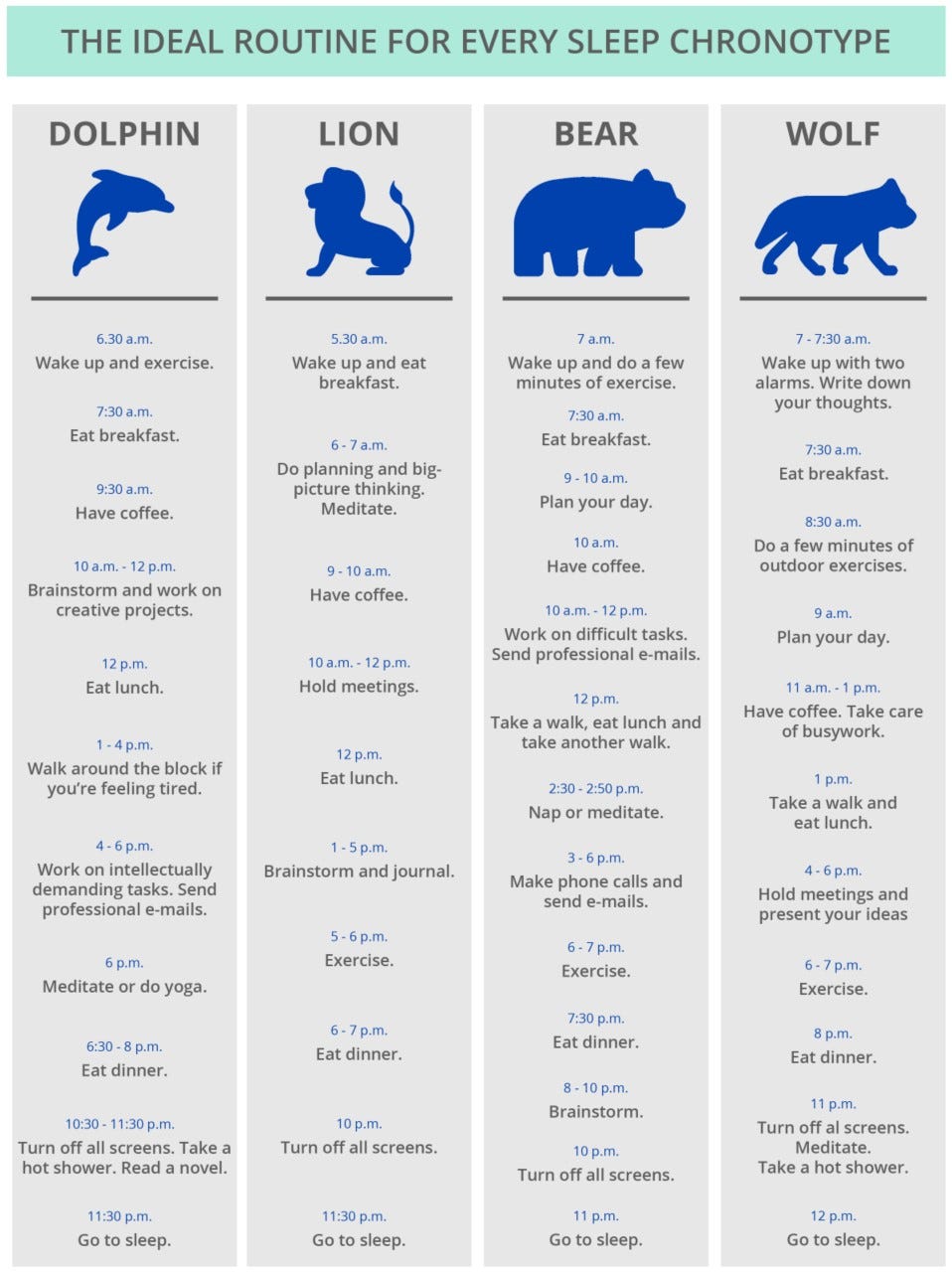
And it's a real masterclass in this thing called chronotypes.
Jim KwikHOST
Chronotype is like a body type.
Jim KwikHOST
And because your body, everyone's a little bit different, we express our hormone production.
Jim KwikHOST
And so based on those hormones, there are different types, time types, if you will, and you can identify the best time to do certain things.

speaker_6NARRATOR
Individual responses to seasonal changes in light and temperature vary considerably.
speaker_6NARRATOR
Chronotype, whether a person is naturally a morning type or an evening type, affects how the seasons are experienced, with evening types generally showing larger seasonal shifts in timing and duration.
speaker_6NARRATOR
Evening types tend to have more difficulty with winter mornings, because their circadian clocks are already set later than society expects, and the winter darkness pushes them even later.
speaker_6NARRATOR
Morning types, whose clocks are naturally earlier, may find winter less disruptive because the earlier onset of darkness aligns more closely with their preferred schedule.
speaker_7HOST
People with a late chronotype, sometimes called owls, may not feel it until midnight or even later.
speaker_7HOST
About 25% of the population lean strongly toward the early type About 25% lean strongly toward the late type, and the remaining 50% falls somewhere in between.
speaker_7HOST
Chronotype is influenced by several genes, including the PER3 gene, which affects how quickly adenosine builds up pressure during the day.
speaker_7HOST
People with a longer version of the PER3 gene tend to accumulate pressure faster and feel heavy eyes earlier.
speaker_7HOST
Teenagers have a well-documented shift toward the late chronotype that begins around age 12 and peaks around age 19 or 20.

Loren LoRosaHOST
Mm.
Steven BartlettGUEST
I have a chronotype which they call an owl.
Steven BartlettGUEST
Chronotypes are, you know...
Steven BartlettGUEST
There's basically three different chronotypes, and it represents when in the day you do your best work.
Steven BartlettGUEST
The thinking here is that when we're in tribes, we didn't all wanna sleep at the same time.
speaker_0NARRATOR
The brain's sensitivity to light varies across the twenty-four-hour day, with the circadian system being most responsive in the early morning and least responsive in the middle of the day.
speaker_0NARRATOR
Chronotype, whether a person is naturally a morning type or an evening type, is partly determined by genetics, with studies suggesting that at least fifty percent of the variation is heritable.
speaker_0NARRATOR
Multiple genes have been associated with chronotype, including PER2, PER3, CRY1, and several others that influence the speed of the molecular clock.
speaker_0NARRATOR
People with a variant of the CRY1 gene that produces a longer-lasting cryptochrome protein tend to have longer circadian cycles and are more likely to be night owls.
speaker_0NARRATOR
Evening types, or owls, tend to have cycles slightly longer than twenty-four hours, causing their clock to drift later and making it harder to fall asleep at conventional bedtimes.
speaker_0NARRATOR
Most people fall somewhere in the middle of the chronotype spectrum, being neither extreme morning types nor extreme evening types, but having a mild preference for one or the other.
speaker_0NARRATOR
Chronotype shifts across the lifespan, with children tending to be morning types, adolescents shifting strongly toward eveningness, and older adults shifting back toward morningness.
speaker_0NARRATOR
The peak of eveningness occurs around age twenty on average, after which the circadian clock gradually moves earlier for the rest of a person's life.