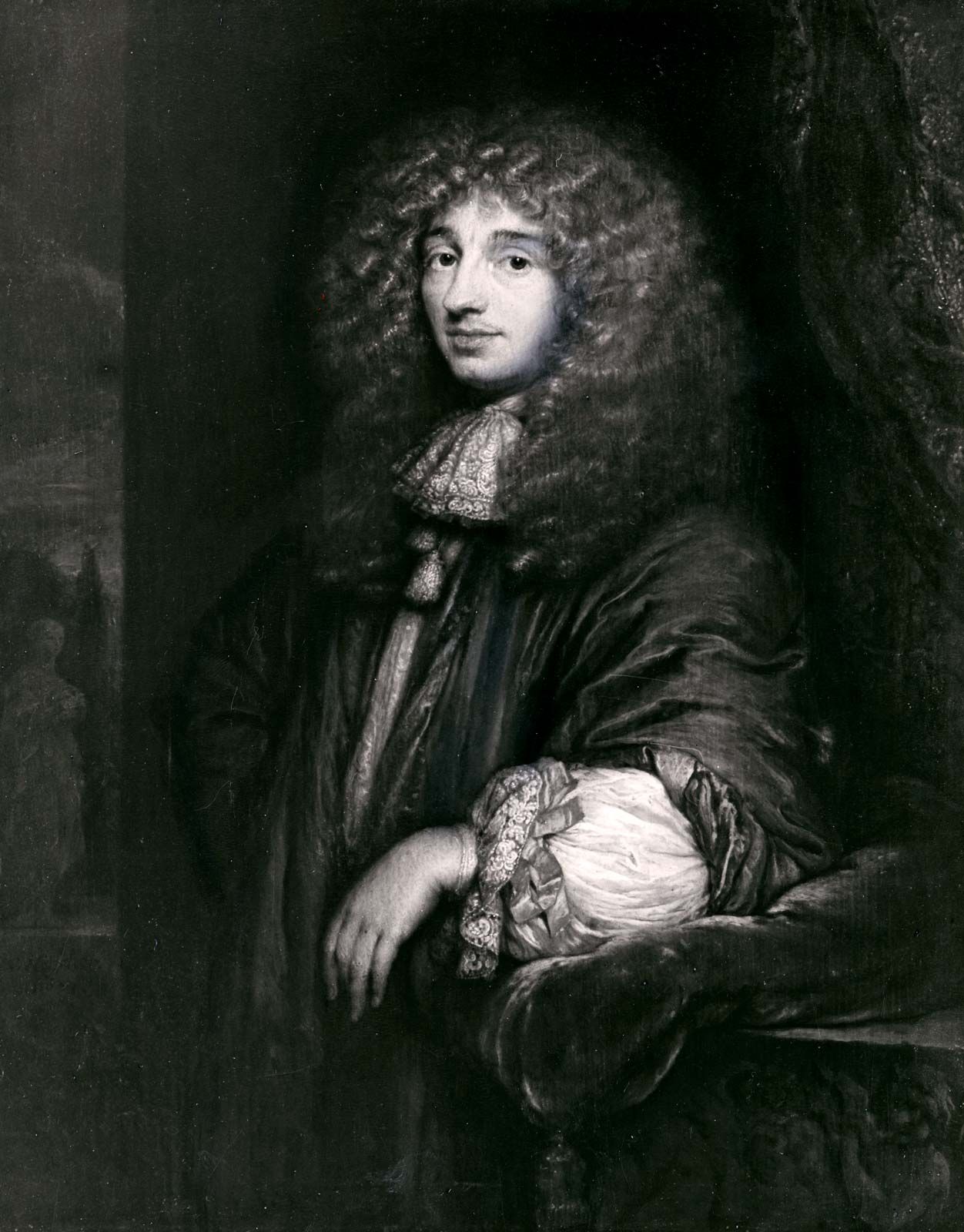
Christiaan Huygens
Dutch mathematician and physicistWikipedia
98
MENTIONS
36
EPISODES
33
PODCASTS
Search complete. 98 mentions across 36 episodes found for "Christiaan Huygens".
Sep 13, 2026

SamHOST
But the precision required for tracking minutes was still several centuries away and would not be attained by improving the old verge-and-foliot methods used thus far.
SamHOST
Rather, the big breakthrough eventually came halfway through the 17th century when Dutch mathematician and astronomer Christian Huygens reapplied the theoretical work on pendulums conducted by Galileo to invent the pendulum clock, the first timepiece accurate enough to track minutes as well as hours.
SamHOST
Patented in 1657, Huygens' device used a long pendulum rod that swung back and forth which, much like old clock towers, continuously latched onto and then released a weighted escape wheel.
SamHOST
Only a complete back-and-forth swing is capable of turning the dial, and this, my friends, is where we get that iconic, oh-so-familiar tick-tock sound you heard at the start.
SamHOST
[clock ticking] Huygens' pendulum clock minified the margins of error plaguing contemporary timepieces from about 15 minutes a day to just one minute per day, with later refinements minimizing this discrepancy further to just seconds.
SamHOST
Thus, the pendulum clock became the standard for another 250 years to come, revolutionizing humanity's relationship with time in the fields of science, astronomy and, before long, transportation.
SamHOST
But when it came to the latter, these devices were far from ideal, not least because they were so large and importable while also being vulnerable to temperature changes that muddled their ticks.

John TrevithickNARRATOR
The abounding presence of numerous experimental motors today is so stimulating to the imagination, there are so many stimulated persons at work upon them, that it is difficult to believe the obvious impossibility of most of them, their convulsiveness, clumsiness, and in many cases, exasperating trail of stench will not be rapidly fined away.
John TrevithickNARRATOR
Footnote Explosives as a motive power were first attempted by Huygens and one or two others in the 17th century.
John TrevithickNARRATOR
And just as with the turbine type of apparatus, it was probably the impetus given to the development of steam by the convenient co-location of coal and water, and the need for an engine, that arrested the advance of this parallel inquiry until our own time.
John TrevithickNARRATOR
Explosive engines in which gas and petroleum are employed are now abundant, but for all that we can regard the explosive engine as still in its experimental stages.

Saint AnandaNARRATOR
She yields her treasures to such only as fear not.
Saint AnandaNARRATOR
I had read in a book of Huygens, Guinand, Newton, Herschel, the great high priests of science who had striven through patient years to read the hieroglyphics of the heavens.
Saint AnandaNARRATOR
The wise imbeciles, I thought, they toiled and died, and nature held no mirror up to them.
Saint AnandaNARRATOR
For me, the poor Camellia, she worked in secret while they grew old and passed unsatisfied.

Aaron FitzgeraldGUEST
And we call our pilot facility Cassini.
Aaron FitzgeraldGUEST
In, uh, the 2000s, uh, NASA and the, uh, couple international space agencies launched a probe, uh, the Cassini-Huygens spacecraft.
Aaron FitzgeraldGUEST
It surveyed Saturn's moon, Titan, and what it found is on Titan, it naturally rains acrylonitrile, which is the monomer that we target.
Aaron FitzgeraldGUEST
So Huygens was the probe that was sent to actually collect that data and identified it.

Dale GrothmanNARRATOR
Alchemy, magic, astrology imposed on everyone's belief.
Dale GrothmanNARRATOR
Modern science began only after sixteen hundred, with Kepler, Galileo, Descartes, Torricelli, Pascal, Harvey, Newton, Huygens, and Boyle.
Dale GrothmanNARRATOR
Five men, telling one another in succession the discoveries which their lives had witnessed, could deliver the whole of it into our hands.
Dale GrothmanNARRATOR
Harvey might have told Newton, who might have told Voltaire; Voltaire might have told Dalton, who might have told Huxley, who might have told the readers of this book.

Eric BetzigGUEST
If light is waves and you're trying to get an image through light, then you can think of the light colloquially as like little fingers trying to feel the sample, right? And if the fingers are too fat, you're not gonna feel the structure below the level of those fingers, right? And so basically, about half the wavelength of light is what Ernst Abbe mathematically determined is the limit.
Eric BetzigGUEST
You know, he did it, but, you know, as soon as people understood the wave nature of light, going back to Huygens or, or certainly Maxwell, all of this could have been easily deduced.
Eric BetzigGUEST
Um, but he was the guy who really realized from a, from a real imaging perspective that that was a fundamental limit.
Eric BetzigGUEST
You know, in, in, in many fields, of course, you know, when I first started getting in in the '80s in graduate school, there was obviously already semiconductors and other structures that were pushing those same limits in terms of their manufacture and so forth.

Pamela NagamiNARRATOR
but to suppose that god created that tendency with the intention of deceiving him would argue a want of veracity in the divine nature incompatible with its perfection such reasoning obviously ignores the alternative that god might be deceiving us for our good or rather what we call truth might not be an insight into the nature of things in themselves but a correct judgment of antecedents and consequence Our consciousness would then be a vast sensory motor machinery adjusted to secure the maintenance and perfection of life.
Pamela NagamiNARRATOR
descartes as a mathematician places the essence of matter or body in extension here he agrees with another mathematical philosopher plato who says the same in his timaeus so far the coincidence might be accidental but when we find that the frenchman like the greek conceives his materialised space as being originally divided into triangular bodies the evidence of unacknowledged borrowing seems irresistible the more so that Huygens mentions this as customary with Descartes.
Pamela NagamiNARRATOR
The great author of The Method and the Meditations, for after every critical deduction his greatness as a thinker remains undoubted, contributed nothing to ethics.
Pamela NagamiNARRATOR
Here he is content to reaffirm the general conclusions of Greek philosophy, the necessary superiority of mind to matter, of the soul to the body, of spirit to sense.

GregHOST
Let's rewind the clocks and go back to the early 1600s and take a look at the magic lantern.
GregHOST
One of the earliest forms of animation technology is the magic lantern, which was invented during the 1650s by famous Dutch scientist Christian Huygens, and but was adapted from earlier forms of image projection that was being experimented with in Japan in the early 1600s.
GregHOST
And the magic lantern is often known as the first image projection device, using light sources and painted glass slides to simulate motion.
GregHOST
And the Magic Lantern is an early type of image projector and the direct historical predecessor to the modern slide projector and motion picture projector.
GregHOST
And originally, lanterns relied on simple candles or oil lamps, which produced very dim, faint projections, but then later were improved with the use of argon lamps and limelight.
GregHOST
and then even later developments included safer electric arc lamps and incandescent electric light bulbs.
GregHOST
Now, like we stated a moment ago, the device evolved naturally from optical phenomena like the camera obscura, and it even evolved from earlier projection concepts like Athenius' Kircher's steganographic mirror, but the Dutch scientist Christian Huygens is actually attributed to inventing the magic lantern.
GregHOST
Sketches found in his personal notes date back to 1659, and we also have a quote from his notebook.

speaker_2NARRATOR
Descartes produced formulae.
speaker_2NARRATOR
Huygens produced formulae.
speaker_2NARRATOR
Newton produced formulae.
speaker_2NARRATOR
As a particular example of the effect of the abstract development of mathematics upon the science of those times, consider the notion of periodicity.
speaker_2NARRATOR
Galileo observed the periodic vibrations of pendulums.
speaker_2NARRATOR
Newton explained sound as being due to the disturbance of air by the passage through it of periodic waves of condensation and rarefaction.
speaker_2NARRATOR
Huygens explained light as being due to transverse waves of vibration of a subtle ether.
speaker_2NARRATOR
Mersenne connected the period of the vibration of a violin string with its density, tension, and length.

Claude GrieslerGUEST
And if two watch movements start to synchronize and to influence each other, and synchronize their frequency, the time becomes much more consistent and the time is much more reliable to external shocks and impacts because they do help each other keeping a very consistent frequency.
Claude GrieslerGUEST
A phenomenon which got discovered by Christian Huygens, the inventor of the pendulum, more than 400 years ago, And then there was a handful of them, like the most famous watchmaker who dedicated themselves to solve the resonance problem.
Claude GrieslerGUEST
We had Abraham-Louis Breguet, we had Antti Janvier, recently we had François Paul Journe.
Claude GrieslerGUEST
So, because it's not only a huge challenge of having two independent movements in one watch, But to bring them to beat in synchronization is what it's all about, resonance.
26 more episodes mention Christiaan Huygens.
Create an account to see the whole feed, search across every transcript, and follow the entities you care about.