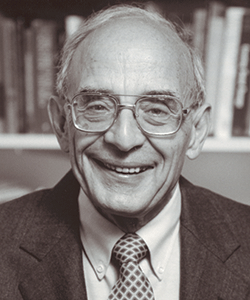
Chris Argyris
American professorWikipedia
9
MENTIONS
6
EPISODES
6
PODCASTS
Search complete. 9 mentions across 6 episodes found for "Chris Argyris".
Nov 3, 2026

Craig WeberGUEST
So my background academically is in organizational development and organizational psychology.
Craig WeberGUEST
And very early on in my academic career, I got interested in the work of Chris Argyris at Harvard and Don Schoen at MIT and their work around organizational learning and dialogue.
Craig WeberGUEST
So that's kind of where the interest came.
Craig WeberGUEST
And I was raised by a father who worked for the post office.

Anthony HodgsonGUEST
And Charles studied with him.
Anthony HodgsonGUEST
And then also, you could link this with the work that Chris Argyris did at MIT on defensive routines and our psychological weakness to want to defend what we're doing and be right, which means we don't want to be seen that way, so we camouflage ourselves.
Anthony HodgsonGUEST
that we're doing that.
Anthony HodgsonGUEST
And then, oh, that's naughty, so we camouflage the camouflage.

Angie RobinsonHOST
I'm going to talk about what's called the ladder of inference.
Angie RobinsonHOST
It was a concept developed by Chris Argyris and Peter Senge, if you've read any of his work, made it into what is known as the fifth discipline.
Angie RobinsonHOST
Now, in the insights discovery work I do, we talk about perception as one of the grounding concepts as we do the self-awareness work.
Angie RobinsonHOST
And it has been adapted a bit in insights to be called the ladder of perception.

Mark GrabanHOST
So let me ask about systems.
Mark GrabanHOST
You know, the subtitle of the book frames this around software delivery, but your sources include the aforementioned Dr. Deming, Walter Schuhart, Chris Argyris, Donella Meadows.
Mark GrabanHOST
I mean, is it really a book about software or is it a book about systems and leadership and such? I'm trying to help expand the market for you.
Mark GrabanHOST
Oh,
33 MINS LATER
Mark GrabanHOST
Yeah.
Mark GrabanHOST
Model one organizations.
Mark GrabanHOST
That's Chris Argyris.
Joel TosiGUEST
Yes.

EricHOST
And then at the third level, I-- Is, is it shared understanding as in it's a, it's a similar-- So like I don't know if you're familiar with his work, but a gentleman named Edgar Schein would've characterized this, I think, as underlying basic assumptions.
EricHOST
And in Chris Argyris' model, I forget exactly what it's called, but essentially it's the often unconscious set of values or beliefs that we share versus having a goal.
EricHOST
And I could see goals fitting in here, but it sounds to me like you're not saying, "What is the goal of democracy?" You said something to the effect of, "What is it that we're doing when we do democracy?"
Ilana RedstoneGUEST
Okay, so that's fascinating.