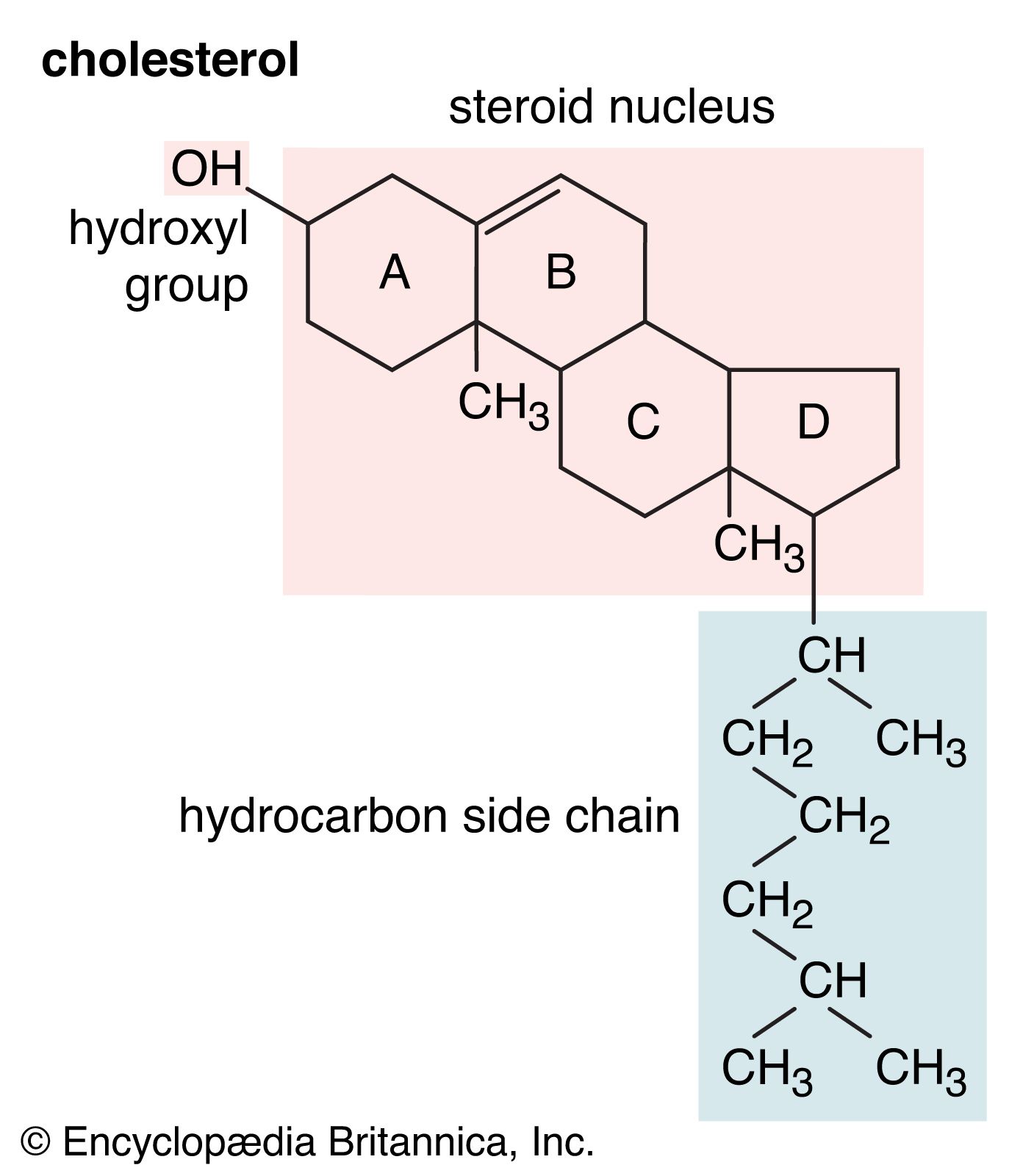
Cholesterol
CompoundWikipedia
106
MENTIONS
58
EPISODES
46
PODCASTS
Search complete. 106 mentions across 58 episodes found for "Cholesterol".
Nov 6, 2026

Ken SikarisGUEST
The family's got heart disease.
Ken SikarisGUEST
Cholesterol's 10.6.
Ken SikarisGUEST
Importantly, the triglycerides are two, which I would say is not normal.
Ken SikarisGUEST
He's got a normal level of these other things.
19 MINS LATER
Ken SikarisGUEST
And just one of the many, many studies, Jeff Volek saying that what the diet does better than anything is reduce small-dense LDL and triglycerides.
Ken SikarisGUEST
So here's a 49-year-old woman.
Ken SikarisGUEST
Cholesterol, she went onto the low-carb diet.
Ken SikarisGUEST
Cholesterol went from, she's a typical hyper-responder.

Cynthia ThurlowHOST
And if you take nothing else on the episode, make sure this part is covered for sure.
Cynthia ThurlowHOST
The foundation is a fasting lipid panel that includes an ApoB or non-HDL cholesterol, not just your standard HDL and total cholesterol.
Cynthia ThurlowHOST
It's fasting glucose plus A1C, it's blood pressure and it's waist circumference or waist to height ratio, not BMI alone.
Cynthia ThurlowHOST
I think BMI is garbage.

Thomas DayspringGUEST
So that's pretty much a basic lipid tutorial.
Thomas DayspringGUEST
I guess there's one other metric in the lipid panel I should mention, because we're really doing those cholesterol metrics to sort of guess, do I have a high ApoB or not? I would say, why don't you just measure the ApoB and forget about the cholesterol metrics? But the labs do report something called non-HDL cholesterol.
Thomas DayspringGUEST
And that is what it sounds like.
Thomas DayspringGUEST
It's the cholesterol is not in your HDL particles.
Thomas DayspringGUEST
From what I've just told everybody, if the cholesterol is not in an HDL particle, it has to be in an ApoB particle because those are the only other particles we have floating around.
Thomas DayspringGUEST
So non-HDL cholesterol is actually the best predictor of do you have or do you not have a high ApoB.
Thomas DayspringGUEST
And it's a simple, if the lab, more and more labs are reporting it, but if they don't, it's a two-second calculation.
Thomas DayspringGUEST
You take the total cholesterol level, that's the cholesterol that's in everything, LDLs, VLDLs, and HDLs.

Arti ThanguduHOST
And there's some reason for optimism.
Arti ThanguduHOST
In the trial program for or for glipron, the drug improved markers like waist circumference, non-HDL cholesterol, triglycerides, and blood pressure.
Arti ThanguduHOST
And those trials did include participants from Asian countries, including India.
Arti ThanguduHOST
But, and this is a big but, we don't have good data yet, especially on normal weight South Asians with metabolic syndrome.

speaker_0HOST
Unscrambling Myths.
speaker_0HOST
The Truth About Dietary Cholesterol and GMOs.
speaker_0HOST
Remember the days when eggs were the villains of breakfast? Back in 1968, the cholesterol content of eggs had them painted as dietary dangers, with recommendations to limit their intake.
speaker_0HOST
This cautionary stance was grounded in the belief that dietary cholesterol directly influences levels of bad cholesterol, or low-density lipoprotein , which is associated with heart disease.

Gil CarvalhoHOST
time and i've gotten it for years and i actually made a video a couple of years ago on eggs and cholesterol and do eggs raise serum cholesterol um but i still get this question almost daily and it's it's a source of confusion for people out there for the public and even for some health professionals so it's it's really great that we get the opportunity to shed some light yeah
Tom DayspringGUEST
and of course like most aspects of the body regulating lipids this can get quite complex i've actually written two very long book chapters on this topic now we're not going to get into those complexities uh for this audience but Everybody knows, hey, cholesterol is something at least I don't want to have in my arteries.
Tom DayspringGUEST
Cholesterol is necessary for a certain degree to every cell in your body.
Tom DayspringGUEST
So the body has powerful forces that regulates cholesterol in every cell in our body, every tissue in our body.
Tom DayspringGUEST
and the body has sensors that can say this person has too much cholesterol i got to get rid of it the only way a human can get rid of cholesterol is it has to go back into the intestine and it goes out with our stools in the feces that's how the body gets rid of unwanted cholesterol But the body also has the ability to sense, oh my goodness, this cell or that cell needs cholesterol, so I have to somehow get cholesterol to that cell.
5 MINS LATER
Tom DayspringGUEST
So it's a pretty monstrous molecule.
Tom DayspringGUEST
So most of the cholesterol we eat are cholesterol esters.
Tom DayspringGUEST
a few of the molecules of cholesterol we don't have a fatty acid attached to it it's simple cholesterol we're going to refer today tonight to that as free cholesterol the biological term is unastrified cholesterol but we're going to call it free cholesterol and it's so crucial because the only cholesterol molecule if it gets into your gut and goes to the small intestine that can be pulled in by specific receptors is free cholesterol Cholesterol ester, if it makes it that far, will just keep on passing right through your small intestine, right through your rectum and out in the stool.

speaker_1ADVERTISER
Consult a healthcare professional if symptoms persist.
Suneel DhandHOST
eight things that your cardiologist or indeed any type of doctor may not have told you about cholesterol this is one of the most common diagnoses out there and we are going to be very open and transparent with you and share our knowledge of things that you should definitely know about cholesterol and for anybody who enjoys our discussions please make sure that you are subscribed to our channel hit the subscribe button link down below Who else to get us started other than America's finest cardiologist, Dr. Peter? What's number eight on the list?
PeterGUEST
Cholesterol is just a number.
PeterGUEST
So cholesterol on its own, we always focus on it way too much.
PeterGUEST
And really, cholesterol on its own tells us very little.
PeterGUEST
It has to be taken into context of who the person is.
PeterGUEST
So an LDL or bad cholesterol of 120 in a 35-year-old is much different than a LDL or high cholesterol in a person who's already had a heart attack and so i think what we do as physicians and we always make the mistake is we don't take in the context of who the patient is so you have to make sure that it's what the age of the patient is whether the risk factors diabetes blood pressure because remember Cholesterol is just one little piece of the puzzle.
PeterGUEST
So what we don't focus on and what we should be focusing on is what's happening inside the arteries.

Khashayar FarzamGUEST
In women, it comes to the the thickest cells of the ovaries, and that's where it signals testosterone production.
Khashayar FarzamGUEST
Now, when that happens, and there's a very similar way of it, this testosterone production mechanism is quite similar in men and women, simply because when we have that binding of luteinizing hormone, the binds to the luteinizing hormone receptor, that activation that occurs is basically you're going to have Cholesterol, you know, we think of cholesterol in different ways, but cholesterol, when people often say it's important for hormone production, well, this is a key example.
Khashayar FarzamGUEST
It's important for the production of testosterone.
Khashayar FarzamGUEST
So now I don't want to go on a side rant about cholesterol, and I don't want to say that if you have more cholesterol, this process is going to happen more.

Eric BergHOST
If someone going through menopause is trying to go on a low-fat diet, they're going to have a hard time with these hormones.
Eric BergHOST
And so just to remind you for the hundredth time, cholesterol is needed to make these hormones.
Eric BergHOST
And Cholesterol is needed to make vitamin D.
Eric BergHOST
Cholesterol is needed to support all the cell membranes.
Eric BergHOST
Cholesterol is needed for your brain.
Eric BergHOST
And cholesterol helps your immune system.
Eric BergHOST
Cholesterol is needed to make bile salts, which is very, very important.
Eric BergHOST
And so this is why your liver makes so much cholesterol.

Stefan HartmannHOST
you're just gonna go average you know out in public and people will look normal weight like when when this thing gets into every primary care's clinic in the transcend type 2 diabetes trial both doses of red true tide lowered a1c by an average of 2.2 percent compared to 1.8 percent with ozempic at 80 weeks participants taking red true tide lost an average of 44 pounds that's 19.5 percent at 9 milligrams, and 47 pounds, 20.9% of the body weight at 12 milligrams, compared to 20.9 pounds, so only 9.4% of their body weight with Ozempic.
Stefan HartmannHOST
Ritrutide also delivered greater improvements than Ozempic across certain cardiovascular risk factors, including non-HDL cholesterol, triglycerides, and systolic blood pressure.
Stefan HartmannHOST
What were the primary endpoints? At the end of the 80-week head-to-head trial, a change in A1C from average baseline of 8.3%.
Stefan HartmannHOST
Redutrutide at 9 milligrams, down by 2.2%.
48 more episodes mention Cholesterol.
Create an account to see the whole feed, search across every transcript, and follow the entities you care about.