Choke point
28
MENTIONS
9
EPISODES
9
PODCASTS
Search complete. 28 mentions across 9 episodes found for "Choke point".
Sep 16, 2026

Eric EricksonHOST
I mean, I just genuinely like Brad.
Eric EricksonHOST
But he's got this book, Choke Point, and it...
Eric EricksonHOST
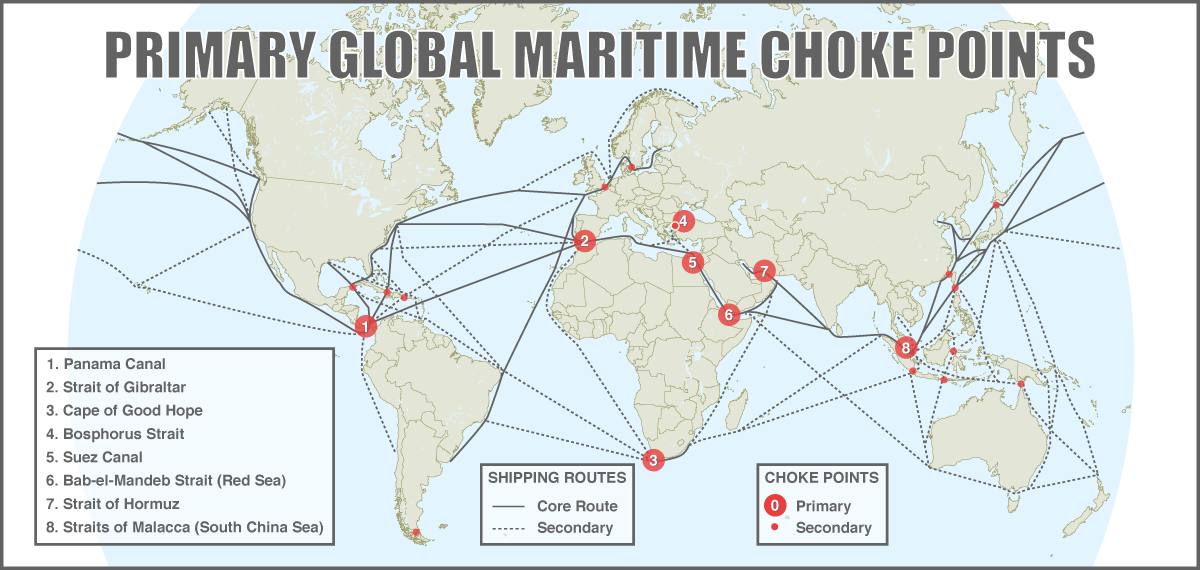
Brad is such a strategic forward thinker on this sort of stuff, and his book kind of focuses on there are these choke points in the world where you gotta be able to get shipping through for the world, and if you control the choke points, you can choke off trade around the world, including the shipping of oil.
Eric EricksonHOST
And, uh, so he's got this book, Choke Point.
Eric EricksonHOST
You should read it, but it, it's a very like, I mean, perceptive thinking.

Stephen GrootesHOST
Oil prices hitting nearly $110 a barrel today because the Strait of Hormuz is closed and because a Saudi Arabian pipeline has been damaged by Houthi attacks.
Stephen GrootesHOST
And that brings us quite nicely to today's book, Choke Points, How Economic Warfare is Changing the World.
Stephen GrootesHOST
It's by Edward Fishman.
Stephen GrootesHOST
Bronwyn Williams is a trend translator and future finance specialist at Flux Trends.
Stephen GrootesHOST
But we'll get Bronwyn Williams back for you just to continue that conversation.
Stephen GrootesHOST
It's an incredibly interesting book, though, and about what this means for the future of the world.
Stephen GrootesHOST
When you have choke points, as we've seen, you know the impact that they can actually have.
Stephen GrootesHOST
Bronwyn Williams is back.

Tim CallanHOST
If you go back to the original point of the Internet, the original point of DARPAnet was resilience, right? We're going to have this network that could survive a nuclear attack.
Tim CallanHOST
That was the original goal, right? Because it doesn't depend on anyone, Chokepoint or anyone.
Tim CallanHOST
And this feels like we're going in the opposite direction, right? That we're introducing this incredible fragility, specificity, and inflexibility into this system for, as you say, what's in theory are the very highest value keys, right? And so for what are the very highest value keys, we are putting them in this incredibly inflexible situation.
Jason SorokoHOST
Tim, let's go back to what we said originally, identity.

speaker_0HOST
So we are diving into a really fascinating article today.
speaker_0HOST
It's titled Mind the Gap, Asymmetric Maritime Warfare in Southeast Asian Choke Points.
speaker_1HOST
It's a brilliant piece.
speaker_0HOST
It really is.
speaker_1HOST
You need the physical environment to work in your favor, which is why Southeast Asia is arguably the most vulnerable region for China's supply chains.
speaker_0HOST
Right.
speaker_0HOST
Because of the choke points.
speaker_1HOST
Exactly.

speaker_5SOUNDBITE_SPEAKER
And once you see them, you cannot unsee them.
speaker_5SOUNDBITE_SPEAKER
Every generation gets one choke point moment.
speaker_5SOUNDBITE_SPEAKER
A single narrow strip of water where the entire architecture of the global economy quietly rests.
speaker_5SOUNDBITE_SPEAKER
The Strait of Hormuz is that strip.
speaker_5SOUNDBITE_SPEAKER
21 miles of water.
speaker_5SOUNDBITE_SPEAKER
That is smaller than most people's daily commute.
speaker_5SOUNDBITE_SPEAKER
And yet, according to the U.S. Energy Information Administration, It is the single most important energy choke point on the planet.
speaker_5SOUNDBITE_SPEAKER
So when I'm on Truth Social and a regional, this is.

Peter Thal LarsenHOST
And the messiness, well, we've all learned about the messiness and sort of tariff schedules and all those kind of things.
Peter Thal LarsenHOST
But the history is interesting and I think instructive here because I feel like we talk a lot about some of these concepts, particularly in the context of trade wars or, you know, choke points or, you know, weaponized interdependence and all these things.
Peter Thal LarsenHOST
In fact, I mean, the authors who popularized those terms have recently appeared on this podcast.
Peter Thal LarsenHOST
Yeah, Able Memory,
Peter Thal LarsenHOST
Yeah.
Ed ConwayGUEST
They've happened for centuries.
Ed ConwayGUEST
And actually, you know, in Eddie's book, in Choke Points, you know, he talks about the kind of, you know, ancient Greece and certain kind of moments back then.
Ed ConwayGUEST
But throughout history, you have so many examples of economics being weaponized, sometimes successfully, most of the time kind of unsuccessfully because there are so many unintended consequences.

Edward FishmanGUEST
In any sort of economic war, what matters isn't just which side can inflict the biggest harm on the other's GDP, it's which side has more will to withstand whatever the hit is.
Nick BryantHOST
That's Edward Fishman, the author of Chokepoint, American Power in the Age of Economic Warfare.
Nick BryantHOST
How sharks became the inspiration for an Australian tech company trying to help aircraft carve through the skies.
Nick BryantHOST
And the comedian and writer Jennifer Wong will tell us about her last things.
24 MINS LATER
Nick BryantHOST
Fighting talk.
Nick BryantHOST
But Scott Besson in that announcement did not mention Iran's biggest trading partner, which is China.
Nick BryantHOST
I've been talking to Edward Fishman, a senior fellow at the Council on Foreign Relations and the author of Chokepoint, American Power in the Age of Economic Warfare.
Nick BryantHOST
Edward Fishman, thanks so much for joining us on Saturday Extra.

JoshuaHOST
The shape is the same.
JoshuaHOST
We've already established that, right? Chokepoint, escort, workaround, no resolution.
JoshuaHOST
The difference is the scale of the money moving through it and who actually ends up holding the bag when it does.
JoshuaHOST
In nineteen eighty-seven, the bag was mostly held by a naval budget and some insurance underwriters in London.

speaker_9SOUNDBITE_SPEAKER
Joining me now, Edward Fishman, former diplomat and international relations scholar.
speaker_9SOUNDBITE_SPEAKER
He's the author of the book Chokepoint, American Power in the Age of Economic Warfare.
speaker_9SOUNDBITE_SPEAKER
It's nice to have you with us this morning.
speaker_9SOUNDBITE_SPEAKER
So, you know, I should point out there are some signs here that this economic approach is having some impact.