Chlorophyll
22
MENTIONS
11
EPISODES
11
PODCASTS
Search complete. 22 mentions across 11 episodes found for "Chlorophyll".
Sep 29, 2026

Jesse FrostHOST
But just to make the point, if you wanted to maximize the potential of a grain cover crops, working them into the soil when they are still lush and green before flowering is a better way to get that nitrogen back on your side.
Jesse FrostHOST
Chlorophyll, the pigment that makes plants green, is largely nitrogen if you're ever wondering where you might find some extra nitrogen.
Jesse FrostHOST
It's the green stuff.
Jesse FrostHOST
So very green is very good.

speaker_3HOST
The reason leaves look green in summer is a pigment called chlorophyll, which absorbs red and blue light from the sun and reflects green light back to our eyes.
speaker_3HOST
That reflected green is so dominant, so total in its presence during the growing season, that it hides everything else happening inside the leaf.
speaker_3HOST
Chlorophyll is not the only pigment in there, not by a long measure, but during the months when a tree is working hardest, it is present in such enormous quantities that it masks all the other colours completely.
speaker_3HOST
A single leaf can contain millions of chlorophyll molecules.
speaker_3HOST
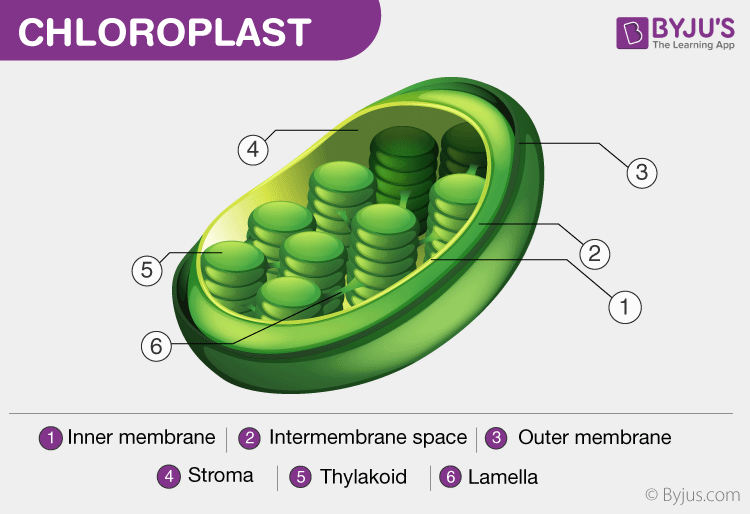
all of them packed into tiny structures called chloroplasts.
15 MINS LATER
speaker_3HOST
It carefully dismantles the leaf's internal machinery and pulls valuable resources back into the trunk and roots.
speaker_3HOST
Nitrogen is one of the most important nutrients the tree recovers.
speaker_3HOST
Chlorophyll contains nitrogen, and as it breaks down, the nitrogen is transported out of the leaf and stored for next year.

Nathan WilsonHOST
But the chlorophyll does not linger or last long.
Nathan WilsonHOST
When we have those changes... that initiate fall.
Nathan WilsonHOST
Chlorophyll is the first out, which means with chlorophyll out of the picture, the other pigments begin to reveal themselves.
Nathan WilsonHOST
So hiding underneath the power of chlorophyll are the yellows and oranges, usually produced by carotenoids.
Nathan WilsonHOST
It's the same thing that makes the carrot look orange.

Adrian StevensNARRATOR
of Scientific American Supplement No. 492, June 6, 1885. isochromatic photography by fred e ives it is well known that the ordinary photographic processes do not reproduce colours in the true proportion of their brightness violet and blue photograph too light green yellow orange and red too dark for a long time it was believed to be impossible to remedy this defect and even when it became known that bromide of silver could be made more sensitive to yellow and red by staining it with certain dyes the subject received very little attention because it was also known that the increase of sensitiveness was too slight to be of practical value in commercial photography dr h w vogel who was one of the first though not the first to devote attention to this subject announced in eighteen seventy three that he had succeeded in making a yellow object photograph lighter than a blue or violet one by using a silver bromide plate stained with coralline and exposed through a yellow glass the plate showed no increased sensitiveness to red and the experiment although of considerable scientific interest did not indicate a practically useful process in the spring of eighteen seventy eight i became interested in this subject and tried to discover a method of producing plates which would be sensitive to all colours and capable of reproducing them in the true proportion of their brightness I commenced by trying nearly all the colour sensitizers which had already been suggested, in order to learn which was the best, and then, if possible, why it was the best, as a guide to further research.
Adrian StevensNARRATOR
Chlorophyll was the only thing I tried which was sufficiently sensitive to red to offer any encouragement in that direction, but the solution which I obtained was weak and unstable, and far from being a satisfactory colour sensitizer.
Adrian StevensNARRATOR
hoping to obtain a better solution with which to continue my experiments i made extracts from many kinds of leaves and found that a solution from blue myrtle leaves looked better and kept better than any other and when it was applied to the silver bromide plates they became remarkably sensitive not only to all shades of red but also to orange yellow and green by placing in front of the lens a colour screen consisting of a small glass tank containing a weak solution of bichromate of potash to cut off part of the blue and violet light i obtained with these chlorophyll plates the first photographs in which all the colours were reproduced in the true proportions of their brightness but my chief desire at that time was to realize a method of producing from any object in colors a set of three negatives in one of which the shadows would represent the blue of the original in another the yellow and in another the red in such a manner that transparent pigment prints from these negatives blue yellow and red would when superimposed on a white surface represent not only the lights and shadows but also the colours of the object.
Adrian StevensNARRATOR
this had already been attempted by others who failed because their plates were not sufficiently sensitive to red and yellow having succeeded perfectly in my undertakings i published my discovery in eighteen seventy nine explaining how to prepare and use the chlorophyll plates in connection with the yellow screen for the purpose of securing correct photographs of coloured objects i intended this publication to be a very full and explicit one and it was sufficiently so to be perfectly understood by most who saw it but some may think i did not sufficiently emphasize the importance of using the particular kind of chlorophyll which i mentioned in a brief communication to the editor of the photographic news in eighteen eighty three i described some experiments with eosine as a colour sensitiser and then called attention to the superiority of blue myrtle chlorophyll for the purpose stating that i had not been able to secure such results with any other kind of chlorophyll and that a fresh solution from fresh leaves must be used to secure the greatest possible degree of sensitiveness see photographic news november eighteen eighty three page seven four seven and foot so far as i know nobody tried the process nearly five years later dr vogel announced that after eleven years of investigation he had at last realized a successful process of this character and that this new process of his was the solution of a problem that had long been encompassed with difficulty this publication attracted a great deal of attention and gave me occasion to again call attention to my process and point out that it was not only the first practical solution of this problem but the only truly isochromatic process ever discovered dr vogel's new process was not only no better in any respect but the plates were insensitive to scarlet and ruby red and therefore would not photograph all colours in the true proportion of their brightness my method consists in treating ordinary collodio bromide emulsion plates with blue myrtle chlorophyll solution exposing them through the yellow screen and then developing them in the usual manner the emulsion which i have employed is made with an excess of nitrate of silver which is afterward neutralized by the addition of chloride of cobalt it is known as newton's emulsion i now prepare the chlorophyll from fresh blue myrtle leaves by cutting them up fine covering with pure alcohol and heating moderately hot the leaves are left in the solution and some zinc powder is added which helps to keep the chlorophyll from spoiling i have a bottle of this solution which was prepared about six months ago and now appears to be as good as when first made i originally recommended chlorophyll extracted from dried leaves because i had not yet learned how to preserve the solution for more than a few weeks and at some seasons it would be difficult if not impossible to obtain fresh leaves the tea organifier which i recommended is also a colour sensitiser and when it is used in conjunction with the chlorophyll from dried leaves the plates are as sensitive to red as can be safely prepared and developed in the light of an ordinary photographic dark-room plates prepared with chlorophyll from fresh leaves do not require treatment with the tea organifier to secure this degree of sensitiveness recently i have used the tea organifier and some other sensitizers in connection with the solution from fresh myrtle leaves and in this way have produced plates having such an exalted color sensitiveness as to be unmanageable in ordinary darkroom light possibly such plates might be prepared and developed in total darkness by the aid of suitable mechanical contrivances but i am not sure that they would work clear even then because they appear to be sensitive to heat as well as to light a glass plate is flowed with the emulsion and as soon as it has set the chlorophyll solution is applied for a few seconds after which the plate is washed in pure water until smooth when it is ready for exposure my colour screen consists of a small plate-glass tank having a space of three sixteenths of an inch between the glass filled with a solution of bichromate of potash about one grain strong i place the tank in front of the lens in contact with the lens mount The advantage of this tank and solution is that it can be more easily obtained than yellow plate glass and the colour can be adjusted to meet any requirement.

Jamie BussinHOST
So you identify four foundational supplements.
Jamie BussinHOST
There's fiber, vitamin D3 with K2, vitamin B12, the active form, and chlorophyll.
Jamie BussinHOST
Why these four and what makes them particularly useful for daily foundation?
Joel ThunaGUEST
Well, I picked the organic forms of these, number one, because they're the cleanest, purest forms.
7 MINS LATER
Joel ThunaGUEST
The beautiful part is if you take sublingual B12, it bypasses your digestive system entirely, goes through, gets absorbed under your tongue almost instantaneously and almost completely.
Joel ThunaGUEST
So you get more, better, faster, and you don't have to worry about digestion issues.
Jamie BussinHOST
Perhaps the least familiar of your foundational four is chlorophyll.
Jamie BussinHOST
What does chlorophyll actually do in the body and where does it fit into the foundational approach to nutrition?

speaker_1HOST
And maybe a teacher or a parent helps you figure out it's chlorophyll.
speaker_2HOST
Exactly.
speaker_2HOST
Chlorophyll, the green pigment that turns sunlight into food for the tree.
speaker_2HOST
But you learn it by touching it, seeing how the light hits it, maybe smelling the dirt.
speaker_1HOST
It's a whole body experience.

Gary MossHOST
Do you know you can just bag them, right? If you like, use chloroform, chlorophyll.
Rosaria RibeiroGUEST
I don't know if I have the upper body-
Gary MossHOST
Chlorophyll's the stuff in leaves that makes the-
Rosaria RibeiroGUEST
[laughs]
Gary MossHOST
... photosynthesize.
Gary MossHOST
Just take-
Rosaria RibeiroGUEST
Is it chlorophyll? It's chlorophyll.
Gary MossHOST
Chlorophyll's the stuff in the leaves.

Sigmar BergGUEST
It occurs in every living matter, in the humming of the bees.
Sigmar BergGUEST
Chlorophyll vibrates on 528 Hz.
Sigmar BergGUEST
That is also why this frequency is on the color spectrum green.
Sigmar BergGUEST
So there's a lot of nature-related and so-called spiritual-related powers to this frequency.

Paul M. SutterHOST
We can make out oceans, continents, shapes, even vegetation.
Paul M. SutterHOST
Chlorophyll, the, the molecule that makes plants green, absorbs red and blue light aggressively because that's the kind of light the planet eats and reflects green, which is why leaves look green.
Paul M. SutterHOST
But something remarkable happens just past the red end of the visible spectrum.
Paul M. SutterHOST
In the near infrared, plants-- plant leaves become very reflective.

Paul M. SutterHOST
We can make out oceans, continents, shapes, even vegetation.
Paul M. SutterHOST
Chlorophyll, the, the molecule that makes plants green, absorbs red and blue light aggressively because that's the kind of light the planet eats, and reflects green, which is why leaves look green.
Paul M. SutterHOST
But something remarkable happens just past the red end of the visible spectrum.
Paul M. SutterHOST
In the near infrared, plants, plant leaves become very reflective.
1 more episode mentions Chlorophyll.
Create an account to see the whole feed, search across every transcript, and follow the entities you care about.