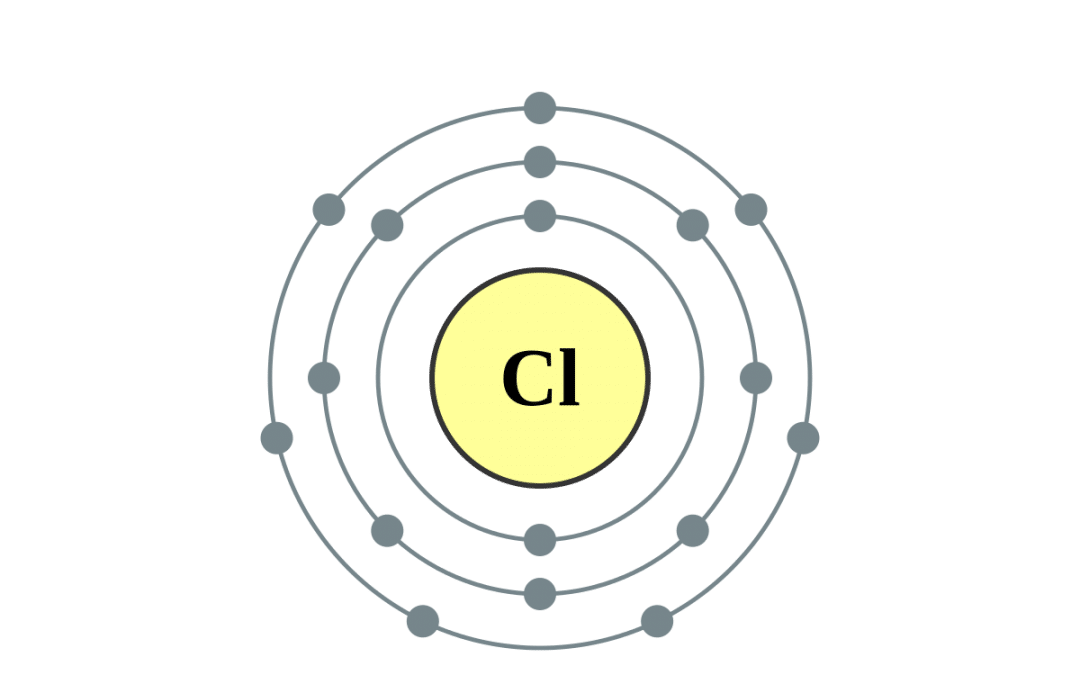
Chlorine
Chemical elementWikipedia
27
MENTIONS
17
EPISODES
9
PODCASTS
Search complete. 27 mentions across 17 episodes found for "Chlorine".
Nov 5, 2026

Michael RussellHOST
Happy nitrogen.
Michael RussellHOST
Chlorine, one, two, three lone pairs and a bonding pair, four pairs.
Michael RussellHOST
It's happy.
Michael RussellHOST
This weird structure down here, which would resonate, everything has four pairs around it.
14 MINS LATER
Michael RussellHOST
Count up the valence electrons.
Michael RussellHOST
Sulfur is six, chlorine is seven, and there's two of them.
Michael RussellHOST
Again, sulfur is Chlorine is group seven, so those electrons used in bonding.
Michael RussellHOST
Seven times two, 14 plus six, 20 valence electrons.
Michael RussellHOST
Boron can be under the octet, along with beryllium, aluminum, those kind of things.
Michael RussellHOST
So boron, symmetric, everything around it is a chlorine.
Michael RussellHOST
Even though the BCl bond is polar, the molecule is non-polar.
Michael RussellHOST
So you can draw Lewis structures, you can think about it, but man, Cl and F, F pulls more than anything else.
Michael RussellHOST
And chlorine pulls hard, but boy, not as close as fluorine.

speaker_1NARRATOR
There was nowhere for the men inside to go either.
speaker_1NARRATOR
Chlorine and bromine, released together, behave differently than either gas alone.
speaker_1NARRATOR
Chlorine attacks the lungs, Chlorine attacks the lungs.
speaker_1NARRATOR
Bromine corrodes soft tissue on contact.
speaker_1NARRATOR
Eyes, nasal passages, throat.
Michael RussellHOST
And also, we're going to look at atoms only up to neon.
Michael RussellHOST
So we'll look at things between hydrogen and neon, but we won't look, for example, at chlorine, Cl2, because that's third period, or bromine, or any of those kind of examples.
Michael RussellHOST
So we're going to get a good sense as to what MO theory offers.
Michael RussellHOST
And one day in another course, you might then look at more sophisticated examples.
Michael RussellHOST
And also, we're going to look at atoms only up to neon.
Michael RussellHOST
So we'll look at things between hydrogen and neon, but we won't look, for example, at chlorine, Cl2, because that's third period, or bromine, or any of those kind of examples.
Michael RussellHOST
So we're going to get a good sense as to what MO theory offers.
Michael RussellHOST
And one day in another course, you might then look at more sophisticated examples.

Eric KnightHOST
And we're going to talk about that.
Eric KnightHOST
So what I'm getting at is 0.05. That is such a small amount of chlorine to be effective.
Eric KnightHOST
Chlorine is, it's the most widely used disinfectant on earth for a reason.
Eric KnightHOST
It's one of the safest because, you know, our own body produces it.
Eric KnightHOST
Our white blood cells produce it, or at least I think the neutrophils do.

Natalie HoodHOST
So if a homeowner asks you, which one should I use? Is there a simple answer? Yeah, it's very simple.
Natalie HoodHOST
Chlorine,
Roy VoreGUEST
period.
Natalie HoodHOST
Couldn't agree more.

Eric BergHOST
Another interesting thing about iodine is that you can be deficient, not from your diet, but from other things interfering with the absorption of iodine, like fluoride.
Eric BergHOST
Whether you're getting some type of dental whitening type therapy or you're drinking tap water with fluoride, as well as chlorine.
Eric BergHOST
Chlorine also interferes with iodine.
Eric BergHOST
So there's three big things that can interfere with iodine.
Eric BergHOST
Fluoride, chloride, and bromine, which is in a lot of enriched substances.

speaker_3AUDIENCE
I don't know.
speaker_3AUDIENCE
Chloro.
Steve HillHOST
Lactic acid? Lactic acid.
Steve HillHOST
That's it.
Michael RussellHOST
So in boron trifluoride, boron would be the A, the central atom, and the three fluorines would be the three Bs.
Michael RussellHOST
In Cl2CO, the carbon is central, and it has two chlorines and an oxygen around it.
Michael RussellHOST
And with ammonia on the far right, nitrogen would be the central atom A, and each B atom would be one of the hydrogens.
Michael RussellHOST
So again, if you want to see if they're polar or nonpolar, do a Lewis structure.
Michael RussellHOST
so boron trifluoride has boron with just fluorines around it each boron fluorine is very very polar as a bond but because everything is the same it all cancels out bf3 is non-polar and again you don't need vectors to figure that out you just need to see that that boron has nothing but fluorines around it no hydrogens no lone pairs no oxygens whatever just fluorines That makes it a symmetric environment, symmetric things, nonpolar.
Michael RussellHOST
Now, Cl2CO, though, does not have a symmetric environment.
Michael RussellHOST
It has a carbon-oxygen double bond and two carbon-chlorine bonds, so that molecule doesn't have anything the same.
Michael RussellHOST
C double bond O will have a different polarity than CCl will, so nothing's going to cancel.
7 more episodes mention Chlorine.
Create an account to see the whole feed, search across every transcript, and follow the entities you care about.