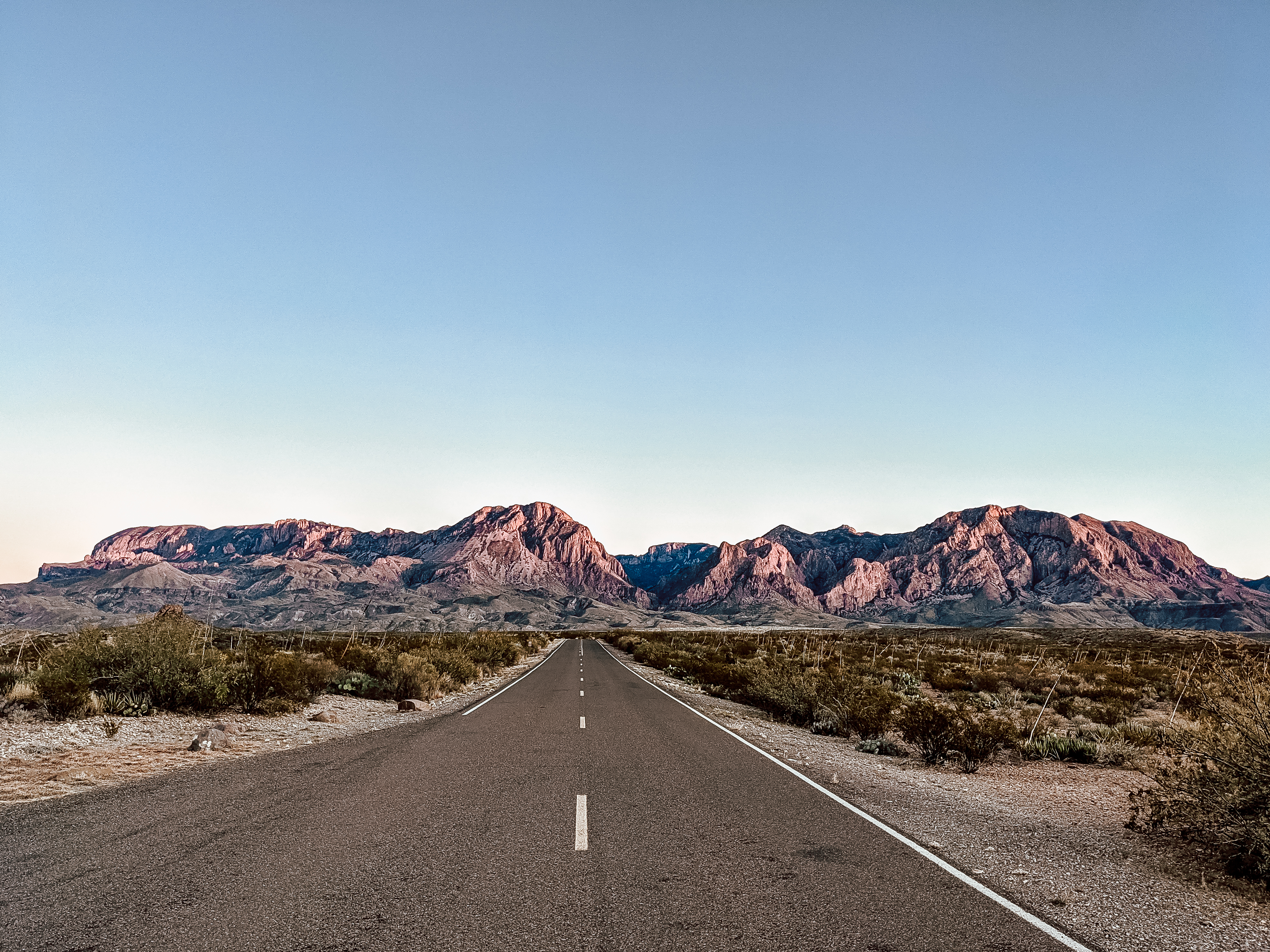
Chisos Mountains
Mountain range in TexasWikipedia
9
MENTIONS
4
EPISODES
4
PODCASTS
Search complete. 9 mentions across 4 episodes found for "Chisos Mountains".
Sep 30, 2026

Tim BuckleyGUEST
The color changes all day depending on what the sun's shining on.
Tim BuckleyGUEST
plants and animals that i've never seen like javelinas and uh roadrunners which i was super pumped to see a lot more coyotes than even though i've seen a lot of coyotes coyotes you can see them like broad daylight the bear obviously i saw a bear and then yeah the chisos mountains being the exception within big bend like everything is surrounded by you know desert and then the chisos is uh like this mountain range that has trees.
Tim BuckleyGUEST
It's not hammock friendly.
Tim BuckleyGUEST
That's important to know before you go.
Tim BuckleyGUEST
But, oh my God, just stunning.
Tim BuckleyGUEST
Absolutely stunning.
Tim BuckleyGUEST
That view from, is it the West Rim on the Chisos Mountains?
JasonHOST
No, South Rim, probably.

Loren AmmermanGUEST
Um, but there are some places around the Grand Canyon where, um, now that we know where they're foraging there, there are people that work with, uh, larger populations of them.
Loren AmmermanGUEST
But they do kind of reach their southernmost edge of their distribution in the Chisos Mountains or in Big Bend.
Loren AmmermanGUEST
Um, they've been documented in Mexico, uh, as well but- I think it's just that we're on the edge of the range, and it's the only place in Texas where you could encounter them.
Loren AmmermanGUEST
Um, it's just hard to, hard to study them.
24 MINS LATER
Loren AmmermanGUEST
Maybe they have to go quite a distance.
Loren AmmermanGUEST
And it turns out that we, uh, we put GPS tags on 21 individuals and- They stay close to the cave.
Loren AmmermanGUEST
They're staying in the Chisos Mountains.
Loren AmmermanGUEST
They're finding plenty of agave blooms to sustain them when they are in the park.

speaker_0NARRATOR
The air is now heavy with the scent of what waits above, a cool, wet forest full of food and entirely devoid of black bears.
speaker_0NARRATOR
She marches higher into the Chisos Mountains, a forested range of peaks marooned in the Chihuahuan Desert and entirely within the boundaries of the national park, and discovers what her keen sense of smell, and perhaps an ancestral instinct, has compelled her to come all this way to find.
speaker_0NARRATOR
She's now in what scientists call a sky island, a geographically isolated habitat high in the Chisos, complete with its own microclimate and a biodiversity that is unique to this part of the region.
speaker_0NARRATOR
Her species used to call this habitat their home until a few decades ago.
speaker_0NARRATOR
You see, this black bear, who crossed into the Chisos sometime in the 1980s, was not the first of her species to ever reach this area.
speaker_0NARRATOR
Instead, she was the first to return, after more than 40 years of extirpation, or the complete removal of her species, from this isolated mountain range.
speaker_0NARRATOR
By the early 1940s, before Big Bend became a national park, local hunters and agricultural producers had entirely wiped out the black bear population in the Chisos Mountains, just one example of the type of predator control that was very common in those days.
speaker_0NARRATOR
The population remained alive and well south of the Mexican border, but it would take four decades for another bear to make its way across the river and back into the range.

David WalesNARRATOR
Years before the purchase of 1803, he was trading his stolen stock and possibly his slaves to the French traders from the Spanish-French border near old Nacotish, pronounced Nacotish, on the lower Red River.
David WalesNARRATOR
Or in later times, upon return from a successful raid, he roared out of Mexico and across the Rio Grande into Texas south of the Chisos Mountains.
David WalesNARRATOR
If short of war paint, he replenished his favorite red color from the outcroppings of cinnabar near Terlingua Creek, then headed through the Badlands and out upon the range country by way of Persimmon Gap.
David WalesNARRATOR
From the gap, he went to Comanche Springs, present Fort Stockton, crossed the Pecos River at Horsehead Crossing, then rode north to the sand dunes to water a famishing flock, after which he headed east to the sulfur and the big spring.