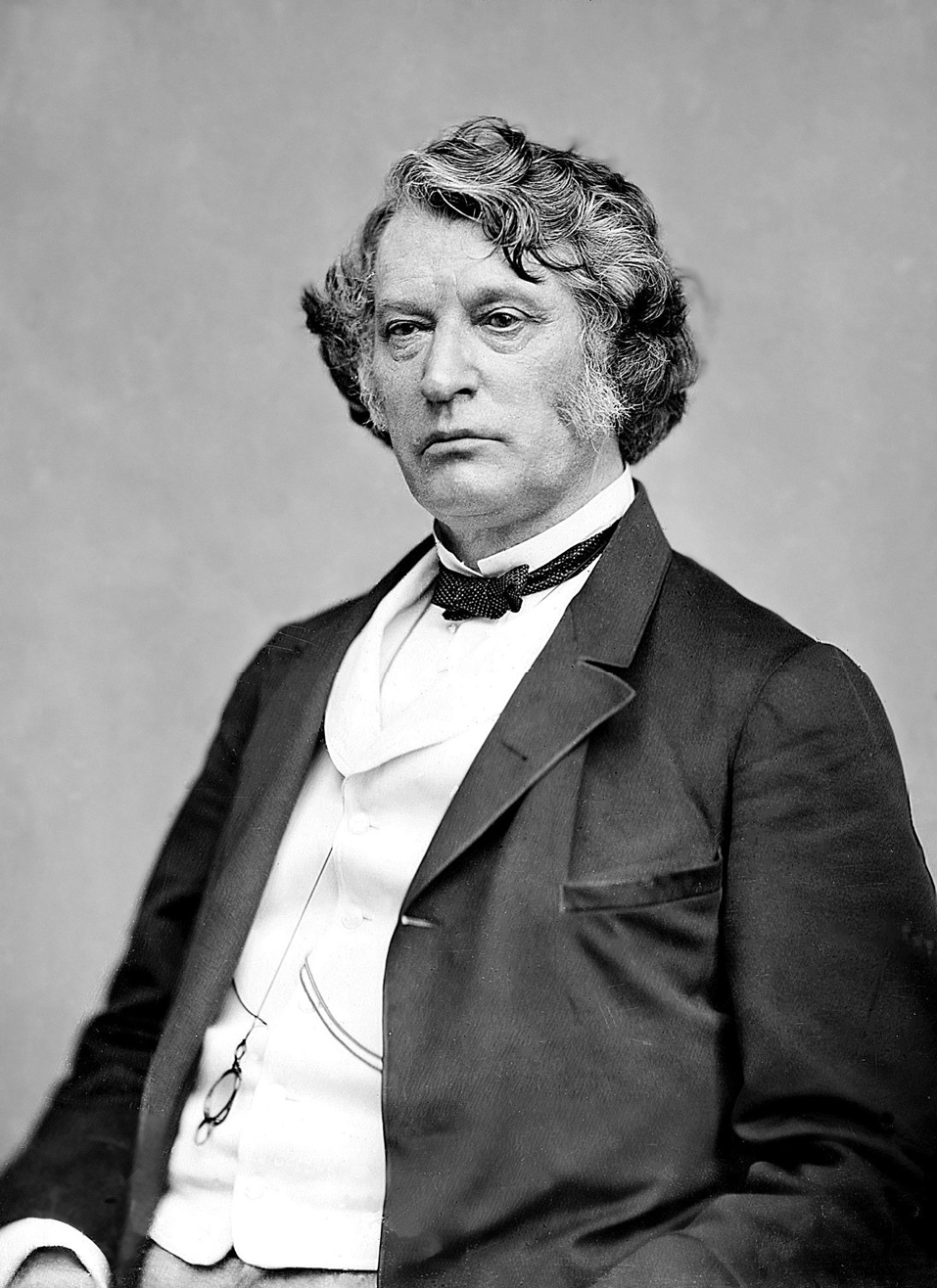
Charles Sumner
Lawyer and former United States SenatorWikipedia
73
MENTIONS
48
EPISODES
43
PODCASTS
Search complete. 73 mentions across 48 episodes found for "Charles Sumner".
Oct 23, 2026

Larry WilsonNARRATOR
do not hesitate to criticize us we want ideas we want short live articles with facts done into english we are not anxious for opinion and we write poetry ourselves if you do not get your copy write us if you do and like it write us if you do not like it do not fail to write us have you got any interesting pictures along the color line send them to us in fact help us to help you and yours End of section 1
Tom ShoesmithNARRATOR
THE CRISIS, A RECORD OF THE DARKER RACES, VOLUME 1, NUMBER 4 section two along the color line charles sumner and others charles sumner was born january sixth eighteen eleven the centenary of his birthday was fittingly commemorated in new york boston and washington in new york the anniversary was celebrated with memorial exercises under the auspices of the national association for the advancement of colored people at the meeting-house of the society for ethical culture central park west and sixty-fourth street dr john lovejoy elliott presided and the speakers were mrs fanny garrison villard the only daughter of william lloyd garrison moore field story the boston lawyer who is president of the national association for the advancement of colored people on charles sumner dr w e burckhardt du bois on charles sumner and peace and the rev dr stephen s wise rabbi of the free synagogue on a senator with a conscience a telegram was read from jacob s schiff lauding sumner as standing for the highest moral issues of his time this was followed by the reading of a poem on sumner composed by w p stafford mr moorfield's story said among other things the man who appeals to race prejudice whether to keep his fellow-citizens down or to excite suspicion and enmity against a foreign nation is a public enemy and should be branded as such his acts are far more dangerous to the state than those of the recognized criminal if we would honor sumner we must take up the battle to which he gave his life we must wage unrelenting war against the absurd prejudices of race and color whether they bar the negro from his rights as a man the foreigner from his welcome to our shores the filipino from his birthright of independence the hebrew from social recognition or breed the unjust and wicked suspicion which would embroil us in war with any other people whether of europe or asia such meetings as this are of no avail if they do not inspire us with a determination to obey the precepts and follow the example of the man whom we would commemorate in boston two meetings were held the main meeting in faneuil hall and a branch meeting at park street church ex-governor gild governor foss rev r c ransome and others spoke in washington d c several hundred prominent colored people attended the exercises under the auspices of the american negro academy in the fifteenth street presbyterian church a number of white persons were in the audience and addresses were made by justice wendell phillips stafford and ex-senator william e chandler of new hampshire memorial exercises to julia ward howe were held in symphony hall under the auspices of the city of boston and were largely attended, every available seat being taken, and hundreds being turned away.
Tom ShoesmithNARRATOR
Mrs. Howe's public services were the subject of addresses from four different standpoints.
Tom ShoesmithNARRATOR
William H. Lewis, Assistant U.S. Attorney, spoke of her devotion to the cause of the colored race.
1 HR 35 MINS LATER
Larry WilsonNARRATOR
THE CRISIS, A RECORD OF THE DARKER RACES, VOLUME 1, NUMBER 4, BY W. E.
Larry WilsonNARRATOR
B. DEBOYS.
Larry WilsonNARRATOR
charles sumner january sixth eighteen eleven january sixth nineteen eleven by justice wendell phillips stafford of the supreme court of the district of columbia i will send him to my dark-browned race on whom the world hath sinned and he shall be as a hiding-place and a covert from the wind as streams of water for the flock amidst the burning sand the shadow of a mighty rock over a weary land so spake the lord god on this day a hundred years agone while the maids to the fainting mother say see thou hast borne a son and now again in the latter year the lord god speaks to-day gird up your loins like men to hear and answer what i say leave me the dead they are my own yours are the sick that die i cannot hear your priests intone for the noise of your poor that cry how is it that the weak complain and my children suffer harm the sacrifice was not in vain the lord made bare his arm you have forgotten the camps that reached from rising to setting suns you have forgotten the truth i preached by the lips of a million guns the thousands who died in the prison pen and the hundred thousand slain must i write it again as i wrote it then to make the lesson plain see how along the dizzy steep go the weak lambs unled see how the thin and hungry sheep look up and are not fed see how the rich in his web still draws around and round the poor he sits and spins his spider laws to make his capture sure see how the man i gave the light leaves man in the dark to dwell and makes religion angel bright procure us unto hell think you i have no reins for wrong no iron curb for a check when the hand of him i have made so strong is on his brother's neck think you the world i made my vow sleeps in my prophet's grave or that my arm is shortened now so that i cannot save now once again i swear he only shall gain who gives the soul that hateth by hate shall die by love the spirit lives and he who will take the curse and carry the griefs of men he shall be my son my anointed one the christ that should come again till man to man by love is bound as man from man by law is free your bells swing round with a hateful sound your censers are a stench to me God of our fathers, be with us as thou wert with our sires, and make our midnight glorious with freedom's beaconing fires.
Larry WilsonNARRATOR
Show us along our cloud-wrapped way some gleam of thy garment's hem, and do for us in our darkening day as thou hast done for them.

Ted RallHOST
thanks jamal i'm going to pipe in yeah robbie west is our producer and i know he's very interested in what you're just starting to talk about right now so please continue
Thaddeus RussellGUEST
yeah so if you simply look at the words and i mean the words that they were expressing throughout their lives the abolitionists the radical republicans abraham lincoln charles sumner all those guys who basically led the civil war and then reconstruction it was all about for them remaking the south into the Yankee North.
Thaddeus RussellGUEST
And that's why, what did they do? They put thousands of schools across the South staffed by mostly women from New England who were all abolitionist Puritans who went down to the South and taught the ex-slaves, guess what? How to be good Americans, the same way they taught the Filipinos 20 years later.
Thaddeus RussellGUEST
which was the Puritan work ethic, basically sexual repression, conventional gender norms.

Daphna RenanGUEST
We shouldn't even vote because voting is becoming complicit in that project.
Daphna RenanGUEST
That was one view, and it was countered by another group of abolitionists like Garrett Smith, Frederick Douglass, Charles Sumner, who said, look, we reject the idea that the Constitution is what the Supreme Court says it is.
Daphna RenanGUEST
The Constitution is what we bring to it through our politics, through the black convention movement.
Daphna RenanGUEST
That was a redefining what the Constitution can and should mean through petitioning to Congress, through organizing and building coalitions and where possible voting.

Daphna RenanGUEST
We shouldn't even vote because voting is becoming complicit in that project.
Daphna RenanGUEST
That was one view, and it was countered by another group of abolitionists like Garrett Smith, Frederick Douglass, Charles Sumner, who said, look, we reject the idea that the Constitution is what the Supreme Court says it is.
Daphna RenanGUEST
The Constitution is what we bring to it through our politics, through the Black Convention movement that was a redefining what the Constitution can and should mean.
Daphna RenanGUEST
through petitioning to Congress, through organizing and building coalitions and, where possible, voting.

Daphna RenanGUEST
We shouldn't even vote because voting is becoming complicit in that project.
Daphna RenanGUEST
That was one view, and it was countered by another group of abolitionists like Garrett Smith, Frederick Douglass, Charles Sumner, who said, look, we reject the idea that the Constitution is what the Supreme Court says it is.
Daphna RenanGUEST
The Constitution is what we bring to it through our politics, through the black convention movement.
Daphna RenanGUEST
That was a redefining what the Constitution can and should mean through petitioning to Congress, through organizing and building coalitions and where possible voting.

Emily GlanklerHOST
But still, they were the political party with the strongest stance against slavery that the country had ever seen, and the South was freaking out.
Emily GlanklerHOST
I mean, in 1856, a Southern representative had literally beaten abolitionist Senator Charles Sumner almost to death in the halls of the Capitol.
Emily GlanklerHOST
Tensions were incredibly high, and the question of slavery was the highest priority for most voters by the 1858 midterms.
Emily GlanklerHOST
So what happened? Well, the young Republican Party swept the election, taking control of the House of Representatives just four years after its founding.

Roger de CovenVOICE_ACTOR
Oliver P. Morton, Salmon P.
Roger de CovenVOICE_ACTOR
Chase, or possibly Charles Sumner, every one of them committed to destroying Mr. Lincoln's policy towards the South.
Peggy AllenbyVOICE_ACTOR
It would be a great tragedy, a very great tragedy.
Roger de CovenVOICE_ACTOR
It would be that.

Norman FinkelsteinGUEST
So I was doing a lot of reading by the abolitionists, not about them, but themselves.
Norman FinkelsteinGUEST
One thing you discover of Frederick Douglass and Charles Sumner, they were wonderful in every question, but they were absolutely horrible in Native Americans.
Norman FinkelsteinGUEST
God bless his town.
Norman FinkelsteinGUEST
Horrible on Native Americans.

Martin DeCaroHOST
In the weeks after the assassination- Leading radicals met frequently with the new president to press him on that issue.
Martin DeCaroHOST
Most persistent was Charles Sumner, who waited upon Johnson almost every day between mid-April and mid-May, reiterating the theme with which his political career was identified: justice to the colored race.
Martin DeCaroHOST
Sumner became convinced he and Johnson agreed on Black suffrage.
Martin DeCaroHOST
"Well into May," writes Foner, "Radicals considered Johnson, in Sumner's words, 'the sincere friend of the Negro and ready to act for him decisively.'" So they misread him obviously [laughs] in the beginning there.

Bill MencarowHOST
means.
Bill MencarowHOST
Well, Charles Sumner caned a man, or Charles Sumner
Bill MencarowHOST
was caned, I think,
Bill MencarowHOST
on the Senate floor.
38 more episodes mention Charles Sumner.
Create an account to see the whole feed, search across every transcript, and follow the entities you care about.