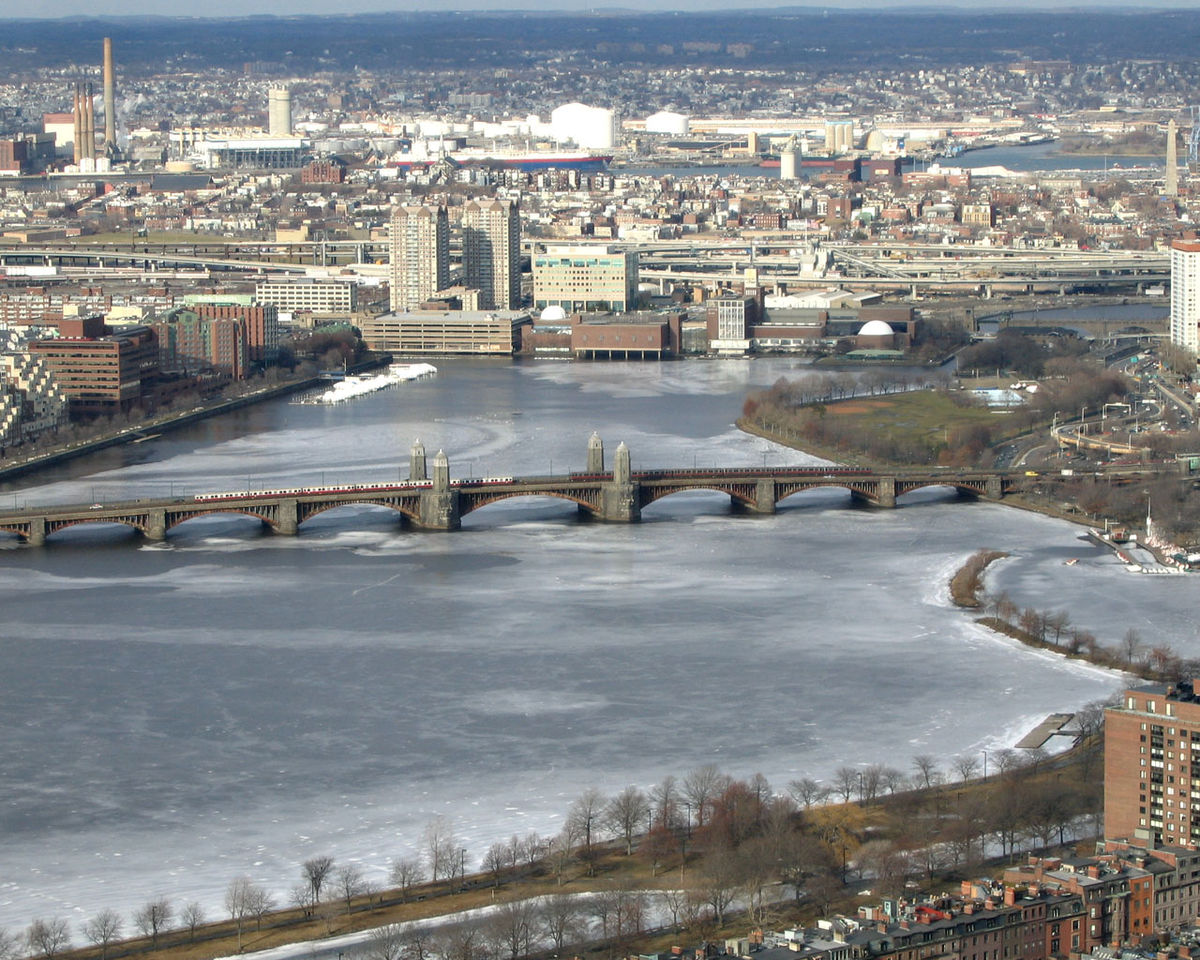
Charles River
River in MassachusettsWikipedia
70
MENTIONS
52
EPISODES
38
PODCASTS
Search complete. 70 mentions across 52 episodes found for "Charles River".
Sep 20, 2026

Ted LienhartNARRATOR
the private soldier under washington by charles knowles bolton much has been written about the american revolution but our knowledge of the private soldier of the patriot army is confined chiefly to washington's description of their sufferings at valley forge their story is to be found in a line here and there scattered through the mass of contemporary literature in sifting this material it has seemed best to give in every case the name of the authority who saw what he described no student however would willingly forget the labours of those later writers who have done so much to make easier the way for others i record with pleasure my obligation to professor edward channing of harvard college for very many valuable suggestions and also to mr albert matthews whose knowledge of the language and customs of the period has been of great service to me c k b pound hill shirley massachusetts july nineteen o two end of preface chapter i the origin of the army when the colonists in america rose in rebellion against the english government in seventeen seventy five they occupied scarcely more territory than had been won from the wilderness a century earlier pioneers from the shores of the north sea had crossed the atlantic to make for themselves homes the more venturesome had forced their way to the headwaters of the coast rivers to build blockhouses for trade and defense little by little they and their descendants cut away the timber along the banks of many pleasant streams and planted grain and now at the southward their lands reached from the ocean to the appalachian range the watershed of the potomac the james the roanoke the santee the savannah and the altamaha river farther north they cleared until the country which is drained by the susquehanna the hudson the connecticut the kennebec and the penobscot here was a theater of war with great possibilities for the strategist who knew the topography thoroughly and could marshal the rivers and hills like forces in reserve to checkmate his antagonist throughout washington's campaigns near new york the hudson river on the east and the delaware on the west served to keep the british in check the maneuvers of gates and green in the carolinas were everywhere influenced by the broad streams that crossed the country but rivers were dangerous allies and when made part of a great plan might by the fortunes of war prove ruinous to any army in the campaign of seventeen seventy seven burgoyne was to gain control of the hudson in order to separate the men of new england from their brothers in rebellion but he accepted a position within the bend of the river at saratoga and was compelled to surrender in the expedition of cornwallis in seventeen eighty one the converging streams of the york and the james which were to protect his army held him like a trap as soon as the french allies came into possession of the sea the political divisions show that england laid claim to the eastern part of america with the exception of florida massachusetts still included the territory between the western part of nova scotia now called new brunswick and new hampshire later known as maine and the land between the connecticut river and lake champlain afterward the state of vermont was at this time within the bounds of new york the rich country between the upper mississippi and its tributary the ohio had but recently been added to the government of Quebec.
Ted LienhartNARRATOR
there were few english inhabitants in this region and the french stockades and trading villages such as detroit vincennes on the wabash and kaskaskia were important only as settlements along the water highway from canada and the great lakes to new orleans the southern english colonies already looked westward to the mississippi for their expansion beyond all this region lay the untouched forests which gathered rains for the far-reaching waters of the rio grande the colorado the arkansas and the missouri the possessions of spain the english colonies in seventeen seventy five had a population of two and a half million people less than a third the number then in great britain and ireland moreover above half a million of these people were negroes barred very generally from military service many others refused from their religious views to bear arms and a considerable minority of the citizens more than a third of the men of influence said adams opposed an appeal to force it was fortunate for america that the war began in new england which had few tories and slaves and was able by furnishing a large part of the patriot army to show a strong front to the enemy earlier in the century there had been little to draw together the various races then settled upon the continent isolated as they were by religious differences social distinctions and the imperfect means of travel but a steady policy of irrigation and repression on the part of the english government quickened the sympathies of the people and led to the perfection of intercommunication and to the dissemination of political ideas the arbitrary restriction of trade and abrogation of privileges by an unseen power three thousand miles away aroused the colonies to a sense of their common danger the presence of an english garrison at boston and the enforcement of acts designed by parliament to crush out the revolutionary spirit in massachusetts made the colony a center of the coming storm the members of a convention of delegates from the towns and districts in suffolk county meeting in september seventeen seventy four declared in language vigorous if a little florid that to arrest the hand about to ransack their pockets to disarm the parricide who stood with a dagger at their bosoms and to resist the usurpation of unconstitutional power would roll their reputation upon a torrent of panegyric to the abyss of eternity with their future fame secured they set about frankly to prepare for the conflict calling upon the people to elect their militia officers and acquaint themselves with the art of war that king george might not make an easy prey of a numerous brave and hardy people the action taken by several of the towns about boston was if possible more marked brookline for example appointed a committee in september to examine into the state of the town as to its military preparation for war in case of a sudden attack from our enemies on october twenty sixth seventeen seventy four the provincial congress sitting at cambridge chose a committee of safety with power to collect military stores and if necessary to summon and support the militia with the delegation of this authority to a specific body of leaders the opposition to great britain ceased to be wholly legislative for the committee had the necessary power to maintain armed rebellion the military measures of this period proposed in convention and carried by vote in time of peace and within three or four miles of the british garrison were a test of new england courage and determination that deserve recognition at the same time a plan of organization for the militia was outlined field officers were ordered to enlist if possible a quarter of the total number of militiamen for emergency service under the direction of the committee of safety these companies were to consist of at least fifty minute men each and were to elect their own company officers twenty years earlier alarmist companies had been organized to repel the indians they may be considered as survivals of the regiments that were in king philip's time ordered to be ready to march at a moment's warning and these in turn can be traced to the companies of thirty men from each hundred of the militia which in sixteen forty five were to be prepared at half an hour's warning thus had the training in arms and in preparation against surprise and attack been handed down from the days of miles standish and simon willard the committee on the state of the province drew up december tenth seventeen seventy four an address to the people which urged the towns and districts to pay their local militia for their services in order to encourage them to obtain the skill of complete soldiers these preparations were well known in boston and lord percy who was for a time in command of the british troops there referred often to them in letters to his father as early as september twelfth he said that the rebels did not make a despicable appearance as soldiers he knew that training day had ceased to be a perfunctory ceremony the provincial congress resolved on april eighth seventeen seventy five that an army should be raised and established and other new england colonies should be asked to furnish their quotas of men for the general defense the records of the committees of safety and supplies show that various stores were being collected at this time such as spades pickaxes and bill-hooks iron pots and wooden mess bowls carpenters tools cartridge paper powder and fuses grape and round shot bombs mortars musket balls and flints molasses salt fish raisins oatmeal and flour from the eighth of march to the fourteenth of april seventeen seventy five sundry persons under the direction of john goddard were carting through the quiet country roads that lead to concord casks of balls barrels of linen hog-heads of flints loads of beef and rice quantities of canteens and other articles to seize these stores so specifically enumerated in the old thong-bound account book of wagon master lieutenant colonel francis smith with the flank companies of the tenth regiment of foot and of several other corps embarked from boston common at about half-past ten o'clock Tuesday night, the 18th of April, crossed the Charles River and began the march which was to bring on the American Revolution.
Ted LienhartNARRATOR
he met and dispersed the forewarned minutemen on lexington green at five o'clock of the morning of the nineteenth of april he marched on to concord destroyed the stores and commenced the return at half-past two his men thoroughly exhausted from their rapid march back toward lexington lay down within the hollow square formed by reinforcements which lord percy had led out from boston the retreat of the regulars along the country road has often been pictured in words the redcoats were harassed by the farmers who to use percy's own phrase surrounded and followed them like a moving circle firing from trees and stone walls a british soldier apparently in chatham's division of marines had his hat shot off his head three times lost his bayonet by a ball and had two holes in his coat as he pushed on to charleston colonel smith's men from the tenth regiment wore at this period three-cornered cocked hats bound with white lace scarlet coats faced and turned up with bright yellow and ornamented with white lace scarlet waistcoats and breeches white linen gaiters reaching above the knee white cravats and buff belts they were brave men of many battlefields and their discomfiture was a sight to stir the blood of every man in homespun who reached the scene each town has its story of that muster morning of the minute man who left his plough in the furrow the bucket at the well sweep or the fodder at the door of the cattle shed in some towns not above half a dozen able-bodied men remained at home through the nineteenth of april and the killed wounded or missing were credited to twenty-three different towns and villages the british reached bunker hill across the narrow neck which joins charleston to the mainland as the dusk began to make visible the flash of the muskets their pursuers halted while the militia officers held a consultation at the foot of prospect hill a guard was formed sentinels were posted as far as the approach to the neck and patrols were sent out to watch the enemy the militia then withdrew to cambridge another guard went to the brooklyn and roxbury shores south of boston to cover that territory until morning on the twentieth cambridge was searched for beef pork and cooking utensils while roxbury furnished a good supply of ship-bread for the hungry men before noon the committee of supplies in concord had sent word that they were using every effort to forward provisions thus were the first difficulties overcome and an armed force began the siege of boston the men who encamped about boston had fought with perseverance and resolution they were not raw recruits for many had contended in the wars with french and indians and their names may still be seen on the king's muster rolls they were not a rabble recruited from the low ranks from which a city mob is drawn college and professional men did their part the death of a justice of the peace who was a graduate of harvard and held his commission under the crown caused a heated discussion in the british press some said that he was a spectator for they could not believe that the movement was respectable in the character of its supporters general howe writing to lord dartmouth a few months later stated half the truth when he said that the continental army contained many european soldiers and most of the young men of spirit in the country who gave diligent attention to the military profession lord percy had held that the americans were a set of sly artful hypocritical rascals cruel and cowards but after the battle of lexington he declared that the rebels showed an enthusiasm and a courage to meet death that promised an insurrection not so despicable as was imagined in england percy was quick to see that the indian method of fighting from behind trees and stone walls was proof not of cowardice but of ability to profit by conditions and said he they know very well what they are about soon after the events of the nineteenth men in the companies encamped near boston were asked by the committee of safety to enlist for service until the end of the year or for a shorter period at the committee's discretion a vigorous circular letter dated april twentieth was sent to the neighboring towns urging the enlistment of an army to defend wives and children from the butchering hands of an inhuman soldiery and on the twenty first the committee decided to raise an army of eight thousand effective men out of the massachusetts forces in the meantime the provincial congress had been hastily summoned and had resolved april twenty three seventeen seventy five to raise thirteen thousand six hundred men proposals were also made to the congress of new hampshire and governments of rhode island and connecticut colonies for furnishing men in the same proportion as an army of thirty thousand was deemed necessary a month later twenty four thousand five hundred men had been collected in the several colonies so thoroughly had the work of organization gone on in the colonies during seventy four and the spring of seventeen seventy five that an appeal for men when the siege of boston began was immediately successful throughout the country a network of local committees controlling militia companies and post-writers bound together the opposition to the king this network was like a fuse which ran over thousands of miles of wood meadow and farm land the people had been able to follow every movement of the hostile british parliament through the aid of the committees of correspondence and inquiry these committees formed in each colony at the suggestion of the virginia house of burgesses in march seventeen seventy three watched the approaching storm tested the loyalty of those who professed to welcome it and guided the popular indignation when the battle of lexington came the colonies were as well prepared for war as the poor dependencies of a powerful nation could be the first news of the battle was brought to the ears of putnam at pomfret the next day and to arnold at new haven a day later john stark in new hampshire heard it in good time at ten o'clock on wednesday morning the nineteenth palmer of the massachusetts committee of safety wrote a letter from watertown to alarm the country quite to connecticut entrusting it to a writer who was to ask for fresh horses as he went at fairfield connecticut this message was overtaken by one written at three o'clock thursday morning and attested by the committee of correspondents from town to town the news reached new york on sunday the twenty third at noon and confirmed the rumors that had already begun to circulate by four o'clock a messenger was on his way to philadelphia about two o'clock of the twenty fifth a second express from new england reached new york his papers having been attested at new haven fairfield norwalk stamford and greenwich the same evening a copy reached elizabethtown at ten it was at woodbridge and signed at midnight it had reached new brunswick across the raritan and half way through new jersey three hours and a half brought the good horse and its rider to princeton at half-past six they were in trenton and by seven the attested papers were on their way to philadelphia the committee of the city sent the news at midday to chester at nine the men drew up at newcastle having followed the delaware through the gathering darkness he reached christine bridge at midnight with orders to forward the papers day and night at half-past four in the gray of the morning of april twenty seventh he was at the head of elk in maryland and after traveling seventeen hours touching charlestown on the way he reached baltimore at ten that night a hard ride along the tortuous shore of chesapeake bay through the entire night brought the news to annapolis where carroll of carrollton tigman and other patriots attested the papers and spread the tidings still on through alexandria and dumfries a long sunday journey brought the papers to fredericksburg where the committee signed at half-past four carter bragston met the messenger at king william on may first nearly a fortnight after the battle to the southward went the news through surrey county williamsburg smithfield may third nasmond cowan in north carolina edenton beaufort county path newburn may sixth to onslow county where the committee received it at ten o'clock sunday morning of the seventh at wilmington on cape fear river harnett of the committee wrote for god's sake send the man on without the least delay and so the news was borne to the committee of little river and georgetown and on to charleston in south carolina what a ride and for what a cause through rain and sun and starlight this firebrand of rebellion was carried this was a ride that made the colonies into a nation and the nameless messengers and their horses deserve a page in history the continental congress resolved on june fourteenth that six companies of expert riflemen be immediately raised in pennsylvania two in maryland and two in virginia to reinforce the army near boston each company was to consist of a captain three lieutenants four sergeants four corporals a drummer or trumpeter and sixty-eight privates the besieging army was temporarily under the command of general artemus ward who received his commission from massachusetts as commander-in-chief on may twentieth four days earlier however the provincial congress had sent dr church to philadelphia to offer the direction of the army to the continental congress on june fifteenth george washington was appointed to command all the continental forces on july fourth seventeen seventy five it was announced in general orders that the troops of the united provinces of north america were taken over by congress the army then numbered not more than fourteen thousand five hundred men including perhaps the newly organized train of artillery which had been authorized in april by the province there existed also a coast guard which had been raised to defend the seaboard towns upon which the british made depredations in their excursions after food the army had scarcely settled down to besiege boston before the presence of slaves and free negroes gave rise to the question of their status in the army they had not apparently been included in the companies of militiamen and minute men which were organized and drilled in the winter of seventeen seventy four seventy five but the moment a call for men went out the black men presented themselves for service in may the committee of safety faced the matter frankly in a resolve which is ethically curious for its differentiation of principles when applied to freemen and to slaves this resolve read that it is the opinion of this committee as the contest now between great britain and the colonies respects the liberty and privileges of the latter which the colonies are determined to maintain that the admission of any persons as soldiers into the army now raising but only such as are freemen will be inconsistent with the principles that are to be supported and reflect dishonour on this colony and that no slaves be admitted into this army under any consideration whatever the provincial congress considered the matter and laid it on the table free negroes continued to serve in the american camp and were conspicuous at the battle of bunker hill in june one man salem poor behaved like an experienced officer as well as an excellent soldier according to the testimony of colonel prescott they were obedient soldiers and useful laborers of a less mutinous spirit than some of their white brothers in july the provincial congress barred out all negroes but the question came to the front again in the autumn of seventeen seventy five when the enlistment of troops for seventeen seventy six was under discussion the council of general officers voted april twenty third to reject slaves and free negroes lord dunmore's proclamation in november seventeen seventy five freeing all indented servants and slaves who were able and willing to bear arms to induce them to join the british army probably forced a general order issued by washington december thirtieth allowing continental recruiting officers to enlist free negroes and promising to bring the whole matter to the attention of congress finally as a compromise congress permitted those who had served faithfully at cambridge to reenlist blacks continued to serve in the army despite all legislative efforts to exclude them a return of negroes in washington's command august twenty fourth seventeen seventy eight shows that seven brigades then had an average of fifty-four in each a hessian officer said in seventeen seventy seven one sees no regiment in which there are not negroes in abundance and among them are able-bodied sturdy fellows the employment of negroes met with approval in many of the colonies but not in the extreme south rhode island purchased the freedom of slaves before enrolling them as soldiers trusting to congress for financial aid and many men in colonel christopher green's regiment were obtained in this way the south true to its traditions refused the urgent appeals of colonel john lawrence in seventeen seventy nine and in seventeen eighty two for permission to enlist colored troops although congress had at last come to favor this scheme and it was backed by alexander hamilton and general greene southern statesmen were by no means of one way of thinking on the slavery question and on the employment of negroes as soldiers the views which lawrence expressed to his father while highly creditable to a young man reared in south carolina were not such as would appeal to most slaveholders he wrote i would advance those who are unjustly deprived of the rights of mankind to a state which would be a proper gradation between abject slavery and perfect liberty
Lady LuckADVERTISER
Hey guys, Lady Luck here.

Eric Jay DolinGUEST
Look it up on Google.
Jeremy D'EntremontHOST
They take the students out in the Charles River and practice being pirates?
Eric Jay DolinGUEST
I don't know, but I did think that when that book came out, one way to get more people to learn about the book, I should have gone out into Marblehead Harbor and taken over a small yacht and demanded treasure.
Eric Jay DolinGUEST
Yeah.

Adam RiveiroGUEST
Now, I don't know Latin, but I'm told that that means this, truth for Christ and the church.
Adam RiveiroGUEST
And if you were to go to Harvard today, over in Cambridge, just across the Charles River from Boston, you would see that those are still emblazoned in marble because people could try to change our history, but they can't change where it's been put in marble, which is why memorials are so important.
Adam RiveiroGUEST
It's still right there.
Adam RiveiroGUEST
Truth for Christ and the church and for over 100 years, Harvard's slogan now is just simply this, veritas, meaning this, just truth.

John GreenHOST
In the 1830s, states began passing general incorporation laws, which made it easier to create corporations, and the Supreme Court upheld them and protected them from further interference in cases like Gibbons v. Ogden, which struck down a monopoly that New York had granted to one steamboat company.
John GreenHOST
and the Charles River Bridge case, which said that building a second bridge over the Charles River did not infringe upon the charter of the first bridge.
John GreenHOST
In both those cases, the Court was using its power to encourage competition.
John GreenHOST
And this brings up something really important about the growth of American capitalism.

speaker_2NARRATOR
The Light Horse and an inconsiderable body of infantry were stationed in Boston.
speaker_2NARRATOR
The American army lay on both sides of Charles River.
speaker_2NARRATOR
The right occupied the high grounds about Roxbury, whence it extended towards Dorchester, and the left was covered by Mystic or Medford River, a space of at least twelve miles.
speaker_2NARRATOR
These extensive lines could not be contracted without opening to the British General a communication with the country.

Mack PaulGUEST
So one of these progressive plutocrats was a young guy named Romeo Guest, whose family had a construction company, and they sent him off to Phillips Exeter, which was probably pretty unusual, you know, for someone coming from the South, but also coming from this background.
Mack PaulGUEST
Ended up going to MIT, got his engineering degree, and he actually got to see some of the innovation occurring on the Charles River outside of MIT in the 1920s.
Mack PaulGUEST
So he unfortunately graduated right during the Great Depression, but he could see the future of technology coming out of industry, out of university settings.
Mack PaulGUEST
So he saw, like, them creating the Polaroid camera.

Jonathan AlgerHOST
And it also is crazy.
Jonathan AlgerHOST
It, it almost sp- it's on a, a bridge spanning between Cambridge and Boston on the Charles River, so it's very dramatic kind of a location.
Jonathan AlgerHOST
So Mike is talking about an, an institution that's worth knowing and certainly worth visiting and, and learning more about.
Jonathan AlgerHOST
But that, that's what we're gonna do in this show.

CoreyHOST
I thought we were in Dover, Delaware this whole time.
MikeHOST
We're in Dover, Massachusetts, roughly 15 miles southwest of Boston, located along the Charles River.
MikeHOST
It's a quiet community, and it's, it's actually...
MikeHOST
So when I think of Massachusetts, I think of cities, colonial housing, tight space.
23 MINS LATER
CoreyHOST
So with the water connection, were there...
CoreyHOST
I forget what you said in the beginning, but you said, like, different types of water that's there, like bodies of waters.
MikeHOST
Yeah, there's so, it was along the Charles River, and then on top of that you had, like, ponds and s- other water sources around the areas.
CoreyHOST
So I'm thinking, how big, do you know how big that river is? I don't know how big it is.

Kurt GowdySOUNDBITE_SPEAKER
The wind's out, they go for the short fence.
Kurt GowdySOUNDBITE_SPEAKER
If the wind's in, and it usually is a strong wind off the Charles River here, it holds up balls hit, especially to right field.
Kurt GowdySOUNDBITE_SPEAKER
Jim Lomborg, a pre-med student in his junior year at Stanford, signed a bonus contract with the Red Sox, a .500 pitcher until this year when he suddenly blossomed into one of the best in baseball.
Kurt GowdySOUNDBITE_SPEAKER
He's 24 years old, born in Santa Maria, California.

Dallas WillardSOUNDBITE_SPEAKER
And there's some interesting things here in the discussion about how people, you know, in Ohio, they still think there's something to this morality business.
Dallas WillardSOUNDBITE_SPEAKER
It's a little different by the River Charles.
Dallas WillardSOUNDBITE_SPEAKER
But in Ohio, probably in Minnesota, you have people here who still think there's But when they are confronted with the wall of influence that comes through the automatic and natural behavior of those, and that's always the faculty because the faculty, they're the ones, they are the university in the sense that no one else is.
Dallas WillardSOUNDBITE_SPEAKER
And coming to understand how it is they approach things and being able to say, well, look, why don't you go back and look at the teachings about loving your neighbor as yourself? Old Testament, New Testament.
42 more episodes mention Charles River.
Create an account to see the whole feed, search across every transcript, and follow the entities you care about.