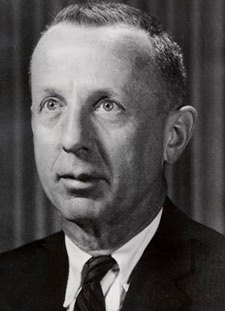
Charles P. Kindleberger
American economic historian and authorWikipedia
14
MENTIONS
9
EPISODES
9
PODCASTS
Search complete. 14 mentions across 9 episodes found for "Charles P. Kindleberger".
Sep 19, 2026

Brandon WeichertHOST
Yes.
Max OtteGUEST
It's credited to Charles Kindleberger, the crisis economist who wrote a lot about economic crisis.
Max OtteGUEST
And it first popped up in his book, The World in Depression.
Max OtteGUEST
There he said something about for the world economy to be stable, there has to be a stabilizer.

Aditi SahasrabuddheGUEST
But perhaps it could have slowed it down or maybe avoided something as big as the depression or sped up the recovery.
Aditi SahasrabuddheGUEST
But my take on this would be sort of taking the Kindleberger argument, which is the U.S. was unwilling, the Britain was unable to lead.
Aditi SahasrabuddheGUEST
The reason why is because the U.S. central bank governor was unwilling and the United Kingdom governor was unable because at this point they don't have either the relations nor the power, prestige or money to do so.
Mark BlythHOST
Fair enough.

Robert ZoellickGUEST
But the other key point is the lesson of this, going back to the Great Depression or the global financial crisis or others, is that the catalyst for cooperative action has had to be the United States.
Robert ZoellickGUEST
So there was a economic historian named Charles Kindleberger who wrote about the G- Great Depression, many other issues.
Robert ZoellickGUEST
One of his conclusions was in the '20s-- in the nineteen thirties, China had-- or that Britain had the experience of global leadership, but no longer the means.
Robert ZoellickGUEST
The United States had the means, but not the experience of leadership.

Cole SmeadHOST
Well, two things come to mind in that, and I, I, I had mentioned I was, I was gonna reference this before we started.
Cole SmeadHOST
But, um, you know, we had done, uh, Perry Mehrling's book, which was all about Charles Kindleberger, um, you know, uh, you know, where he called America the banker to the world in that book.
Cole SmeadHOST
You, you reference Kindleberger.
Cole SmeadHOST
A lot of your framework is Kindleberger.

Steve KeenGUEST
Ben Bernanke wrote a book called Essays on the Great Depression that was regarded as an expert on the Great Depression.
Steve KeenGUEST
His entire consideration of Minsky and Irving Fisher in that book was to say that Hyman Minsky and Charles Kindleberger, the person who wrote the book Burns, Panics, and Crashes, have on occasions argued for the instability of the financial system, but in doing so have headed apart from the assumption of rationality.
Steve KeenGUEST
End of consideration.
Steve KeenGUEST
He then has a footnote.

Vince CableGUEST
This is inherently unstable.
Vince CableGUEST
It is the view of the world that Trump on one hand and the Chinese on the other promote, but it is inherently unstable, partly because of conflict between the powers and partly because of what I call the Kindleberger trap, which is nobody is responsible for what economists rather grandly call international public goods, the things we all have in common and need a common approach.
Rafael BehrHOST
But that question of the international public goods, the fact that we all have to breathe clean air, the fact that we all have an interest in the planet not overheating, the fact that we will all want some kind of guardrails and boundaries and understanding how AI is going to work.
Rafael BehrHOST
I mean, the list is quite long.

Vince CableGUEST
But nonetheless, you can see the potential for conflict, certainly in the South China Sea area.
Vince CableGUEST
But there's another trap which is equally important, if not more important, which is the so-called Kindleberger trap, that when you have a declining economy, global superpower, a hegemon, you know, the United States at present, and its influence declines, then who then takes responsibility for what economists rather pompously call international public goods, or the things which we share in common, the need for an international rule of law or strong institutions dealing with financial stability and trade or, you know, climate change is the most obvious one.
Vince CableGUEST
And that's a case where the United States essentially walked away.
Vince CableGUEST
And whether this problem is addressed and addressed properly now largely falls to China, but also increasingly to India.

Chloé MatthewsGUEST
which is one of the earliest attempts to identify recurring market behavior.
Chloé MatthewsGUEST
And the second is the Minsky-Kindleberger framework, which I think provides the stronger theoretical explanation for why financial instability is endogenous to the financial system.
Chloé MatthewsGUEST
And although both of these are separated by almost a century, Both frameworks point towards the same conclusion that, you know, markets don't simply respond to economic fundamentals, but actually they're heavily influenced by credit conditions and collective investor psychology.
Ralitza ShiderovaHOST
Yes, and you gave a very extensive presentation, which I was very interested about, you know, what causes the financial instability and how this repeats over time.
Chloé MatthewsGUEST
But I think we should actually look at Benner's theory, I guess, by seeing that he recognized something fundamental, which is that markets are cyclical because investor behavior is cyclical.
Chloé MatthewsGUEST
You know, what changes over time is the catalyst or are the catalyst.
Chloé MatthewsGUEST
But what doesn't change are these ideas of optimism or leverage, complacency, fear and then eventual recovery, which is then where the Minsky-Kindleberger theoretical framework comes in and complements Benner's ideas quite well.
Ralitza ShiderovaHOST
Great.

Brent NeimanGUEST
Think of it a little bit like the English language.
Brent NeimanGUEST
This is an analogy that I think Charles Kindleberger and many other famous economists have referenced over the years with respect to the dollar.
Brent NeimanGUEST
It's kind of like the English language in the sense that it's a standard.
Brent NeimanGUEST
If you go around the world and you say, what's the most likely second language for countries in non-English speaking countries to speak? English is going to be up there quite a lot of the time.