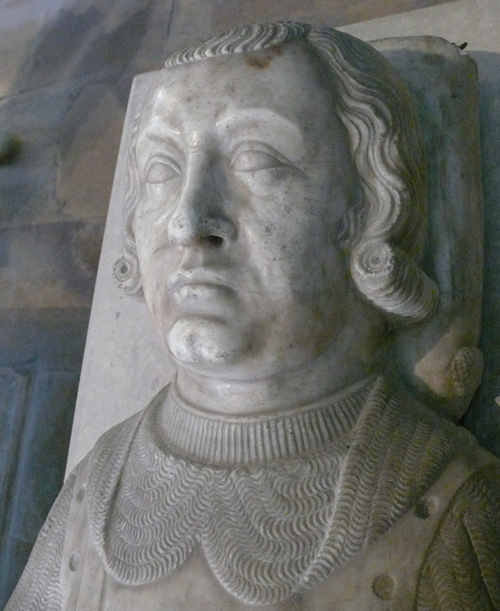
Charles of Valois
Member of the House of CapetWikipedia
21
MENTIONS
2
EPISODES
2
PODCASTS
Search complete. 21 mentions across 2 episodes found for "Charles of Valois".
Oct 24, 2026

speaker_0NARRATOR
you are the most powerful man in france who is not actually wearing the crown you are riding home on a mule humming to yourself having just spent a very pleasant evening with your sister-in-law who happens to be the queen of france you have a handful of attendants with you a couple of lads with torches nothing to worry about this is your city and then out of the dark 15 or so men in masks come pouring out of a doorway like a squad that has just spawned in on top of you The first blow takes off your hand, not cuts it, takes it off.
speaker_0NARRATOR
You shout, quite reasonably, that you are the Duke of Orleans, brother of the King, and that there has clearly been some sort of mistake.
speaker_0NARRATOR
And somebody in the crowd shouts back that this is exactly who they were looking for.
speaker_0NARRATOR
They drag you off your mule, they hit you with swords, axes and wooden clubs.
speaker_0NARRATOR
A student who did exactly the same thing might claim the protection of the church and walk away.
speaker_0NARRATOR
A nobleman who killed to defend his honour could very often obtain a royal pardon.
speaker_0NARRATOR
And a prince of the blood could have the king's own brother butchered in the street and, at least for a while, be thanked for it.
speaker_0NARRATOR
Same city, same crime, completely different outcomes.

Algie PuggNARRATOR
PART II.
Algie PuggNARRATOR
i now intend to relate the cause of his banishment in detail for it is well worthy of note and boccaccio passes over it so dry shod that i suspect it was not so well known to him as it is to me because of the history which i have written the city of florence having in times past been the scene of great conflicts between the guelphs and the ghibellines had finally remained in the hands of the guelphs and when this had lasted a long space of time there arose again another plague of factions among the guelphs themselves who had control of the commonwealth and the factions were called bianchi and neri this perverse dispute first arose in pistoia especially in the family of the cancellieri and all pistoia being now divided into factions the florentines ordained by way of remedy that the heads of these parties should come to florence that they should have no further power of making trouble at home this remedy turned out to do less good to the pistoians by removing their party leaders than harm to the florentines by drawing the infection upon them for the leaders had many connections and friendships in florence and at once kindled a greater conflagration there because of the zeal of their relatives and friends on either side than they had left behind them at pistoia and as this matter came to be debated in public and private the ill-seed spread apace and the whole city was so divided that there was hardly a family noble or plebeian which was not divided against itself nor was there a private person of any account who was not of one party or the other and the division reached two very brothers one holding with the one side and another with the other and as the contest went on month after month and disputes were multiplied not only in words but in arrogant and embittered deeds begun by the youthful and extending to the mature at last all the city was thrown into upheaval and uncertainty then it chanced that while dante was one of the priors the faction of the neri had a meeting in the church of s trinita the proceedings were a profound secret but the effect was to approach pope boniface the eighth who was then in the chair to get him to send charles of valois of the royal house of france to florence as pacificator and reorganizer of the city when this meeting was heard of by the opposite faction of the bianchi they at once conceived the utmost suspicion of it so much so that they took up arms and surrounded themselves with their allies and went to the prize making it a grievance that a meeting had been held to discuss the affairs of the city at a private council and declaring that all was done in order to banish them from florence and finally they required the priors to see that such excess of presumption was punished then they who had called the meeting being alarmed in their turn took arms and complained before the priors that their adversaries had armed and strengthened themselves without any public deliberation and intended under various colourable pretexts to banish them whereon they required the priors to have them punished as disturbers of the public peace both parties had gathered their men-at-arms and allies suspicion and fear and danger were at their height so when the city was all in arms and commotion the prize at dante's suggestion determined to call out the civic guard and when so strengthened they relegated the leaders of both parties to confinement under bounds namely these messer corso donati messer gerispini messer giocannotto de pazzi messer rosso della tozza and others with them all these were of the black faction and were put under bounds at the castello della pieve in the district of perugia of the white faction the following were put under bounds at serrazzana messer gentile and messer torrigiano di cerchi guido cavalcanti paschiera delitosa baldinaccio adimari naldo di messer lottino gerardini and others this brought much blame upon dante and though he stands on his defence and declares himself to be above party he was none the less reputed to lean to the white faction and to disapprove of the council held in santa trinita to summon charles of valois to florence as likely to cause divisions and woes to the city and the odium was increased by the fact that the group of citizens confined at zerazzana was soon readmitted into florence and the other that was confined at castello della pieve was kept outside to this dante replies that when they were recalled from zerazzana he was no longer in office as prior and should not be held responsible and he further declares that their recall was due to the illness and death of guido cavalcanti who fell sick at serrazzana because of the bad climate and soon after died this unequal treatment moved the pope to send charles to florence and on being received in the city with honour out of respect to the pope and the house of france he at once recalled the banished citizens and subsequently drove out the white party he took occasion to this from the discovery of certain practices revealed by messer piero ferranti a baron of his who said that he had been requested by three gentlemen of the white faction to wit naldo de messer lottino gherardini paschiere della tosa and baldinaccio aldimardi so as to work upon messer charles of valois as to make him secure the supremacy in the city to their party and that they had promised to make him governor of prato if he should accomplish this and he produced this request and promise in writing with their seals to it and i have seen the original document which is still in the palace with other public documents but for myself i strongly suspect it nay i believe for certain that it is a forgery but be this as it may the banishment of the whole white party followed upon it charles professing great indignation at this request and promise which they had made dante was not in florence at the time but was at rome whither he had been sent shortly before as ambassador to the pope to offer concord and peace on the part of the citizens But, nonetheless, by reason of the rage of those of the Black Party, who had been exiled in his priorate, a rush was made upon his house, which was plundered of everything he had, and all his possessions were devastated.
Algie PuggNARRATOR
And he and Messer Palmieri Altoviti were banished in their persons for contumacy in not answering the summons, but not really for any fault they had committed.
Algie PuggNARRATOR
the way this banishment was effected was by making an iniquitous and perverse law with retrospective action that the podista of florence should have the power and duty of taking cognizance of all the offences that had been committed in the office of the prioret even though the audit had already been passed under this law dante was summoned by messer conte de gabrielli podest of florence at the time and being absent and therefore not appearing was condemned and banished and his goods confiscated though for that matter they had already been plundered and laid waste we have been told how dante's banishment came to pass and the occasion and method of it now we will tell what life he led in his exile when dante heard of his ruin he immediately left rome where he was ambassador and journeying with all speed came to siena hearing there more particulars of his disaster and seeing no remedy he determined to ally himself with the other refugees and his first approach to them was in a meeting of refugees which was held at gargonza where they considered many schemes and finally fixed their headquarters at arezzo where they made a great camp and appointed count alessandro da romena their captain with twelve counsellors amongst whom was dante Drawn on from hope to hope till the year 1304, they then gathered together all the strength of their allies and set out to force an entry into Florence, with a very numerous company that had joined them, not only from Arezzo, but also from Bologna and from Pistoia, and, coming unawares, they instantly seized a gate of Florence and won a part of the city.
10 MINS LATER
Algie PuggNARRATOR
and certainly he has exquisitely expressed in this vernacular rhyme many things that he would not have known how to express and could not have expressed in the latin tongue and in heroic verses the proof lies in the eclogues which he wrote in hexameters and which granting them to be good i have often seen surpassed for the truth is our poet's strength lay in vernacular rhyme in which he excels above all others but in latin verses and in prose he hardly reached mediocrity the reason of this is that his age was given up to rhymed poetry but of elegance of diction in prose or in latin verse they knew nothing at that period but were rude and gross and without literary skill though learned enough in these disciplines after the friar and scholastic type Dante tells us that rhyme began to be written about a hundred and fifty years before his time, and the first to practise it were Guido Guinezzelli of Bologna, and Guitone, a jovial friar of Arezzo, and Buona Giunta of Lucca, and Guido of Messina, all of whom Dante far excelled in science and polish, and elegance and charm, so much so that good judges suppose that no one will ever surpass Dante in rhymed poetry.
Algie PuggNARRATOR
and indeed we can but marvel at the grandeur and sweetness of his writing so wise and full of meaning and dignity with such marvellous variety and wealth such knowledge of philosophy such familiarity with ancient history and an acquaintance with modern affairs such that he seems to have been present himself at every event these beauties are unfolded with such charm of verse that they take captive the mind of every reader and far most of those who have most understanding his invention was admirable and was hit on by a true stroke of genius for it unites the description of the world the description of the heavens and the planets the description of men the rewards and punishments of human life bliss misery and all that lies between the two extremes nor do i suppose that any man ever handled a subject more large and fertile in giving scope for the expression of the very soul of all his thoughts by reason of the variety of the spirits that discourse of the divers causes of things in divers countries and of the varied chances of fortune this his chief work dante began before his expulsion and afterwards finished it during his exile as may be clearly seen from the work itself he also wrote some moral odes and sonnets his odes are perfectly polished and beautiful and full of lofty matters and all of them open with some large conception as the one that begins amor che muovi tua virtu dal cielo come il sol lo splendore which contains a subtle and philosophical comparison between the effects of the sun and the effects of love and another which begins tre donne intorno al cor mi son venute and another donne che vite intelletto d'amore and he is equally subtle and polished and full of learning in many other odes in his sonnets he is not so strong such are his works in the vernacular in latin he wrote prose and verse in prose there is a book called monarchia written without any charm of style he also wrote another book entitled de vulgari eloquentia he also wrote many prose epistles in verse he wrote certain eclogues and the beginning of his book in heroic verses but not succeeding in this style he pursued it no further dante died in thirteen twenty one at ravenna he had a son amongst others named pietro who studied in law and reached distinction by his own deserts and aided by the memory of his father and it is not long since this leonardo came to florence with other young men of verona well appointed and in good style and he paid me a visit as a friend to the memory of his great-grandfather dante and i showed him dante's house and that of his forebears and i pointed out to him many particulars with which he was not acquainted because he and his family had been estranged from their fatherland and so does fortune roll this world around and shift its inhabitants as she turns her wheels end of life of dante by leonardo bruni end of section twenty one Section 22 of The Early Lives of Dante Translated by Philip H. Wicksteed This Liberox recording is in the public domain.
Algie PuggNARRATOR
section twenty two appendix one extract from giovanni villani's florentine chronicle in the said year thirteen twenty one in the month of july dante alighieri of florence died in the city of ravenna in romagna having returned from an embassy to venice in the service of the lords of polenta with whom he was living and in ravenna in front of the door of the chief church he was buried with great honour in the garb of a poet and of a great philosopher he died in exile from the commonwealth of florence at the age of about fifty-six years this dante was an honourable and ancient citizen of florence of the port de san piero and our neighbour and his exile from florence was by reason that when messer charles of valois from the house of france came to florence in the year thirteen o one and banished the white party as has been mentioned before at the proper time the said dante was among the chief governors of our city and pertained to that party albeit he was a guelph and therefore for no other fault he was driven out and banished from florence with the said white party and he went to the university of bologna and afterwards at paris and to many parts of the world this man was a great scholar in almost every branch of learning albeit he was a layman he was a great poet and philosopher and a rhetorician as perfect in poetry and verse as in public speaking a most noble poet supreme in rhyme with the most polished and beautiful style that ever was in our language up to his time and since it in his youth he wrote the book of the vita nuova of love and afterwards when he was in exile he wrote some twenty odes of high excellence treating of moral questions and of love and he wrote amongst others three noble letters one he addressed to the government of florence complaining of his undeserved exile the second he addressed to the emperor henry when he was besieging brescia reproving him for his delay almost in prophetic strain the third to the italian cardinals at the time of the vacancy after the death of pope clement praying them to unite in the election of an italian pope all these in latin in a lofty style and with weighty pronouncements and authorities much commended by men of sage judgment and he wrote the comedy wherein in polished verse and with great and subtle disquisitions moral natural astrological philosophical and theological with new and beautiful illustrations comparisons and poetic inventions he dealt and treated in a hundred chapters or cantos of the existence and condition of hell purgatory and paradise as loftily as it were possible to treat of them as in his said treatise may be seen and understood by whoso has subtle intellect it is true that in his comedy he indulged in invective and denunciation after the manner of poets perhaps in certain places more than was fitting but maybe his exile was the cause of this he wrote also the monarchia in which he treated of the office of pope and of emperor and he began a commentary upon fourteen of his afore-named moral odes in the vulgar tongue which in consequence of his death is only completed as to three of them the which commentary judging by what appears was turning out a lofty beautiful subtle and superb work adorned by lofty style and fine philosophical and astrological reasonings and he also wrote a little book entitled de vulgari eloquentia of which he promises to write four books but of these only two exist perhaps on account of his untimely death and here in strong and ornate latin by choice considerations he tries all the vernaculars of italy and finds them wanting this dante because of his knowledge was somewhat haughty and reserved and disdainful and after the fashion of a philosopher careless of graces and not easy in his converse with laymen but because of the other virtues and knowledge and worth of so great a citizen, it seems fitting to confer lasting memory upon him in this our chronicle, although, indeed, his noble works, left to us in writing, are the true testimony to him, as also an illustrious honour to our city.
Algie PuggNARRATOR
Section 23 of The Early Lives of Dante, translated by Philip H. Wicksteed.