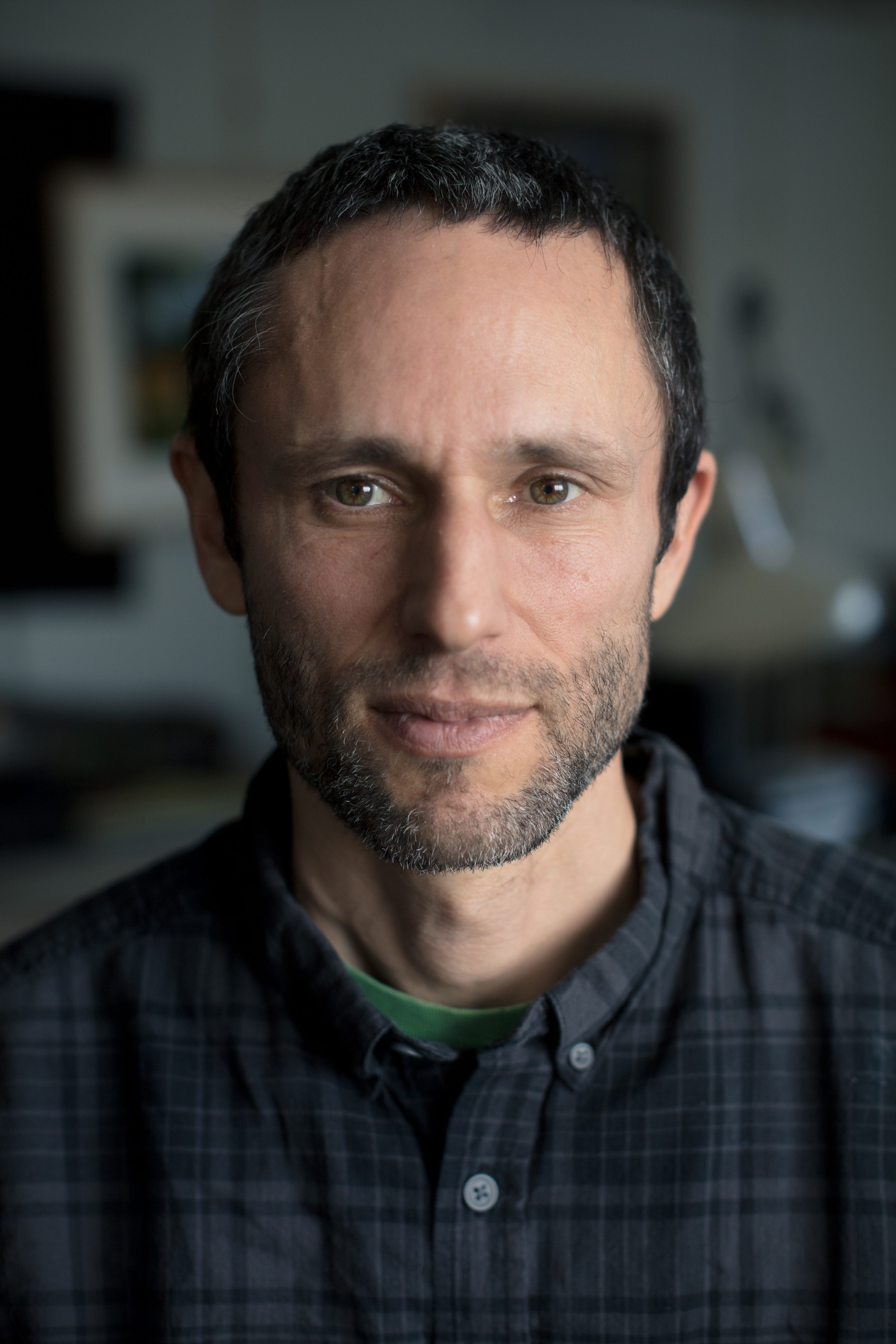
Charles Eisenstein
American orator and authorWikipedia
26
MENTIONS
14
EPISODES
14
PODCASTS
Search complete. 26 mentions across 14 episodes found for "Charles Eisenstein".
Oct 7, 2026

Aleya JobsonHOST
Dues do not circulate.
Aleya JobsonHOST
Charles Eisenstein, who I like to quote, speaks about demurrage, or the decaying ability of money.
Aleya JobsonHOST
Not just the physical disintegration and replacement as happens with fiat, but an actually decaying value to the currency being a part of a healthy currency that prevents hoarding, as it will soon disintegrate into nothing.
Aleya JobsonHOST
So it's more hot potato than Smaug's treasure.

Ximena ServinGUEST
Um, the, there's this amazing author economist.
Ximena ServinGUEST
He's called Charles Eisenstein.
Ximena ServinGUEST
People, if you ever have time, read him.
Ximena ServinGUEST
He is amazing.

Ian MacKenzieHOST
in a little development, trying to be like, how do we get a community? And, you know, trying to, yeah, trying to do potlucks, but it was so hard to get people out because it was like, well, they don't need it, right? Like they got their busy lives, they got Netflix, they got whatever.
Ian MacKenzieHOST
And Charles Eisenstein calls this shared consumption, right? Most people who think they, their experience of community is actually shared consumption, right? Like guys going to the football game or, you know, going to the bar or whatever.
Ian MacKenzieHOST
But true ritual, like what it takes to co-craft something like this.
Ian MacKenzieHOST
Yeah.

Gregory PettysGUEST
Mm.
Kamea ChayneHOST
I think it was Charles Eisenstein who initially inspired me to interrogate the word, but he was saying how the word privilege kinda implicitly reinforces ideas of what to look up to and what to aspire towards if we consider particular ways of living as being better off.
Kamea ChayneHOST
So, like, looking to a billionaire, like sure, they, they are better off in many ways given the power and, well, dominating power and resources that they have to do whatever they want.
Kamea ChayneHOST
Um, but I'm like, I don't aspire to that.

Jacob ThompsonHOST
Are there any other big inspirations into your kind of current life philosophy as far as teachers or books or even like plant medicines?
Kevin MayGUEST
So one of my main inspirations as far as a teacher is named Charles Eisenstein.
Kevin MayGUEST
And I got to read his magnum opus called The Ascent of Humanity way back in 2010 when I was a freshman in college.
Kevin MayGUEST
And that book, when I read it, I was just like, holy shit, this dude figured it out.
Kevin MayGUEST
Like humanity was going great and then we started civilization and we fucked it up and it's just been coming increasingly fucked up since we started civilization.
Kevin MayGUEST
And what we need to do is just destroy civilization and go back to being hunter-gatherers and then we'll be groovy.
Kevin MayGUEST
But Charles Eisenstein also read a lot of Derek Jensen books and he was like, something doesn't feel right about this.
Kevin MayGUEST
And his theory is that civilization was not a wrong turn, so to per se, but it was this, this detour for us to learn all of these cool things.

Elayne KalilaGUEST
You are birthing into form the more beautiful world that you want to see.
Elayne KalilaGUEST
Thank you, Charles Eisenstein, for coining that phrase.
Elayne KalilaGUEST
Beautiful.
Elayne KalilaGUEST
And we've all used it hundreds of millions of times because he captured it.

Tam HuntGUEST
And so I was kind of fleshing out this idea, which is not new to me.
Tam HuntGUEST
I'll give Charles Eisenstein credit for this.
Tam HuntGUEST
And so and also Christopher Ryan, Insects at Dawn and various other anthropologists have basically sketched out a notion, Jared Diamond, that our last 10,000 years of human history have been highly anomalous because with the advent of agriculture and the accumulation of energy and power, we became hierarchical in ways we were never before.
Tam HuntGUEST
And that more quote unquote primal societies that we know of today and in yesteryear were profoundly non-hierarchical in many, many cases.

Nate HagensHOST
But the superorganism that is our, uh, [laughs] I'll, I'll recently call it a, um, instrumental psychopathic selection hypothesis after my recent podcast, uh, with Greg Elliott.
Nate HagensHOST
The superorganism has kind of severed our relationship with our sense of interbeing, as Charles Eisenstein would say.
Nate HagensHOST
It's like we walked into a casino from a forest and we got distracted by the slot machines and the all-you-can-eat smorgasbord, and we went on a bender, and then much later, we walked out and noticed, to our surprise, that the forest had somehow turned into a desert.
Nate HagensHOST
And then we had some sadness and some remorse and some "What have we done?" and some grief.

Brinda AdhikariHOST
What if we told you that all that was part of the original vision of the movement that would eventually become Maha? Yeah, the Maha that's now a part of the Republican Party and Donald Trump.
Brinda AdhikariHOST
One of its early architects was a man named Charles Eisenstein.
Brinda AdhikariHOST
Eisenstein is an author and political strategist who served as Robert F. Kennedy Jr.'s senior advisor and speechwriter during his 2024 presidential campaign.
Brinda AdhikariHOST
We've heard Eisenstein described as Maha's source code, someone whose ideas about healing, political division, institutional distrust, and the limits of left-right politics helped shape the early Kennedy movement.
Brinda AdhikariHOST
Last week, Kennedy stood before the Republican midterm convention and declared that many of the foundational values of the Democratic Party he grew up in had found a new home in the Republican Party and that Donald Trump had kept every single promise he made to him without exception.
Brinda AdhikariHOST
His speech has drawn considerable attention, including speculation about a potential presidential run in 2028, maybe even as a Republican.
Brinda AdhikariHOST
Today, we speak with Charles Eisenstein.
Brinda AdhikariHOST
What does he hear when he listens to his old boss today? Since leaving the campaign, Eisenstein has publicly criticized the war in Iran.

Jonas SøvikGUEST
But there is a deep want I feel in many of us for this, this looking through this sense of, of our hearts being fulfilled.
Jonas SøvikGUEST
I keep thinking of the Charles Eisenstein, the more beautiful world our hearts know is possible.
Jonas SøvikGUEST
And I see that both with AI having access to synthesize and integrate a lot of information, And a lot of the breakthroughs that are being made in healthy psychology and power dynamics and technology, there's so much that's starting to integrate along with the Eastern wisdom tradition or general wisdom traditions everywhere that maybe, just maybe, we're starting to also get a clear synthesis of how do we actually co-create a more beautiful world that we have more and more the pieces i think a lot of the knowledge has been out there but again it's been in these pockets and i see much more starting to converge within people within communities and also then within research collectives The question then is, how do we bring all that into practice? And I hope it happens.
Jonas SøvikGUEST
I see a lot of people trying, but I also see that we're stumbling and fumbling a lot.
4 more episodes mention Charles Eisenstein.
Create an account to see the whole feed, search across every transcript, and follow the entities you care about.