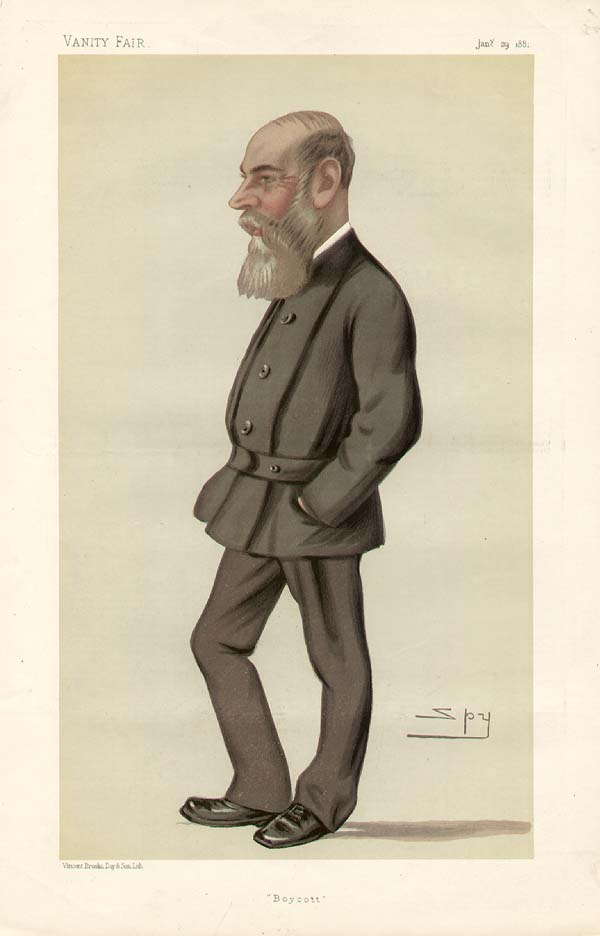
Charles Boycott
British farmerWikipedia
8
MENTIONS
5
EPISODES
5
PODCASTS
Search complete. 8 mentions across 5 episodes found for "Charles Boycott".
Oct 14, 2026

DylanHOST
I'm not saying that violence would be the first option to go to here, but I am saying that it has worked in the past to enforce rules surrounding surf breaks.
DylanHOST
The answer, my answer about how we can police or enforce these rules comes from the answer that the locals had for Captain Charles Cunningham Boycott in the late 1800s.
DylanHOST
He This was during famine times, and he owned half of this small town in County Mayo in Ireland.
DylanHOST
He increased the rent, doubled the rent, tripled the rent for all his tenants at a time when they didn't even have enough food to eat, at a time when people were either starving to death or leaving the country, at a time of mass emigration and famine.

Blindboy BoatclubHOST
You must shun him in the fair green and in the marketplace, and even in the place of worship.
Blindboy BoatclubHOST
By leaving him alone, by putting him in a moral Coventry, by isolating him from the rest of the country as if they were a leper of old, you must show your detestation of the crime he has committed." Who is he talking about there? Some fucking prick of a landlord called Captain Boycott.
Blindboy BoatclubHOST
Actually, he wasn't a landlord, and this is important.
Blindboy BoatclubHOST
He was a land agent, so he was s-- an English person who was employed to manage the large estates.
Blindboy BoatclubHOST
But the landlords, they're very rich colonial people who don't live in Ireland.
Blindboy BoatclubHOST
They were absentee landlords who were exploiting the people of Ireland via their land agents.
Blindboy BoatclubHOST
So anyway, Captain Boycott, he was shunned in Ireland.
Blindboy BoatclubHOST
He couldn't get served in shops.

speaker_0HOST
Maybe even the...
speaker_0HOST
The history of the boycott coming from Ireland, of course, with Charles Boycott.
speaker_0HOST
I mean, even the first time that happened, they know that the movement was going to take off and that such.
speaker_0HOST
And even if Ireland were to become the only country to do it, I still think you shouldn't be thinking in the lines of, well, it doesn't matter for us.

GavHOST
A boycott is an organised voluntary refusal to buy products, etc, blah, blah.
GavHOST
The term comes from Captain Charles Boycott, an Irish land agent who was socially and economically isolated by local tenants in 1880 after he refused to lower rents.
GavHOST
Proposed by Charles Stuart Parnell, tenant farmers in County Mayo stopped working for Captain Boycott.
GavHOST
So his name has become the new verb for Collective ostracism.