Chalkidiki
39
MENTIONS
11
EPISODES
11
PODCASTS
Search complete. 39 mentions across 11 episodes found for "Chalkidiki".
Oct 9, 2026

Pamela NagamiNARRATOR
So far we have been dealing solely with Macedon; but there were large districts and many cities to the east of the Axios which had been founded or colonized by Hellenes, and in which they were the dominant, if not the more numerous part of the population.
Pamela NagamiNARRATOR
These colonies fringed the whole coast of the Euxine Sea, the Chersonese, Thrace, and Chalcidice; and as the extension of Macedonian power by Philip brought him into collision with many of them, it will be well to give a short account of the country lying between the Axios and Amphipolis.
Pamela NagamiNARRATOR
The promontory of Chalcidice, with its three fingers or peninsulas, seemed formed by nature to be the maritime province of the inland country behind it.
Pamela NagamiNARRATOR
Macedon might seem to have a natural right to it, and we can hardly wonder that Philip was not content until he had won it.
Pamela NagamiNARRATOR
As compared with the western shores of the same latitude, it had marked advantages.
Pamela NagamiNARRATOR
Each was fringed with a numerous belt of colonies.
Pamela NagamiNARRATOR
Each boasted one city of first-rate importance.
Pamela NagamiNARRATOR
On the western coast of Sithonia lay Toroni, the first home of the immigrants from Euboean Chalcis, who colonized Chalcidice and gave it their own name; while at the neck of land connecting Pallini with the country to the north was Potidea, a colony from Dorian Corinth, the near neighbor, rival, and sometimes subject of the Chalcidian Olynthos.

Konstantinos KolokotronisGUEST
So Hellas Sat satellites, Hellas Sat two, Hellas Sat three, Hellas Sat four, which are currently in a geostationary orbit, underpin the Greek governmental satellite communication network, which is the Current government communications, uh, infrastructure that Greek government officials, diplomats abroad, and as well as, uh, the military uses for secure communications.
Konstantinos KolokotronisGUEST
So this existing, uh, architecture of satellite communications is now expanding to include the Hellas Sat Five and brand new state-of-the-art satellite system, which, uh, actually introduces a quantum encrypted optical communications payload that shall utilize domestic ground observatory nodes and, uh, ground bases which will be stationed in Crete, Kalamata, Corinthia, and Halkidiki.
Konstantinos KolokotronisGUEST
So moving on to unmanned offshore infrastructure.
Konstantinos KolokotronisGUEST
On the water surface, this, uh, space network directly-- it can directly integrate with the Hellenic Navy's new unmanned sea platform, the so-called PANOPTES.

JamesGUEST
And so I'm looking at this country going, okay, the deal in terms of residency is really, really good compared to literally anywhere on the continent.
JamesGUEST
Where it is geographically is such a fantastic spot because, you know, from where I am now, I can be in Trieste in six and a half hours, or I can be in Halkidiki in maybe like 10, 12 tops.
JamesGUEST
I can fly to basically anywhere in Europe in two hours.
JamesGUEST
And let's be honest, like I'm not really that interested in Spain.

speaker_3NARRATOR
Another circumstance too is made a proof of his lack of courage for an emergency, namely that when he was interrupted by the clamours of the people, Demades often rose and spoke offhand in his support, but he never rendered such a service to Demades.
speaker_3NARRATOR
How then, some might say, could Astaines call him a man of most astonishing boldness in his speeches? And how was it that when Python of Byzantium was in vain with much boldness and a great torrent of words against the Athenians, Demosthenes alone rose up and spoke against him? Or how did it happen that when Lamachus the Muranian had written an encomium on Kings Philip and Alexander, in which many injurious things were said of Thebes and Olympus, and while he was reading it aloud at Olympia, Demosthenes came forward and rehearsed with historical proofs all the benefits which the people of Thebes and Chalcidice had conferred upon Greece, and on the other hand all the evils of which the flatterers of the Macedonians had been the cause, and thereby so turned the minds of the audience that the sophist was terrified at the outcry against him and slunk away from the festival of Semblage.
speaker_3NARRATOR
But although Demosthenes, as it would appear, did not regard the other characteristics of Pericles as suitable for himself, he admired and sought to imitate the formality of his speech and bearing, as well as his refusal to speak suddenly or on every subject that might present itself, as if his greatness was due to these things, that he by no means sought the reputation which is won in a sudden emergency, nor did he often of his own free will stake his influence upon chance.
speaker_3NARRATOR
However, those orations which were spoken offhand by him had more courage and boldness than those which he wrote out, if we are to put any confidence in our Eratosthenes, Demetrius the Phalerian, and the comic poets.

Carol PelsterNARRATOR
Another circumstance, too, is made a proof of his lack of courage for an emergency, namely, that when he was interrupted by the clamours of the people, Demades often rose and spoke off-hand in his support, but he never rendered such a service to Demades.
Carol PelsterNARRATOR
How then, some might say, could Aeschines call him a man of most astonishing boldness in his speeches? And how was it that when Python of Byzantium was inveighing with much boldness and a great torrent of words against the Athenians, Demosthenes alone rose up and spoke against him? Or how did it happen that when Lamachus the Murian had written an encomium on Kings Philip and Alexander, in which many injurious things were said of Thebes and Olympos, and while he was reading it aloud at Olympia, Demosthenes came forward and rehearsed with historical proofs all the benefits which the people of Thebes and Chalcidice had conferred upon Greece, and, on the other hand, all the evils of which the flatterers of the Macedonians had been the cause, and thereby so turned the minds of the audience that the sophist was terrified at the outcry against him and slunk away from the festival assembly? But although Demosthenes, as it would appear, did not regard the other characteristics of Pericles as suitable for himself, he admired and sought to imitate the formality of his speech and bearing, as well as his refusal to speak suddenly or on every subject that might present itself, as if his greatness was due to these things; but he by no means sought the reputation which is won in a sudden emergency, nor did he often of his own free will stake his influence upon chance.
Carol PelsterNARRATOR
However, those orations which were spoken off-hand by him had more courage and boldness than those which he wrote out, if we are to put any confidence in Eratosthenes, Demetrius the Phalerian, and the comic poets.
Carol PelsterNARRATOR
Of these, Eratosthenes says that often in his speeches Demosthenes was like one frenzied, and the Phalerian says that once, as if under inspiration, he swore by the famous metrical oath to the people, by earth, by springs, by rivers, and by streams.

speaker_2NARRATOR
You are on a boat.
speaker_2NARRATOR
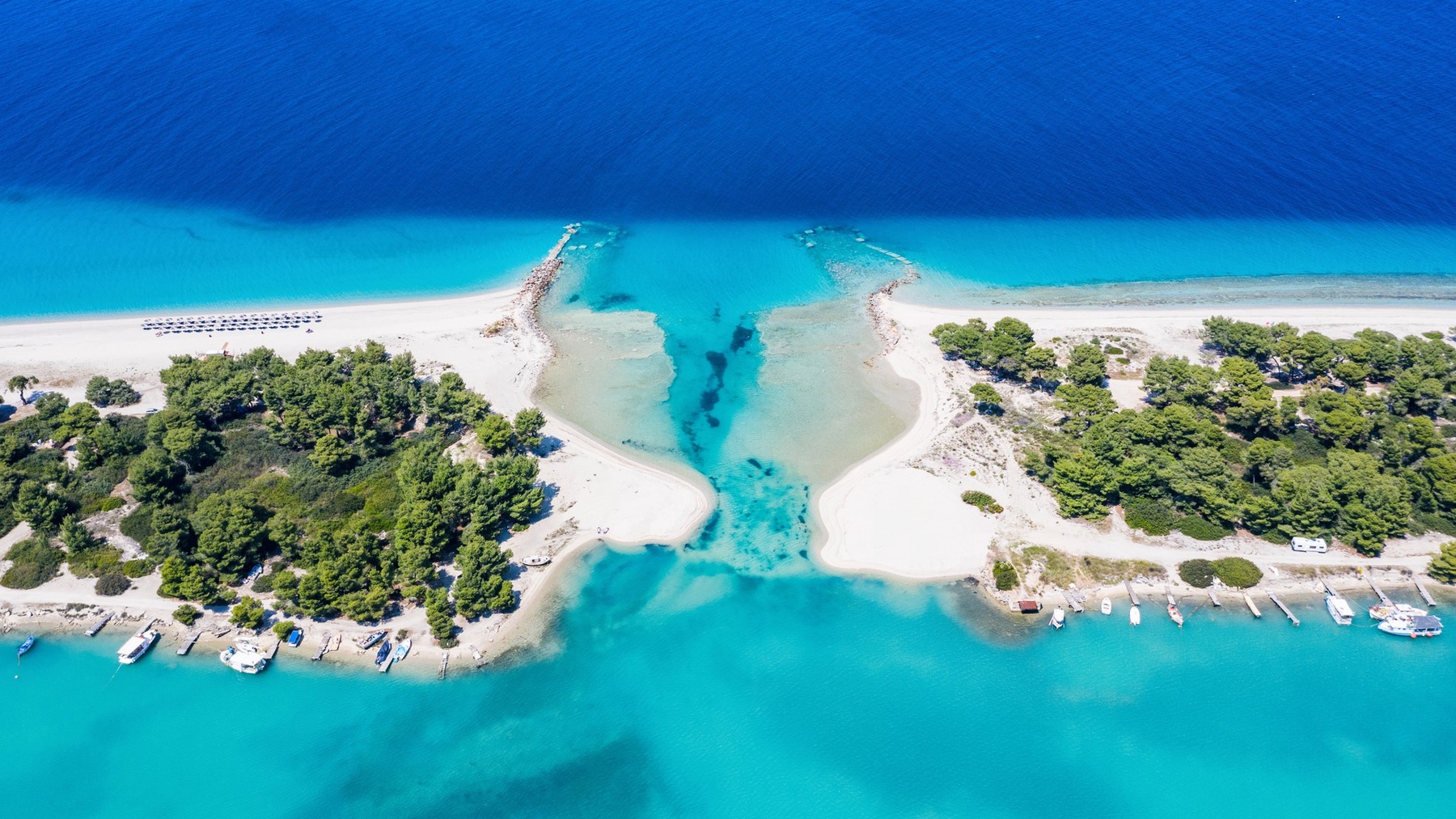
The water beneath you is the Aegean Sea, and the coast to your left is the eastern shore of northern Greece, where the Chalkidiki Peninsula reaches southward into the sea in three long fingers of land.
speaker_2NARRATOR
The westernmost finger is Kassandra.
speaker_2NARRATOR
a tourist destination known for beaches and resorts.

Donald KaganHOST
That's not a great surprise.
Donald KaganHOST
But it's interesting that many a town up in the north of the Aegean on the Chalcidice [clears throat] also joined in this, uh, anti-Spartan coalition.
Donald KaganHOST
And likewise, the region in the west on the, on the Ionian Sea, uh, of Acarnania also joined, which [clears throat] I think suggests that there was quite a lot of anti-Spartan sentiment in the Greek world at this time, which, you know, very often comes about if any state seems to be too strong, too, too, uh, too powerful, too much of a threat to what everybody else wants, people tend to cut it down.
Donald KaganHOST
Political scientists, uh, tend to [clears throat] formulize this into the notion of a, um, what do you call it? Uh, if you, if you join up with the most powerful state, that's called bandwagoning.
29 MINS LATER
Donald KaganHOST
And the Spartans did so.
Donald KaganHOST
And in the course of, uh, that war, which lasted from three eighty-two to three seventy-nine, they defeated Olynthus, dissolved the confederacy, and destroyed any, again, any notion of a league other than the Spartan League.
Donald KaganHOST
But eve-- there was an event that was connected with that movement up towards, uh, the northeast, up to the Chalcidice, which was the most famous, I think.
Donald KaganHOST
It's m-- there's a small competition for a couple of events, but one of the most famous anyway in this period illustrating the arrogance and power of the Spartan hegemony.

Pamela NagamiNARRATOR
So far we have been dealing solely with Macedon, but there were large districts and many cities to the east of the Axios which had been founded or colonized by Hellenes and in which they were the dominant, if not the more numerous part of the population.
Pamela NagamiNARRATOR
These colonies fringed the whole coast of the Euxine Sea, the Chersonese, Thrace, and Chalcidice, and as the extension of Macedonian power by Philip brought him into collision with many of them, it will be well to give a short account of the country lying between the Axios and Amphipolis.
Pamela NagamiNARRATOR
The promontory of Chalcidice, with its three fingers or peninsulas, seemed formed by nature to be the maritime province of the inland country behind it.
Pamela NagamiNARRATOR
Macedon might seem to have a natural right to it, and we can hardly wonder that Philip was not content until he had won it.
Pamela NagamiNARRATOR
As compared with the western shores of the same latitude, it had marked advantages.
Pamela NagamiNARRATOR
Each was fringed with a numerous belt of colonies.
Pamela NagamiNARRATOR
Each boasted one city of first-rate importance.
Pamela NagamiNARRATOR
On the western coast of Sithonia lay Toroni, the first home of the immigrants from Euboean Chalcis, who colonized Chalcidice and gave it their own name, while at the neck of land connecting Pelini with the country to the north was Potidia, a colony from Dorian Corinth, the near neighbor, rival, and sometimes subject of the Chalcidian Olynthos.
1 more episode mentions Chalkidiki.
Create an account to see the whole feed, search across every transcript, and follow the entities you care about.