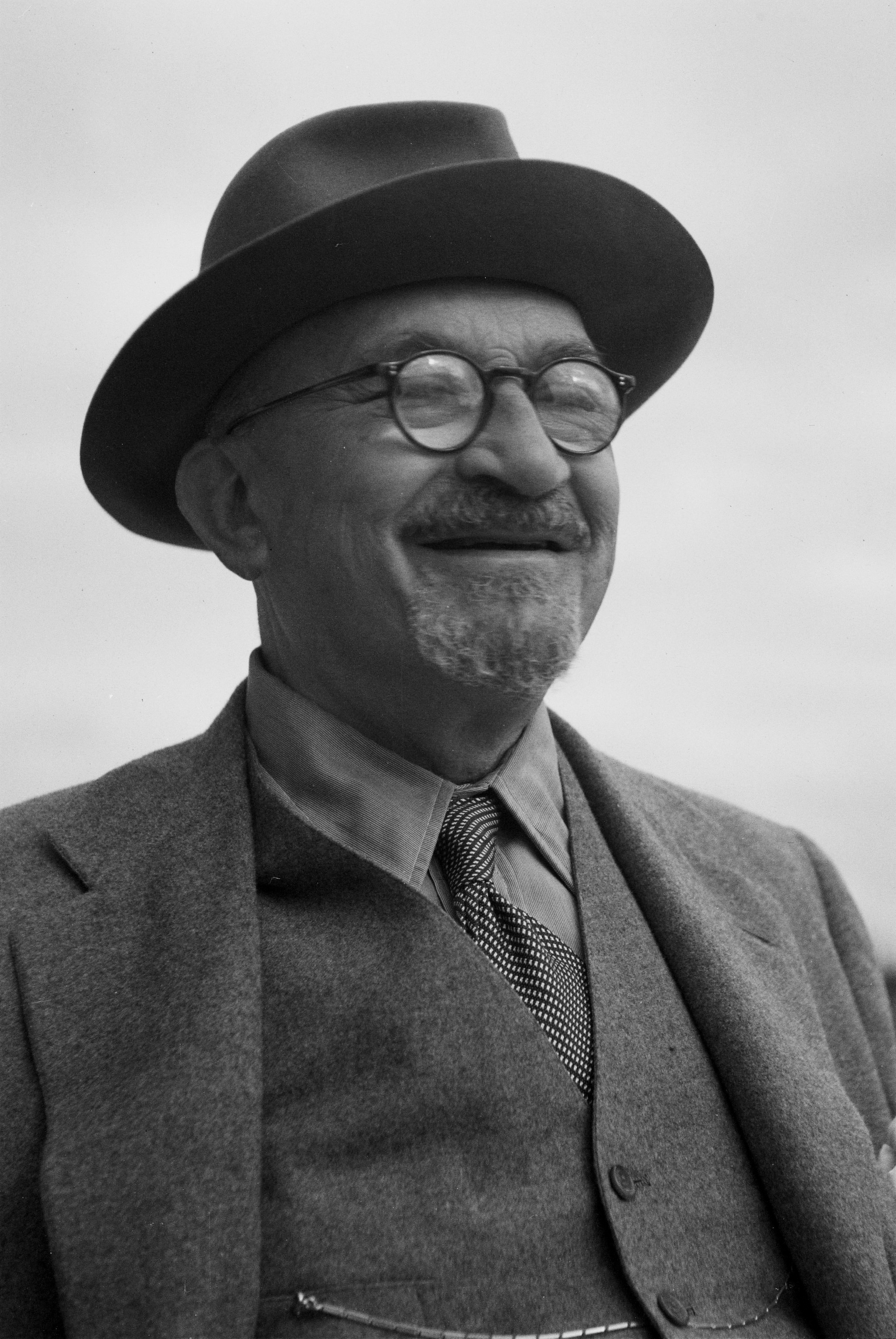
Chaim Weizmann
Biochemist and former President of IsraelWikipedia
44
MENTIONS
28
EPISODES
23
PODCASTS
Search complete. 44 mentions across 28 episodes found for "Chaim Weizmann".
Sep 29, 2026

Jay CovitzHOST
The man who, so helpfully, summarized Jabotinsky's speech for Herzl, leading to him being booted off the stage? Dr.
Jay CovitzHOST
Chaim Weizmann.
Jay CovitzHOST
Within a year, Herzl was dead.
Jay CovitzHOST
Having those four words being the only ones ever exchanged between them, Jabotinsky joked about it the rest of his life.

speaker_3NARRATOR
Jabotinsky's disagreements with the Zionist leadership eventually became too large to ignore.
speaker_3NARRATOR
He increasingly criticized leaders such as Chaim Weizmann and David Ben-Gurion, arguing that they placed too much faith in British goodwill and too little emphasis on immediate Jewish statehood.
speaker_3NARRATOR
By the 1930s, the disagreements had become so deep that Jabotinsky established the New Zionist Organization as an alternative to the World Zionist Organization.
speaker_3NARRATOR
His supporters believed the mainstream movement had become too cautious, while critics accused the revisionists of dividing the Zionist cause during a dangerous period.

Jay DyerHOST
And I think you could argue that Zionism, because it's kind of a process philosophy, quasi-atheist political approach, because basically Zionism is just saying that the salvation that's promised throughout the Old Testament and all this kind of stuff, it's really just realized in some political social idea.
Jay DyerHOST
So, you know, that's why Herzl and Weizmann and...
Jay DyerHOST
Moses Haas, they were basically all just sort of Hegelian, Spinoza, agnostic types that thought that a form of socialism would be kind of the beacon that Jerusalem or later Tel Aviv would spread, right? The world would accept.
Jay DyerHOST
That's what they were thinking.

Susan NeimanGUEST
in every way.
Susan NeimanGUEST
In 1929, he wrote to Chaim Weizmann.
Susan NeimanGUEST
Einstein very much supported the state of Israel as a homeland because he was watching rising anti-Semitism.
Susan NeimanGUEST
He did not think it should become a state.
Susan NeimanGUEST
He thought it should be a binational state.
Susan NeimanGUEST
And he wrote to Chaim Weizmann that if we cannot find a fair agreement with the Arabs.
Susan NeimanGUEST
We've learned nothing from our 2,000 years of suffering and deserve anything that befalls us, okay? Very, very prescient.
Susan NeimanGUEST
He turned down also the offer to become president, the first president of the State of Israel, partly because he told Ben-Gurion, you wouldn't want to listen to me.

Johnny SolomonHOST
Rough work, you know, do a fright of self-denomination.
Johnny SolomonHOST
Sure, I could tell you that Bialik thought this and Jabotinsky thought that and Weizmann said this and, you know, of Kalischer said that, but those sit at the fringes.
Johnny SolomonHOST
At the core, I had a working definition which worked for me and which was generally used in any kind of public forum when speaking about the underpinning values of what is Zionism.
Johnny SolomonHOST
What is, as an attitude, it is to sow seeds of doubt, to make you question whether you ever meant what you said and whether you actually understand what you're saying.

Matan YaffeGUEST
And if you are a Zionist, because you understand this, you have to understand that there are no free miracles in the world.
Matan YaffeGUEST
You know, imagine that in 1948, Ben Gurion and Chaim Weizmann and Yitzhak Sadeh and all these founders of Israel would say, you know, well, let's hope that something good will happen.
Matan YaffeGUEST
nothing would happen.
Matan YaffeGUEST
They have been working.

Pete QuiñonesHOST
So...
Darryl CooperGUEST
Well, and you also had Zionists like Chaim Weizmann, who was kind of the leader of the movement at the time.
Darryl CooperGUEST
He lived in England, and he was rubbing shoulders with people like Balfour, you know, Lord Balfour.
Darryl CooperGUEST
And yeah, they...

KenAUDIENCE
All right, I'll start with this one.
KenAUDIENCE
Chaim Weizmann, born in Belarus.
KenAUDIENCE
David Ben-Gurion, real last name Grun, born in Poland.
KenAUDIENCE
Richard Sherret, real last name, Shertock, born in Ukraine.
Pete QuiñonesHOST
So...
Darryl CooperGUEST
Well, and you also had Zionists like Chaim Weizmann, who was kind of the leader of the movement at the time.
Darryl CooperGUEST
He lived in England, and he was rubbing shoulders with people like Balfour, you know, Lord Balfour.
Darryl CooperGUEST
And yeah, they...

Pete QuiñonesHOST
[laughs] I wonder why.
Pete QuiñonesHOST
Mikhoels and Fefer were received by former Zionist leader Chaim, Chaim Weizmann and by Albert Einstein.
Pete QuiñonesHOST
Yet behind the scenes, the committee was managed by Lozovsky Drid- Drizdo, the deputy head of the Soviet Information Bureau.
Pete QuiñonesHOST
The committee did not have offices in the Soviet Union and could not act independently.
18 more episodes mention Chaim Weizmann.
Create an account to see the whole feed, search across every transcript, and follow the entities you care about.