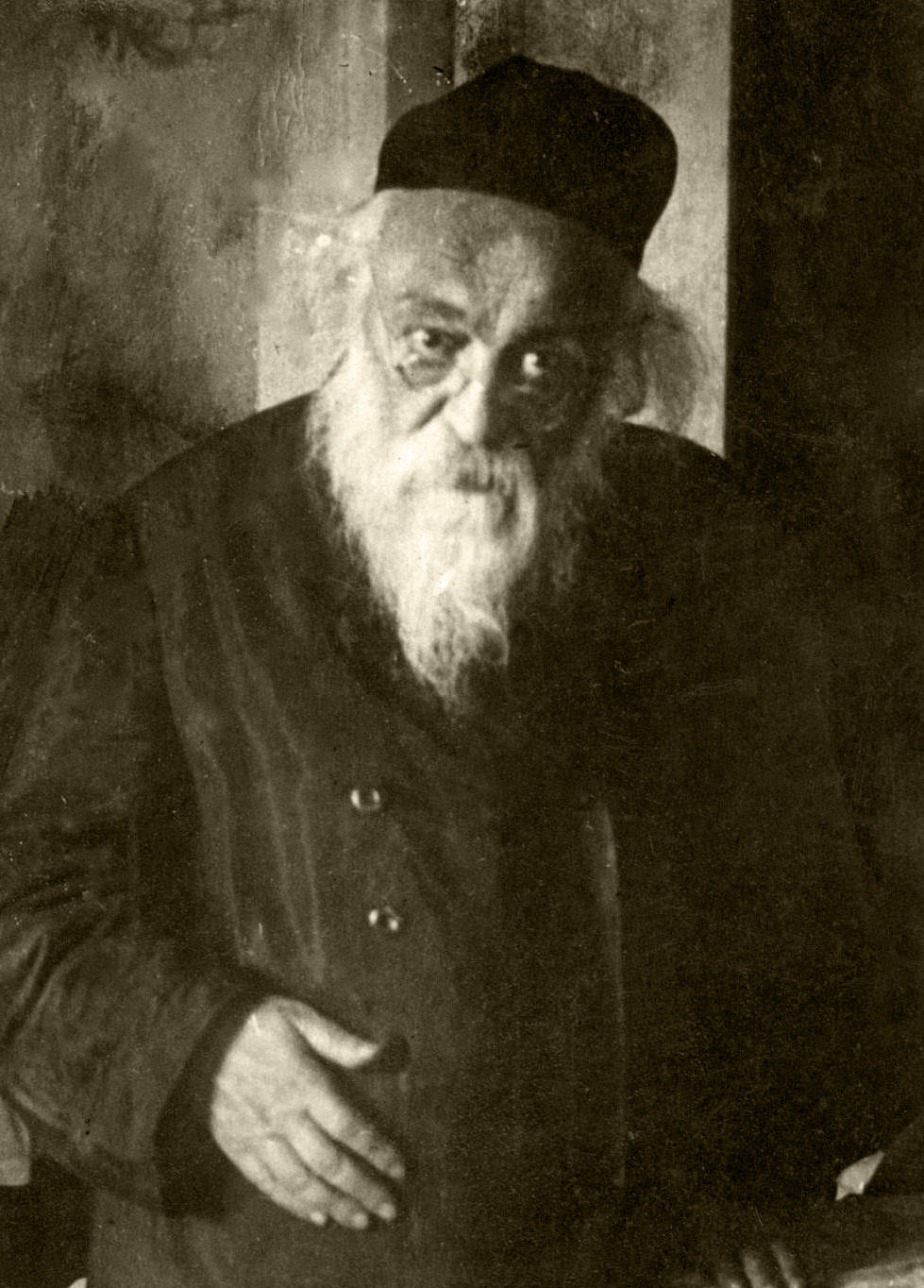
Chaim Soloveitchik
RabbiWikipedia
41
MENTIONS
26
EPISODES
23
PODCASTS
Search complete. 41 mentions across 26 episodes found for "Chaim Soloveitchik".
Sep 12, 2026

Moshe ElefantHOST
What is it coming? We learn it from the fact that there's the next step.
Moshe ElefantHOST
And it says, And I sort of, Chaim Brisker explains why over here, an animal that's owned by partners, is chai b'reish esageis, because the chiev is on each partner.
Moshe ElefantHOST
It's not a din in the wool.
Moshe ElefantHOST
If it was a din in the wool, so there we could discuss some wool is chai and some wool is not.

Ari BergmannGUEST
And that's why you have...
Ari BergmannGUEST
It, it started, Rabbi Chaim Soloveitchik says, you see this already earlier, Rabbi Gershom a little bit, the incipient.
Ari BergmannGUEST
But most of the commentaries before, people didn't even realize they were commentary, because it's all meshed to the thing.
Ari BergmannGUEST
They had to, like, break out what's interpretation, what's not.

Shalom RosnerHOST
[reading foreign language] That's a higher level.
Shalom RosnerHOST
They quote from Rav Chaim Soloveitchik.
Shalom RosnerHOST
I think Rav- the Brisk Rav quoted this from his father, the Rav Chaim Soloveitchik.
Shalom RosnerHOST
Emunah starts where sechel ends.
Shalom RosnerHOST
That's where emunah starts.

Hershel SchachterHOST
They say the Chafetz Chaim also used to daven out loud, and people near him could hear every word.
Hershel SchachterHOST
Uh, Rav Chaim Soloveitchik did that.
Hershel SchachterHOST
Rav Elbo, they say, did like that.
Hershel SchachterHOST
They say the Rav Elbo once on Rosh Chodesh, he was davening Shemoneh Esrei, and he forgot Yaaleh V'Yavo.

Warren GoldsteinHOST
What is davening? Davening is the ultimate encounter with God.
Warren GoldsteinHOST
In fact, um, Rav Chaim Soloveitchik says that at the very minimum, to be yoitzer, to fulfill one's obligation of tefillah, we at least to have, have to have at least one moment of feeling.
Warren GoldsteinHOST
And he says for the first blessing of the Amidah to feel that we are properly standing in God's presence.
Warren GoldsteinHOST
We're not just saying words.

VannGUEST
Every person tries to go have people say amin to the bracha because that props up the bracha.
VannGUEST
They say over that, M'chaim Soloveitchik, was particularly personally strict.
VannGUEST
I didn't see this brought down anywhere, but he had his own personal tradition that he only made brachot if somebody would answer amin.
VannGUEST
All of his brachot, he wanted that people should answer amin to fortify the brachot.
VannGUEST
So the Reb Chaim Soloveitchik, so it says that he got up once late at night to have a glass of water.
VannGUEST
In the middle of the night, he got up and he was thirsty.
VannGUEST
but he had his personal stringency that he wanted somebody to answer Amin, but it was the middle of the night.
VannGUEST
One of his students had come, asked him a question, so he came in, and he made the bruch of Shehakahu.

Hershel SchachterGUEST
So, the author of the Orach HaShulchan was a relative of Rabbi Meir Bar-Ilan, so he thought the role of the rabbi is to pass consensus.
Hershel SchachterGUEST
When Rabbi Meir Bar-Ilan asked Rabbi Chaim Soloveitchik, Rabbi Chaim Soloveitchik married the granddaughter of the Netziv, so officially Rabbi Meir Bar-Ilan was his uncle.
Hershel SchachterGUEST
He was much younger.
Hershel SchachterGUEST
Amir Bar-Ilan died after Hakam Samadina.
Hershel SchachterGUEST
He lived in 1920 or something like that, after the First World War, 1918 or something like that.
Hershel SchachterGUEST
But officially, Amir Bar-Ilan was the son of the second wife, so he was much younger than his great-nephew, than his nephew.
Hershel SchachterGUEST
So he asked Rav Chaim Soloveitchik, what does he think the role of the rabbi is? So he thought the role of the rabbi is to be in charge of all of the chesed in the community.
Hershel SchachterGUEST
Rav Chaim used to deal with the aniyim and the almonas and the yisayimim and Sholem Bayis, Rav Moshe Feinstein on the Lower East Side used to deal a lot also with the people on the Lower East Side about Sholem Bayis when there was a rift in the marriage.

Rabbi StarkHOST
Like, excuse me, like what happened to the whole Torah? The answer is there's a Kiddush and it's brought in this Pasuk that you could feel like you could actually decide your fate.
Rabbi StarkHOST
Meaning Daf cannot be overwhelmed by Chaim and Maveth.
Rabbi StarkHOST
If there was water or cyanide in front of you and that's the way it felt, you would not be able to choose.
Rabbi StarkHOST
it would be very hard for you to choose.
15 MINS LATER
Rabbi StarkHOST
Hashem is not reactive.
Rabbi StarkHOST
Hashem does what's needed.
Rabbi StarkHOST
It's said about Rav Chaim Brisker that Rav Chaim Brisker said, But the way he was, was every behavior seemed to be exactly what was needed at that time.
Rabbi StarkHOST
It was like, if this needs to be, it's like that.
David BashevkinHOST
He is great, the grandfather of the Rav.
David BashevkinHOST
His name, and he's referring to his own grandfather, is Reb Chaim Brisker, and without whom no shiur can be delivered nowadays.
David BashevkinHOST
Then the door opens quietly again, and another old man comes in.
David BashevkinHOST
He's older than Reb Chaim.

Aryeh LebowitzHOST
What if the Kiddush just disappears? You know, there's a famous Telzer Hakira, which if you learned in a Brisker yeshiva is an insult to call something a Telzer Hakira.
Aryeh LebowitzHOST
They say Reb Chaim Telzer met Reb Chaim Brisker and he told them this Hakira that he said when a couple gets married, right? When a man is Mekadesh Nisha, now they remain married for years, for decades, forever.
Aryeh LebowitzHOST
How does it work? Is it that there was one Maisa kiddushin, and now they just remain married forever, that that created a sense of ishos, and that halos stays forever? Or no, is it that the kiddushin reinvigorates itself every second? That there's a new kiddushin every second, like every moment it's kiddushin, and another kiddushin, and another kiddushin, and another kiddushin, and another kiddushin.
Aryeh LebowitzHOST
And they say that Rabbi Chaim Briscoe looked at him and he said, Mazel Tov, Mazel Tov, Mazel Tov, Mazel Tov, Mazel Tov.
16 more episodes mention Chaim Soloveitchik.
Create an account to see the whole feed, search across every transcript, and follow the entities you care about.