cerebral visual impairment
InjuryWikipedia
32
MENTIONS
2
EPISODES
2
PODCASTS
Search complete. 32 mentions across 2 episodes found for "cerebral visual impairment".
Oct 6, 2026

AndreaHOST
Um, I'm Andrea, and I'm very happy today to be joined by Louise Allen.
AndreaHOST
And Louise is an orthoptist and a lecturer at the University of Liverpool, and is doing some fantastic PhD research into CVI, or cerebral visual impairment.
AndreaHOST
And welcome, Louise.
AndreaHOST
It's great to have you here.
Louise AllenGUEST
And the charity helped me, uh, get in contact with s- some of the parents that could help me with the research.
Louise AllenGUEST
That's how I, I, um, came in, in touch.
Louise AllenGUEST
And they were getting a lot of questions about CVI, so we did a lunchtime let's chat session, and the questions went on and it was a really great ...
Louise AllenGUEST
I learnt a lot, um, as I always do, speaking to parents and trying to answer questions.

Rahul DhodapkarHOST
Dr. Chang.
Rahul DhodapkarHOST
You know, your work also combines eye tracking with AI and children with CVI.
Rahul DhodapkarHOST
Can you tell us a little bit more about your research and what you've been doing recently in your lab?
Melinda ChangGUEST
So as you know, CVI stands for cerebral or cortical visual impairment, and it's one of the leading causes of pediatric visual impairment in the US.
Melinda ChangGUEST
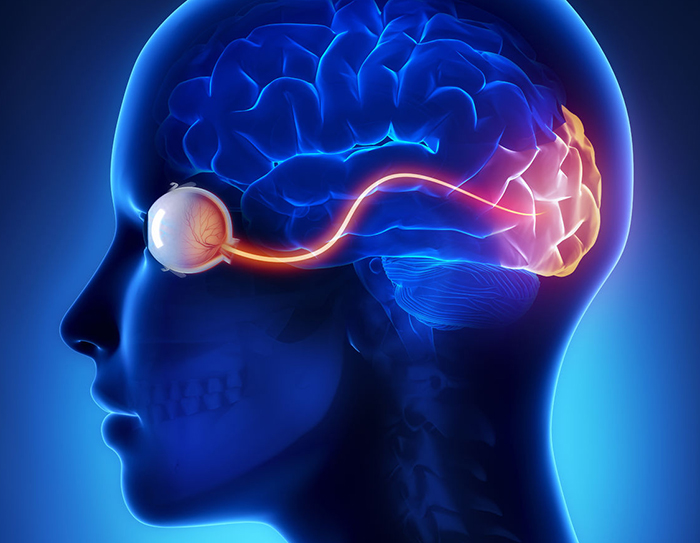
This is where the ocular anatomy may be normal, but there is decreased vision or visual dysfunction due to visual pathways in the brain being affected by things like hydrocephalus, trauma, hypoxic ischemic encephalopathy, or prematurity.
Melinda ChangGUEST
And there is no evidence-based medical treatment for CVI, which makes it very difficult for us to know how to best manage these patients in our clinic.
Melinda ChangGUEST
Part of the reason we don't have evidence-based treatment is that we can't even really run clinical trials because we don't have a good outcome measure to measure the severity of CVI because standard pediatric ophthalmology exam techniques don't really capture the higher level visual perceptual problems that kids with CVI have.
Melinda ChangGUEST
So our lab has been using eye tracking to detect various things, including visual attention to higher and lower level visual characteristics using eye tracking.