Cephalochordate
AnimalWikipedia
3
MENTIONS
2
EPISODES
1
PODCASTS
Search complete. 3 mentions across 2 episodes found for "Cephalochordate".
Oct 15, 2026

Dave FarinaHOST
Remember that all members of phylum Chordata share the five chordate characteristics we mentioned at least some point in their lives, those being the notochord, dorsal tubular nerve cord, pharyngeal pouches or gill slits, endostyle, and postanal tail.
Dave FarinaHOST
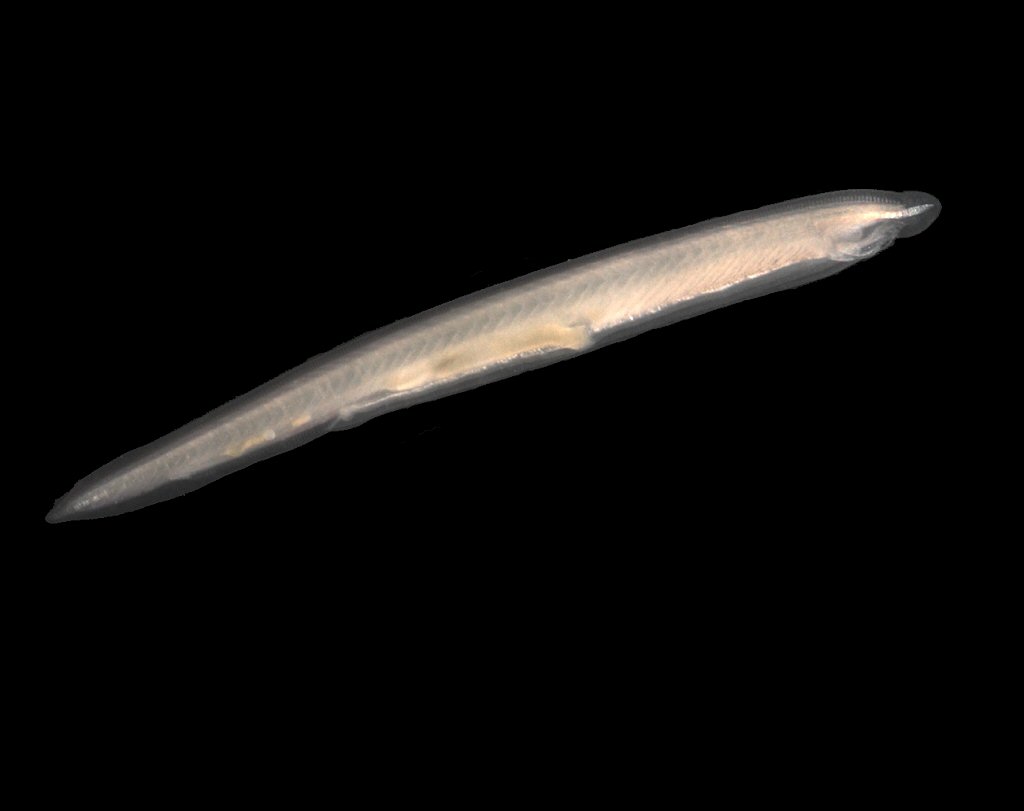
So let's begin our exploration of the chordates with subphylum Cephalochordata, the sister clade to the olfactories.
Dave FarinaHOST
There are fewer than 35 species of extant cephalochordates, all of which are found in the class Leptocardii and the order Amphioxiformes.
Dave FarinaHOST
They are commonly known as lancelets or amphioxae, the singular being amphioxus.
Dave FarinaHOST
In the previous tutorial, we began examining phylum Chordata, which contains organisms that possess these five chordate characteristics at least some point in their lives.
Dave FarinaHOST
And as we learned, within the phylum Chordata, there are three extant subphyla, Cephalochordata, the lancelets, Tunicata, the tunicates, and Vertebrata, the vertebrates.
Dave FarinaHOST
With the lancelets covered, let's now check out the tunicates.
Dave FarinaHOST
Once again, the sister clade to the cephalochordates are the olfactories, which are further split into subphylum Tunicata, sometimes called Urochordata, and its sister group, subphylum Vertebrata, also called Craniata.
Dave FarinaHOST
Subphylum Tunicata is quite a bit more diverse than Cephalochordata, with over 3,000 marine species found in the oceans worldwide.
Dave FarinaHOST
They include a wide range of colorful, translucent, and nearly transparent species.
Dave FarinaHOST
Though some species are solitary as adults, others replicate by budding and can become colonial superorganisms comprised of identical individuals.