Central Powers of World War I
CoalitionWikipedia
182
MENTIONS
52
EPISODES
37
PODCASTS
Search complete. 182 mentions across 52 episodes found for "Central Powers of World War I".
Oct 1, 2026

Bill McClayGUEST
[dramatic music] Soon, the dividing lines were clear.
Bill McClayGUEST
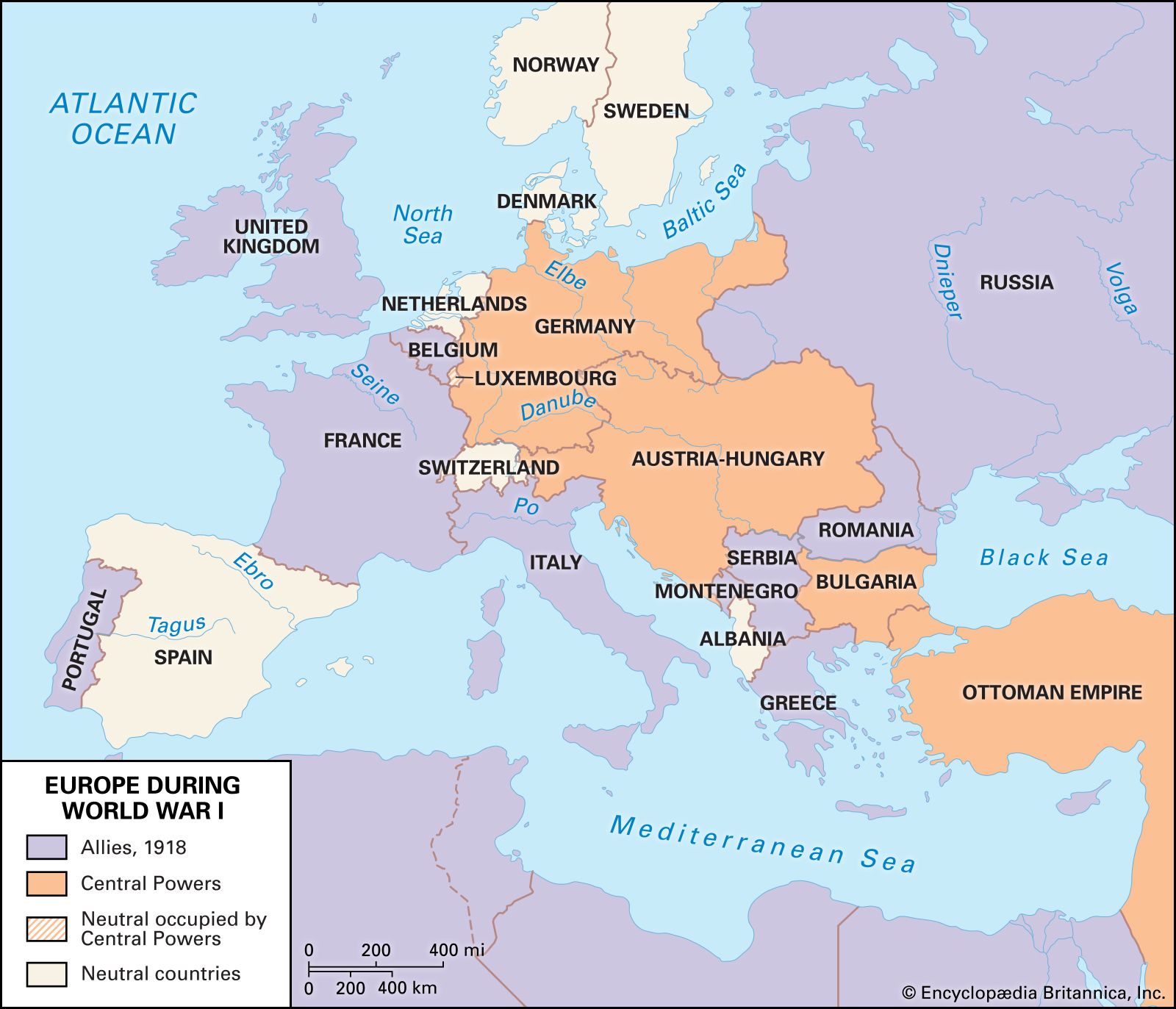
The Allied Powers, Britain, France, and Russia, battled the Central Powers, Germany, Austria-Hungary, and the Ottoman Empire.
Bill McClayGUEST
President Wilson, following President Washington's advice regarding foreign entanglements, issued a declaration of neutrality.
Bill McClayGUEST
Here's how the very short declaration began.

Simon WhistlerHOST
So when news of Stillmark's discovery broke, governments were all like, wait, these super common plants we've got lying around could be used to make a weapon and none of our enemies had done it first? The first major push to turn ricin into a bioweapon came during World War I.
Simon WhistlerHOST
With both the Entente and Central Powers already lobbing poison gas at one another, scientists at the American University Experimental Station began figuring out how to take things to the next level.
Simon WhistlerHOST
One major focus of their research was ricin.
Simon WhistlerHOST
The American plans for the toxin took two distinct forms.
Simon WhistlerHOST
The only trouble was that ricin can be destroyed by high temperatures, meaning firing those bullets would render them useless.
Simon WhistlerHOST
So the US turned to another method, creating a deadly dust cloud.
Simon WhistlerHOST
Remember earlier when we said inhaling ricin was a nasty way to go? Well, America wanted to inflict that on Central Powers soldiers on a vast scale.
Simon WhistlerHOST
The idea was that ricin would be refined into an ultra-fine powder, then spread in the air over battlefields.

Nick LloydGUEST
So the ghosts of Caporetto are still there, and it's one of those battles which is absolutely destructive.
Nick LloydGUEST
And so at this point, November 1917, there's a real window of opportunity for the central powers, perhaps the last time they really get one, where they are able to... decide the war in their favor.
Nick LloydGUEST
It's truly decisive.
John BatchelorHOST
Yes, but it occurs to me, Professor, the irony of this is if there's an author somewhere, that success at Caporetto and the stories of the Winter Palace storming and the Bolsheviks who went out of the war, and we immediately enter into Brest-Litovsk negotiations of the Russian ceasefire, That gives confidence to Hindenburg and Ludendorff that one throw of the dice will win it all.
Nick LloydGUEST
And ultimately, Karl is correct in this.
Nick LloydGUEST
Karl's an interesting figure because he's always written off as this sort of naive young boy, this man, this sort of rather pathetic figure.
Nick LloydGUEST
But he sees very, very clearly the dilemma that the central powers face.
Nick LloydGUEST
But also that this is a new world now with the Bolshevik revolution, and they have to be very, very careful.

Ted LinhartNARRATOR
As General Pershing, after his arrival in Europe in June 1917, got in close touch with the situation, what did he find it really to be? Of course, he knew what any trained soldier who had been following the situation even from a distance knew.
Ted LinhartNARRATOR
He knew the rosy picture painted by Allied propaganda of the Central Powers sinking rapidly into defeat under the powerful blows of the Allies was not true.
Ted LinhartNARRATOR
The fact that after three years of fighting, with a single exception of Upper Alsace, the German troops still stood on Allied territory a long way from their own frontier was sufficient evidence of that.
Ted LinhartNARRATOR
The much-heralded Allied Ring of Steel around the Central Powers was still a long way from forcing them back on their own territory.
Ted LinhartNARRATOR
It is the business of a general commanding a reinforcement, when he arrives in the theater of war, to report to the general headquarters of his side.
Ted LinhartNARRATOR
This in order to find out where the enemy's troops are, what indications exist as to their plans, what his own side is planning to do, and what help he is expected to give.
Ted LinhartNARRATOR
He arrived just at the time when nearly three years of failing to fight the war with a single object of beating the Germans was commencing to bear fruit for the Allies in the discouragement and pessimism which culminated about a year later when Hindenburg and Ludendorff delivered the tremendous blows which not only the Germans confidently expected, but the Allies almost admitted meant victory for Germany.
Ted LinhartNARRATOR
The chiefs of the Allies had met in November 1916 to plan the campaign for 1917.
Simon WhistlerHOST
Thankfully, he wouldn't have to test that love in the nightmare of war.
Simon WhistlerHOST
In November 1918, before Fitzgerald could be deployed, the Central Powers collapsed, ending World War I.
Simon WhistlerHOST
Suddenly, the young man was free to leave the army, to make a living, to marry his girl.
Simon WhistlerHOST
He headed to New York City, determined to land a plum job as a journalist and make enough money to impress Zelda.

speaker_4NARRATOR
On the other hand, territories were assigned to the new states, which by nationality were connected with other political organisms.
speaker_4NARRATOR
Furthermore, taking into consideration that it was not full independence that was granted to the Balkan states at the Berlin Conference, but that they got into a great dependency on the neighboring states it is obvious how the balkan peninsula came to be the hotbed of incessant combat among the nations and that the neighboring great powers made the balkan peninsula the theater of their wrestling for hegemony nor could the bucharest treaty bring an adjustment of the national conflict since it disregarded the ethnographical boundaries of the national territories thus a gulf not to be bridged over, open between the Bulgarians and the Serbians, and that is why in the Great War we see Bulgaria on the side of the central powers.
speaker_4NARRATOR
That the Balkan question gave the first impulse to the Great War is a fact universally known.
speaker_4NARRATOR
Surveying the development of the national problem in the other states of Europe, we come in short to the following results.
speaker_4NARRATOR
another way was chosen by austria here the principle of equality of rights was expressly established by the constitution but was turned into the reverse on being carried out the empire was not divided according to national territories but according to provinces and in the provinces the nations who were in the minority were delivered up to other nations who often had only a chance majority So an antagonism arose on the one hand between the imperial government and the province governments, the majority nations trying to shake off the remaining part of their dependency on the supreme power of the state, and on the other hand an antagonism between the nations, the minorities endeavoring to free themselves from the rule of the majority nations.
speaker_4NARRATOR
In consequence, whereof a conflict was kindled among the nations of Austria, which affected the whole state machinery.
speaker_4NARRATOR
when the great war broke out indeed all nations of austria were forced to fight on the side of the central powers but it was obvious a priori that each nation was aiming at her own deliverance and that the nations had gone to the war for their own right of self-determination so there can be no doubt that the main fact that called forth the great war was that the problem of nationality had to choose this way of being brought to a definite solution The re-annexation of Alsace-Lorraine, the independence of the small nations, the restitution of Poland, these are the forms in which the problem of the deliverance of nations made its first appearance in the war.
speaker_4NARRATOR
Soon other national questions followed, such as the Czechoslovak, the Yugoslav, the Ukrainian questions, etc.

ToddNARRATOR
Casement, who was a fiery patriot and cherished a deadly hatred for England, believed that the World War had at length brought the opportunity to deliver his country from the age-long oppression of the English.
ToddNARRATOR
The favorable military situation of the Central Powers at that time justified the hope that they would be victorious.
ToddNARRATOR
If, then, the Irish people made up its mind to rise against England, and had sufficient tenacity and a sufficient supply of arms and ammunition to maintain the struggle, the existing situation was undoubtedly the most favorable for the realization of Ireland's hopes that Ireland had ever had, or ever will have.
ToddNARRATOR
Roger Casement, as appears from his earlier writings, had years before foreseen this World War and the opportunity for Ireland that it would bring in its train.

JoshHOST
Thousands died, a lot of them Americans.
JoshHOST
Once a neutral party in all this mess, the United States declared war against Germany and the Central Powers and entered the war.
JoshHOST
U.S. funding bolstered the Allied military so that with increased manpower in France and the use of tanks, the British and French were able to punch through the trenches.
JoshHOST
This had a resounding effect on the German people.
42 more episodes mention Central Powers of World War I.
Create an account to see the whole feed, search across every transcript, and follow the entities you care about.