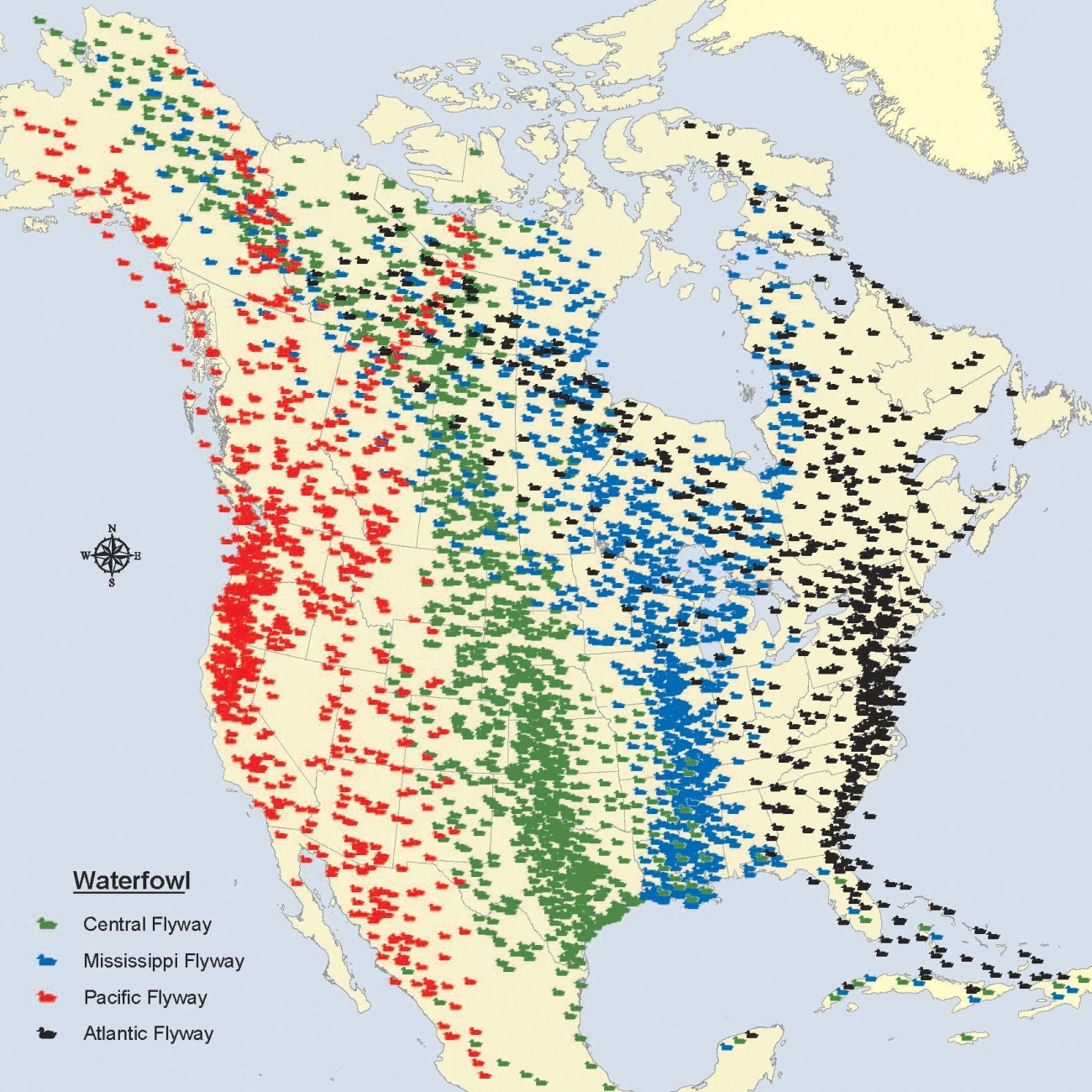
Central Flyway
54
MENTIONS
26
EPISODES
23
PODCASTS
Search complete. 54 mentions across 26 episodes found for "Central Flyway".
Sep 29, 2026

Wade SkeenGUEST
And when we go below a certain threshold, That's when they're going to change our seasons.
Wade SkeenGUEST
So like right now in the Central Flyway, I think we're at a 74-day season.
Wade SkeenGUEST
We're like the Mississippi Flyways typically have a 60-day season.
Wade SkeenGUEST
You go west and the season gets longer.

Corey LeckerGUEST
Yeah, we don't.
Corey LeckerGUEST
We're in both flyways, Pacific and Central Flyway here.
Corey LeckerGUEST
Make splits in Choteau County line, east of town here, halfway to Lewistown.
Corey LeckerGUEST
But mainly our waterfowl hunting is on our river systems and around our reservoirs before they freeze in the grain country.

Brian HalbleibGUEST
Yeah.
Brian HalbleibGUEST
Yeah, I'm from Pennsylvania, so that's a rare occurrence, so I have to go out to the central flyway.
Brian HalbleibGUEST
We don't have an early teal season here, so for the last handful of years I've been going out to the central flyway and taking advantage of that September, I guess it's September 5th start this year.
Brian HalbleibGUEST
And, uh, yeah, got a, got a limit three days in a row.
Brian HalbleibGUEST
So, it's a good way to start the duck season.
9 MINS LATER
Tyler MeadenHOST
So that, and that's something that, you know, I think I, I haven't looked at personally, so that's, that's good.
Tyler MeadenHOST
I think, um, you know, from a, from like a traveling standpoint, right, and, and expanding and having guests on from other flyways on your podcast, right, before you started to really travel, like, did any of the techniques from, from outside, outside your flyway or outside your local area where we can spend, right, you can spend a lot of time in your core area till you start to travel, did any of that stuff really resonate or, or did it not necessarily apply because of the, the habitat that you're hunting in?
Brian HalbleibGUEST
in?Well, the hardest thing with hunting in Pennsylvania is the number of ducks that we have, right? So if you go out to the Central Flyway, for instance, there's a lot more ducks funneling through that flyway than there is where I live.

Brian HalbleibHOST
I'll be bringing those YouTube videos as well, but that's probably going to be a couple weeks.
Brian HalbleibHOST
I've still got a couple more from the Central Flyway trip.
Brian HalbleibHOST
There's actually two videos up there from day one and day two, if you haven't checked those out yet.
Brian HalbleibHOST
They've been getting really good views.

Byron ReedCORRESPONDENT
Edwards is the communications director for Denver Audubon, a group that's spending the next couple of weeks tracking birds migrating through the state.
Dori EdwardsSOUNDBITE_SPEAKER
We have about 300 to 500 species that come through here in the Central Flyway, which is one of the main migratory paths in the country.
Byron ReedCORRESPONDENT
The Denver Audubon Kingery Nature Center is hosting bird banding sessions through October, helping scientists track migrating birds and giving the public a behind-the-scenes look.
Dori EdwardsSOUNDBITE_SPEAKER
The birds will get caught gently in the mist nets.

MikeHOST
So go have a look and find that cool graphic.
MikeHOST
The summary is that the average numbers of days a duck hunter takes to shoot a hen from 1999 to 2022 was nine days for the Atlantic Flyway, 6.4 days for the Central Flyway, 5.5 days for the Mississippi Flyway, and 4.1 days for the Pacific Flyway.
MikeHOST
Also, every flyway saw a statistical increase in the numbers of days of duck hunting it took to shoot a hen mallard during this period.
MikeHOST
At a 3.14% increase per year for the Atlantic Flyway, a 1.52% for Central, 1.49% for Mississippi, and 1.48% for the Pacific Flyway.

Casey HartwellGUEST
And then you can see the breakdown versus flyway as well, too, below that.
Casey HartwellGUEST
So you can kind of compare side by side what the Pacific Flyway is experiencing versus like the Atlantic or the Central Flyway.
Casey HartwellGUEST
Obviously, with this study, since we're California-based, the West Coast sample size was significant.
Casey HartwellGUEST
We had 223 respondents from the Pacific Flyway versus the Atlantic Flyway, which had 40.

Kevin CramerGUEST
I like to say moved with the water.
Kevin CramerGUEST
And it wouldn't surprise anybody to know that the Central Flyway and the prairie potholes especially do change.
Kevin CramerGUEST
They do change.
Kevin CramerGUEST
And by the way, the ducks know when they change.

Scott TaylorHOST
Cranes.
Scott TaylorHOST
To help us unpack that, I'm joined by Dr. Andy Kaven, Director of Central Flyway programs for the International Crane Foundation.
Scott TaylorHOST
After the break, Andy takes us to a river in Nebraska and gives us a number I made him say twice.
Scott TaylorHOST
We get into what a wet meadow actually is and why soggy grassland is worth fighting over, and we talk about what it takes to bring a bird back from almost nothing and how fragile that comeback still is.

Mike BrasherGUEST
There have been some recent studies that have looked into various parts of that.
Mike BrasherGUEST
We, the, the three of us here, have, have collaborated, along with, uh, Dr. Bram Verheijen, the lead author on, on the studies that we'll be talking about, a, a, a study that looked at band recovery distribution and actually wing recovery distributions as a way to index some of those changes, long-term changes in duck distribution to the Mississippi and Central Flyway, and so that's the, that's what we're gonna be talking about today and hope people will find it interesting.
Mike BrasherGUEST
Um, so I will kinda take the opportunity to introduce my colleagues here or sorta toss it to them, give them an opportunity to introduce themselves, and I'll start with Dr. Lisa Webb, the first time ever on a podcast, which is super exciting.
Lisa WebbGUEST
[laughs] We'll see.
Heath HagyGUEST
Um, as Mike mentioned, I'm, uh, uh, I guess I'm, uh, I didn't do too badly before, so he invited me back, um, for my former role.
Heath HagyGUEST
Uh, I was the waterfowl ecologist for the southeast region for about six to seven years based in Memphis, Tennessee.
Heath HagyGUEST
Um, so I've had some experience on both sides of the Mississippi and Central Flyways, um, uh, doing waterfowl research, worrying about waterfowl distributions, um, and, uh, and trying to serve the needs of, uh, of, uh, of, of waterfowl hunters and other waterfowl enthusiasts throughout the Central and Mississippi Flyways, kind of north to south.
Heath HagyGUEST
So with that, thanks, Mike, and, and again, thanks, Elliot, for inviting me today.
16 more episodes mention Central Flyway.
Create an account to see the whole feed, search across every transcript, and follow the entities you care about.