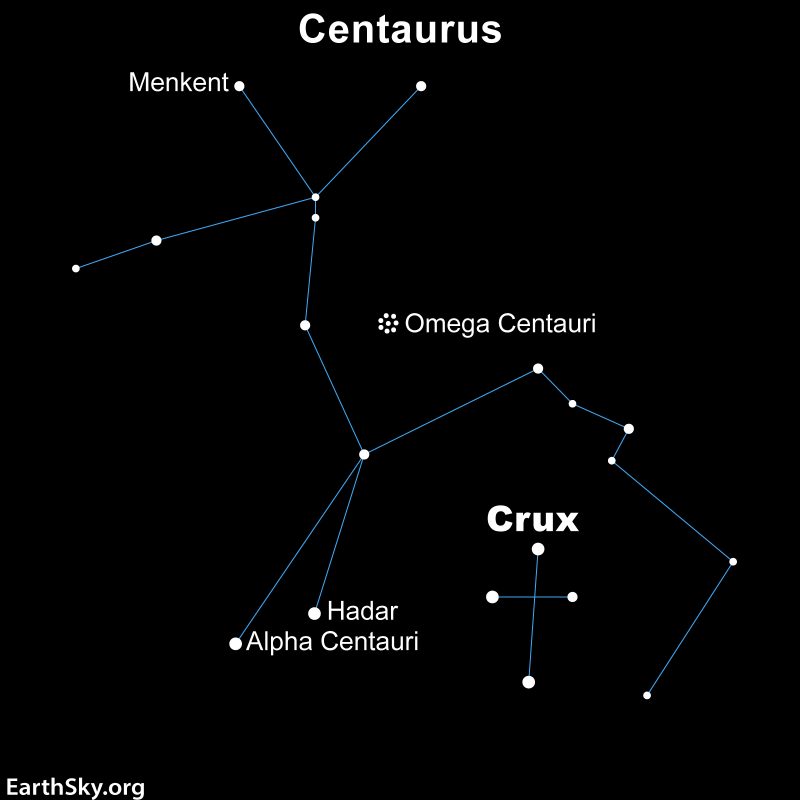
Centaurus
ConstellationWikipedia
22
MENTIONS
5
EPISODES
5
PODCASTS
Search complete. 22 mentions across 5 episodes found for "Centaurus".
Oct 8, 2026

speaker_2NARRATOR
4.24 light years from the Sun is the nearest star of all.
speaker_2NARRATOR
Its name is Proxima Centauri, which simply means the nearest one in Centaurus.
speaker_2NARRATOR
It isn't much like the Sun.
speaker_2NARRATOR
Proxima is a red dwarf, a small, cool star with only about an eighth of the Sun's mass.

Nigel StockVOICE_ACTOR
The reply.
Nigel StockVOICE_ACTOR
Eh? Where from? Where from? The message was directed towards the constellation Centaurus.
Nigel StockVOICE_ACTOR
That seems too fantastic to be true.
Nigel StockVOICE_ACTOR
Arecibo's main target was the star Alpha Centauri.

speaker_1HOST
The corrected data shows our local group is hurtling through the universe at an astonishing 627 to 631 kilometers per second directly toward a specific celestial region.
GorgorodHOST
Toward the Hydra and Centaurus constellations.
speaker_1HOST
Exactly.
GorgorodHOST
So the CMB is literally our cosmic speeding ticket.
10 MINS LATER
speaker_1HOST
Hundreds of galaxies spanning immense swaths of the sky were all streaming in the exact same direction, like water rushing toward a drain.
speaker_1HOST
Wow.
speaker_1HOST
These galaxies were moving toward the Hydra and Centaurus superclusters at velocities roughly 400 kilometers per second higher than what the uniform Hubble expansion predicted.
GorgorodHOST
Which proved the CMB speeding ticket was real.

Alex McColganHOST
If this is the case, then they would be the Milky Way's first known binary globular cluster pair.
Alex McColganHOST
We found binary clusters in other galaxies, like in Centaurus A and the Large Magellanic Cloud, but scientists think it might be when these gravitationally bound clusters collide that we get the most massive globular clusters, like Omega Centauri.
Alex McColganHOST
So studying a binary cluster right in our own galaxy could produce some amazing insights into this process.
Alex McColganHOST
It's all speculation at the moment, but it's definitely cool to think about.
15 MINS LATER
Alex McColganHOST
Nuclear physicist Anton Wallner, who led one of these research teams studying the deposits, said that the fact that the more recent debris was spread across 1.5 million years suggests that there were a series of supernovae that occurred one after another in close succession.
Alex McColganHOST
Astrophysicist Dieter Breitschaft, who led a second team of scientists, identified a likely source of these supernova explosions, which would have occurred 196 to 423 light years from the sun.
Alex McColganHOST
These supernovae that created our local hot bubble may have been part of an aging star cluster, whose surviving members are now associated with the Scorpius-Centaurus stellar group.
Alex McColganHOST
Using the iron-60 deposits, the team was able to trace the signals of two supernovae, one that happened 1.5 million years ago, and the other 2.3 million years ago, as the result of the deaths of stars that were 8.8 times and 9.2 times the mass of our sun respectively.

DianaHOST
And you don't need to have heard the main episodes first, although it helps to know the basic geography.
DianaHOST
Centaurus is the centaur, Lupus is the animal he carries, Ara is the altar below them, and Sagittarius is the archer to the east.
DianaHOST
Together they occupy one of the richest stretches of the southern sky.
DianaHOST
The Greeks turned part of it into something resembling a ritual scene, a centaur carrying an animal toward an altar.
DianaHOST
But other cultures looked toward those same regions of sky and found very different stories, some considerably darker, some considerably stranger, and one involving a fight that starts over a boar and ends with a god handing over one of the most destructive weapons imaginable.
DianaHOST
We'll take them one constellation at a time.
DianaHOST
First, Centaurus.
DianaHOST
Long before the Greeks put a centaur here, Babylonian astronomers placed something very different among these stars.