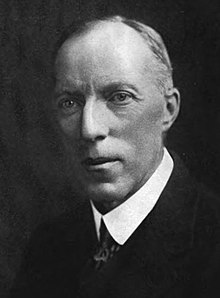
Cecil Sharp
Music teacherWikipedia
13
MENTIONS
7
EPISODES
7
PODCASTS
Search complete. 13 mentions across 7 episodes found for "Cecil Sharp".
Oct 11, 2026

Nancy DoreyCORRESPONDENT
And it became a bit of a thing in the Victorian era and later in the '20s to start writing and collecting all of these down.
Nancy DoreyCORRESPONDENT
So we owe Cecil Sharp an enormous debt because we have all those songs now.
Nancy DoreyCORRESPONDENT
And so it has the music, and it has the songs, and it also has some of his notes about the-- where he collected it and, and what the songs are about.
Nancy DoreyCORRESPONDENT
So another brilliant music book.

Jenny ShawHOST
And of course, it is very problematic.
Jenny ShawHOST
But Cecil Sharp went one further and cleaned the whole thing up, publishing a baudelarised version.
Jenny ShawHOST
It's a lovely idea, but completely misses the point, and we're left with a bland song.
Jenny ShawHOST
No wonder his version didn't catch on.

speaker_2HOST
Uh, who are some of those, uh, some of those songwriters that stand out to you from, uh, maintaining that history there?
Dan DuttonGUEST
Well, I mean, um, you know, there was, um, m- m- m- um, Cecil Sharp.
speaker_2HOST
Mm.
Dan DuttonGUEST
Um, um, folklorist, he traveled, um, through...
Dan DuttonGUEST
Interestingly, an English folklorist who came to America and traveled through the mountain country with his assistant, Maud Karpeles, on muleback, collecting ballads and old songs, um, here.
Dan DuttonGUEST
A- a- almost in a flip from the earlier work by Sir Francis Child, where he had attempted to collect every ballad in, in, um, the British Isles and document them.
Dan DuttonGUEST
Cecil Sharp did something of the same thing in the mountains, in the Appalachian Mountains, basically, North Carolina, Tennessee, and Kentucky.
Dan DuttonGUEST
And, um, they were writing these tunes down, um, by ear or using wax cylinders sometimes to record them.

Tony WalkerHOST
And so you get in the nineteenth century, you get these collectors going out, people like, uh, Sabine Baring-Gould, massively reactionary in lots of ways, but he recorded the folk songs of Devon and Cornwall with great respect for the people.
Tony WalkerHOST
And, and then you got Cecil Sharp and W.A. Evans Wentz who were doing field work, and lots of people then doing field work amongst, uh- The, uh, traveling communities, uh, the peasant communities, and treating what they say as being worth listening to, and in fact, perhaps in some cases, a, a, a, a true representative of an older world that the learned with their books have forgotten.
Tony WalkerHOST
So I think she represents that.
Tony WalkerHOST
A- and I think James does that.

speaker_0HOST
There are older songs which also contain the same elements.
speaker_0HOST
Cecil Sharp found multiple sources in southern England in 1906.
speaker_0HOST
Sharp put the different versions he found together and used the opening lines we are most familiar with at this time, The Water is Wide.
speaker_0HOST
In his blog, Jim Moran states that he found a version of it in a song book from around 1590 in the rare book room of the University of Illinois.

Jeff KeithGUEST
[gentle music]
Charlie Shelton OrmondCORRESPONDENT
Jeff says the song stayed in Southern Appalachia until 1916, when a British music collector traveled through the region, a man named Cecil Sharp.
Charlie Shelton OrmondCORRESPONDENT
His mission was to document a specific kind of music, songs originally from England that over time had made their way into Appalachia.
Jeff KeithGUEST
He, uh, felt like Appalachia would have purer versions of the music because it was less touched by industrialization.
Jeff KeithGUEST
I can imagine that.
Charlie Shelton OrmondCORRESPONDENT
Sure.
Jeff KeithGUEST
'Cause he's English, this guy, Cecil Sharp.
Jeff KeithGUEST
Or is he documenting that they've changed the song into Swannanoa Town?

Dave ThompsonGUEST
I mean, they were a vital part of community life in those little towns and villages and hamlets.
Dave ThompsonGUEST
Cecil Sharp, et cetera, went and explored looking for songs.
Dave ThompsonGUEST
That's why they went there.
Dave ThompsonGUEST
So I think the child ballads are a foundation stone of Americana.
5 MINS LATER
Dave ThompsonGUEST
And that was really his world.
Dave ThompsonGUEST
And then a folk singer named Bracey, F.A. Bracey, I think, discovered, in inverted commas, him at one of these events.
Dave ThompsonGUEST
and took him to, or introduced him to Maude Carpiles, who we touched on last time when we were talking about the Appalachian tour of Cecil Sharp.
Dave ThompsonGUEST
She was head of the English Folk Dance and Song Society, so impressed by what she heard about Phil Taylor that she brought him to London with his dog.