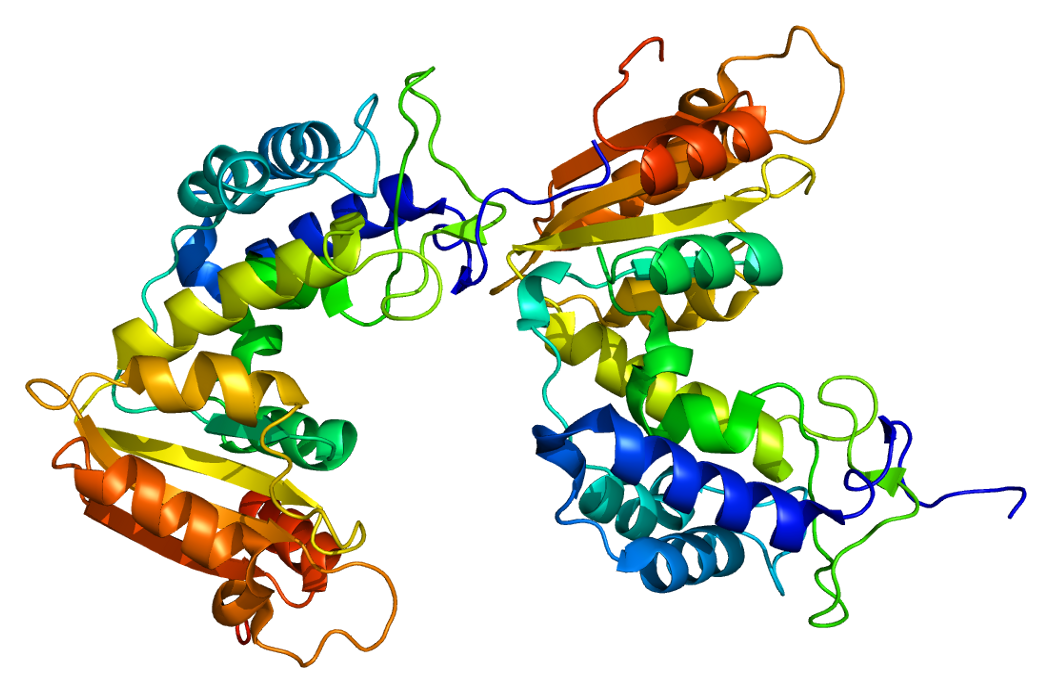
CD38
ProteinWikipedia
95
MENTIONS
27
EPISODES
23
PODCASTS
Search complete. 95 mentions across 27 episodes found for "CD38".
Sep 11, 2026

Robert CykiertHOST
So tell us about this drug Sarclisa and what does the FDA approval of the new variety of this called Sarclisa Acena add for patients and healthcare providers?
Sikander AilawadhiGUEST
So, Dr. Seichert, sarclisa or esotuximab belongs to an important class of drugs in myeloma, which is called CD38 monoclonal antibodies.
Sikander AilawadhiGUEST
There is one other drug available called dartumumab or Darzalex, and sarclisa or esotuximab is another agent available here.
Sikander AilawadhiGUEST
These are very important drugs.

Curtis Gillespie SayersGUEST
And then we have like a very severe case of like chronic fatigue people and autoimmune disease where they have SASP, senescent associated secretory phenotype.
Curtis Gillespie SayersGUEST
So what the heck does that mean? That means the senescent cell produces an inflammatory cytokine, well, multiple ones, but mainly interleukin-6, which then upregulates CD38.
Curtis Gillespie SayersGUEST
That's the hungry, hungry hippo to your NAD, meaning it's going to overly consume your NAD.
Curtis Gillespie SayersGUEST
It will also increase NNMT levels.
Curtis Gillespie SayersGUEST
You just gotta take care of the inflammatory senescent cell situation first.
Curtis Gillespie SayersGUEST
Then you can utilize NAD because some people, here is the ironic paradox or whatever, some people of severe diseases need NAD to heal, but you have to regulate the enzymes.
Curtis Gillespie SayersGUEST
You have to regulate NNMT and CD38, and you have to reduce the inflammation.
Curtis Gillespie SayersGUEST
before you can bring in NAD for yourself to heal.

speaker_1SOUNDBITE_SPEAKER
It's a consumption issue.
speaker_1SOUNDBITE_SPEAKER
As we accumulate those senescent zombie cells we talked about earlier, the resulting chronic inflammation upregulates an enzyme called CD38.
speaker_2SOUNDBITE_SPEAKER
And what does CD38 do?
speaker_1SOUNDBITE_SPEAKER
it aggressively consumes NAD plus battery.
speaker_1SOUNDBITE_SPEAKER
It eats it up.
19 MINS LATER
speaker_1SOUNDBITE_SPEAKER
Well, it's a combination of decreased synthesis and increased consumption.
speaker_1SOUNDBITE_SPEAKER
But the sources point to a massive aggressive driver of this decline.
speaker_1SOUNDBITE_SPEAKER
The upregulation of an enzyme called CD38.

Baran DilaverGUEST
And it just chews up NAD.
Baran DilaverGUEST
So CD38 levels going up means your NAD levels are going down.
Baran DilaverGUEST
So it does make sense to also address the CD38s eating up NAD because you don't want too much of this enzyme in your system.
Mark YoungHOST
Well, let me ask you a question.
Mark YoungHOST
So why does that enzyme increase production? Is there a reason if that is what's eating? I'm thinking of it as, for instance, like the difference between free testosterone and uh, actual testosterone production, right? Is because you're, you're looking at like a, like a, a sex hormone binding globulin, right? Like, so I'm talking now about SHBG and how levels of SHBG are actually eating up testosterone.
Baran DilaverGUEST
But it's coming out from somewhere else.
Baran DilaverGUEST
But the more... holes that you have, the more energy goes into fixing the problem, kind of what we were talking about, like the sick care, like, you know, the leakier gut you have, the more energy goes into fighting the inflammation, and now starts the vicious cycle, that more of your energy goes into fighting the bacteria, the bad guys, instead of, like, you know, recovering or sending the energy somewhere else.
Baran DilaverGUEST
So CD38, that enzyme I mentioned, is part of it.

Hunter WilliamsHOST
So again, PARPs run off of NAD plus, so we need the NAD plus to have this DNA damage repair crew operate and do what it's going to do.
Hunter WilliamsHOST
And then we have CD38 basically that sits on immune cells.
Hunter WilliamsHOST
It destroys NAD plus and its precursors.
Hunter WilliamsHOST
And again, the CD38 is going to climb steadily with age.
Hunter WilliamsHOST
And also the more inflamed we are, the more it's going to express and then ultimately chew up the NAD plus.
Hunter WilliamsHOST
So again, in addition to it doing the things it's going to do in the body, it also kind of serves as a fuel source, as an enzyme for these other things that consume NAD plus.
Hunter WilliamsHOST
It's not forgetting how to make it.
Hunter WilliamsHOST
So it's just running out of the ability to make it and it's burning through it faster.

Surbhi SidanaGUEST
And it was a death sentence.
Surbhi SidanaGUEST
And as the field has evolved, we've had many new drugs like proteasome inhibitors, IMEDS, anti-CD38 monoclonal antibodies.
Surbhi SidanaGUEST
I still remember my first ASH as a fellow.
Surbhi SidanaGUEST
So I'd gone to a few ASH meetings before, but my first ASH as a hematology oncology fellow, there was a session on new drug development and Dr. Vincent Rajkumar said, And then one of the FDA representatives was talking about all the new drugs.
7 MINS LATER
Surbhi SidanaGUEST
Maggie, this is, as I said, a cataclysmic time in myeloma where we're moving to curative therapy.
Surbhi SidanaGUEST
We have a lot of treatment options.
Surbhi SidanaGUEST
The very impressive data that we have with upfront therapy already with the anti-CD38 antibody, IMIDs, proteasome inhibitors, and now the bispecifics and CAR-T.
Surbhi SidanaGUEST
So a plethora of options.

Ben AzadiHOST
He was here.
Ben AzadiHOST
We talked all about the NMN, um, the CD38-
Dylan GemelliGUEST
Yeah
Ben AzadiHOST
... part of the conversation, which is, like, this NAD shredder, and it goes up as you age, so having different resveratrol polyphenols to bring down CD38 and then introduce the precursor, the NMN, to turn into NAD.

Nancy JohnsonHOST
The CAP's accreditation program hits a milestone.
Nancy JohnsonHOST
A webinar on how to advocate for pathology and a new proficiency testing program on anti-CD38 interference.
Nancy JohnsonHOST
These stories and more coming up next.
Nancy JohnsonHOST
This is Path News Network Daily Edition from the College of American Pathologists.
Nancy JohnsonHOST
Stop by to connect with colleagues, charge your devices, and hear about advocacy priorities.
Nancy JohnsonHOST
We've been telling you about the CAP's new proficiency testing programs now available for order for 2027 delivery.
Nancy JohnsonHOST
Today, we focus on the anti-CD38 interference antibody screen.
Nancy JohnsonHOST
Anti-CD38 drugs are used to treat blood cancers but can cause interference with some laboratory tests.

Rohit GosainHOST
But at the end of the day, quad therapy still remains the current standard of care in frontline setting.
Rohit GosainHOST
And then we continue on with our anti-CD38 and len-based maintenance.
Rohit GosainHOST
Though for standard risk, after the endurance trial, two years of len maintenance is rather sufficient.
Rohit GosainHOST
Ajay, to get us started, what data do we have for upfront quad therapy, and what can patients expect with this treatment in frontline settings?
Samantha ShenoyGUEST
So I...
Samantha ShenoyGUEST
When I speak to patients about dara, I explain it's a monoclonal antibody that targets CD38.
Samantha ShenoyGUEST
It's relatively well-tolerated, any of the anti-CD38, dara or isa.
Samantha ShenoyGUEST
They're well-tolerated.

Sagar LonialGUEST
A majority of them were one or two prior lines of therapy.
Sagar LonialGUEST
And so I think it was a really balanced trial looking at what's the additive benefit of iber in combination with an anti-CD38 versus bortezomib.
Chris RyanHOST
Just turning to some of the data that supported this approval, just looking at the efficacy first, you know, what improvements were seen versus the bortezomib, daratumib, dexamethasone combination?
Sagar LonialGUEST
Well, the co-primary endpoint on this was MRD negativity.
Chris RyanHOST
With daratumumab being kind of a backbone in different lines of therapy, how does that affect treatment decision-making, especially for patients who have been exposed to daratumumab in a previous line of therapy?
Sagar LonialGUEST
The exposed versus resistant, in terms of the resistant, I think it's a little bit different discussion there.
Sagar LonialGUEST
But exposed doesn't necessarily mean that they're resistant to an anti-CD38.
Sagar LonialGUEST
So if you had an anti-CD38 as part of your induction but didn't get it in maintenance, then I think it's a very reasonable combination to consider in that context.
17 more episodes mention CD38.
Create an account to see the whole feed, search across every transcript, and follow the entities you care about.