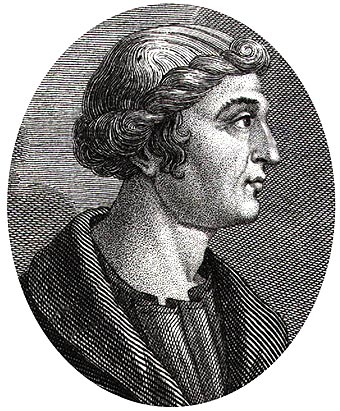
Cassius Dio
HistorianWikipedia
109
MENTIONS
43
EPISODES
31
PODCASTS
Search complete. 109 mentions across 43 episodes found for "Cassius Dio".
Nov 22, 2026

Barry StraussGUEST
The only...
Barry StraussGUEST
A continuous narrative we have comes from a Roman writer named Cassius Dio, who lived in the third century.
Barry StraussGUEST
But actually, we don't really have Cassius Dio.
Barry StraussGUEST
We have a later Byzantine abridgment of Cassius Dio.
Barry StraussGUEST
And it's very short.
Barry StraussGUEST
It's very good.

speaker_0NARRATOR
But something had changed.
speaker_0NARRATOR
The ancient historians, Suetonius, Cassius Dio, Philo of Alexandria, are unanimous on this point, even if they differ on the details.
speaker_0NARRATOR
The man who emerged from that illness was not the man who had entered it.
speaker_0NARRATOR
Whether the fever had caused neurological damage, whether the experience of near death had fractured something in an already fragile psychology, whether the illness had simply stripped away the careful performance he had been maintaining and revealed what was always underneath.

James EllisHOST
And at some point in this period, the seven-day week was built on the planets.
James EllisHOST
And by the time of Cassius Dio in the early 3rd century, it was ordinary to name the days after them.
James EllisHOST
And he himself explains why they come in the order they do.
James EllisHOST
Then the chain runs east to a city called Haran, which is now in southern Turkey, a community that actually kept the planets as gods, one of the models that I've spoken about, long after the rest of the Roman world became Christian.

speaker_0HOST
became a quaestor, thanks in part to that same aunt's influence, and made a name for himself as an orator.
speaker_0HOST
Such a name that, according to the historian Cassius Dio, the Emperor Caligula, jealous of his talent, came close to having him killed, and only left him alone because someone assured him that Seneca was so ill he would soon die anyway.
speaker_0HOST
Caligula was murdered, and Seneca lived on.
speaker_0HOST
The new emperor was Claudius, and the person who really ran his palace was his wife, Messalina.
38 MINS LATER
speaker_0HOST
He speaks of his clemency.
speaker_0HOST
He lets it drop, with little subtlety, that he hopes to be pardoned and allowed back to Rome.
speaker_0HOST
Many historians, from antiquity to the present day, have read that letter as the work of a man who, after years of solitude, couldn't take any more, and was ready to flatter whoever he had to in order to get home.
speaker_0HOST
This is where a historian who had no fondness at all for Seneca comes in, Cassius Dio.

Simon WhistlerNARRATOR
Her exact birth date remains unknown.
Simon WhistlerNARRATOR
Historical records from Roman chroniclers like Tacitus and Cassius Dio sketch a portrait of a woman who rose to infamy during the reigns of Emperor Claudius and Nero.
Simon WhistlerNARRATOR
Though Liz known about Lacusta's early life, including her origins, she presumably came from Gaul and later moved to Rome.
Simon WhistlerNARRATOR
Early in her life, Lacusta developed a profound knowledge of botany and toxicology, skills which she would later use with deadly effectiveness.

Eric HansenNARRATOR
Antoninus was, however, the acting and responsible emperor.
Eric HansenNARRATOR
His clemency of brightness and affableness of disposition are the praise of all historians.
Eric HansenNARRATOR
His reign has commonly been regarded as free from the stain of persecution.
Eric HansenNARRATOR
This is a mistake, though probably the emperor himself was not to blame.

Mike BeerGUEST
It's only really now, I think, that scholars are rethinking it.
Mike BeerGUEST
So they're trying to sort of think about, well, you know, is Catiline the threat that he was presented as? Was he a reformer? But if you go on, if you look at the main sources and the main sources will be Plutarch's life of Cicero we get very little about it in Suetonius's life of Julius Caesar for instance later historians like Cassius Dio etc they genuinely follow the line of Cicero that says Catiline is a very bad man but they don't afford him very much space and it is literally seen later on as just being a sort of another hiccup in the various kind of problems that the somewhere between the dictatorship of Sulla and the riots that happened in the late 50s and then the civil war that happens in 48 so it kind of is lost a little bit and I'm sure Cicero would have been quite disappointed that posterity doesn't really remember Catiline as being a massive thing to be honest.
Alexandra SillsHOST
So if the conspiracy and everything around it ended up being more of a hiccup, Cicero comes out of it, in his own writings at least, really quite well.
Alexandra SillsHOST
Father of the country, saviour of Rome, he won't stop banging on about it.

ChristoHOST
It was.
ChristoHOST
Well, this is how the Greco-Roman historian Cassius Dio said it was.
ChristoHOST
The Quadi had surrounded them at a spot favorable for their purpose, and the Romans were fighting valiantly.
ChristoHOST
Then the barbarians ceased fighting, expecting to capture them easily as a result of the heat and their thirst.
ChristoHOST
I can understand your skepticism.
ChristoHOST
And if you prefer to think of it as mere coincidence, be my guest.
ChristoHOST
But for centuries, historians have treated the rain miracle as if it were indeed a matter of divine intervention.
ChristoHOST
Indeed.

Jeremy Ryan SlateHOST
These were the hands that had written the Philippics, and Antony had them put on display with the head on the rostra, the speaker's platform in the forum, where Cicero had addressed the Roman people for most of his life.
Jeremy Ryan SlateHOST
Cassius Dio, writing more than 200 years later, adds that Fulvia, Anthony's wife and the widow of Clodius, pierced the dead man's tongue with her hairpins.
Jeremy Ryan SlateHOST
The detail appears only in Dio, and it is so late, so I'd hold it loosely.
Jeremy Ryan SlateHOST
Cicero's career began in 80 BC.

Jeremy Ryan SlateHOST
These were the hands that had written the Philippics, and Antony had them put on display with the head on the rostra, the speaker's platform in the forum, where Cicero had addressed the Roman people for most of his life.
Jeremy Ryan SlateHOST
Cassius Dio, writing more than 200 years later, adds that Fulvia, Anthony's wife and the widow of Clodius, pierced the dead man's tongue with her hairpins.
Jeremy Ryan SlateHOST
The detail appears only in Dio, and it is so late, so I'd hold it loosely.
Jeremy Ryan SlateHOST
Cicero's career began in 80 BC.
33 more episodes mention Cassius Dio.
Create an account to see the whole feed, search across every transcript, and follow the entities you care about.